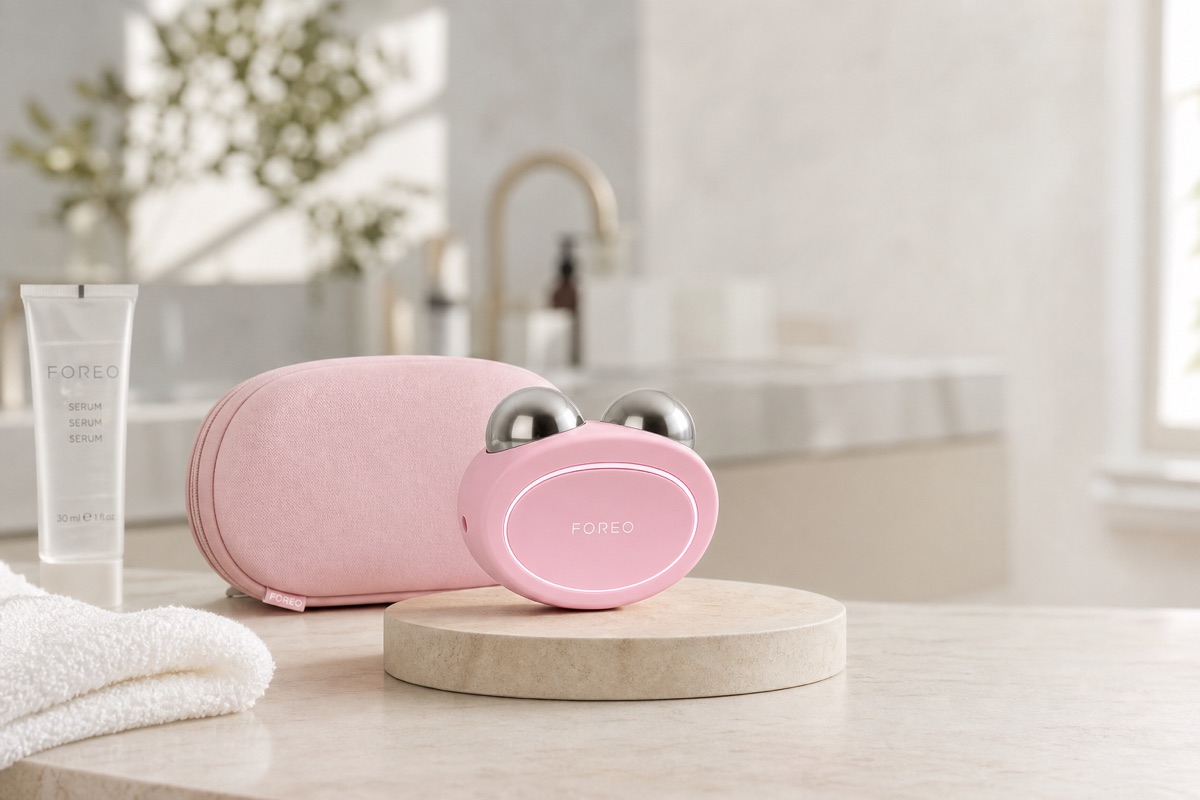
Microcurrent Devices After 40: Dos and Don'ts for Safer At-Home Use
An evidence-led guide to microcurrent device dos and don'ts after 40, with conservative protocols, contraindications, and Amazon-available device options.
Based on 1,690 Amazon ratings across 3 microcurrent devices, 18 clinical studies summarized in PubMed review PMID 38476342, and FDA device-clearance guidance, microcurrent after 40 is best used as a consistency tool: clean skin, conductive gel, low intensity first, and 8 weeks before judging visible firmness.
Editor's top Amazon picks for this guide
Real Amazon products that match this protocol. Affiliate links — your purchases support BeautySift.
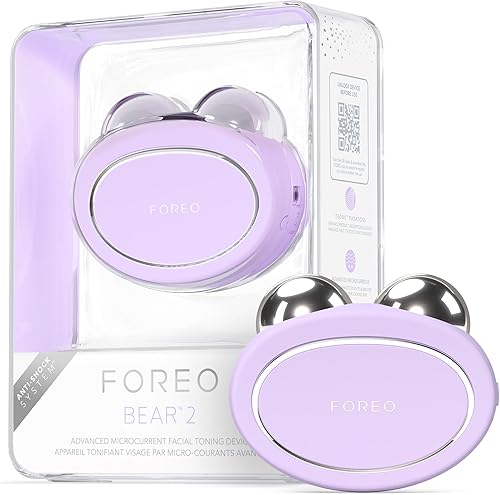
FOREO
FOREO Bear 2 Advanced Toning Microcurrent Facial Device
$239.99
"Best fit for users who want adjustable microcurrent intensity and are willing to use enough conductive gel to avoid stinging. Amazon snapshot: 4.2/5 across 337 ratings."
What real Amazon buyers say
4.2★· 337 reviews"I tend to get swelling, especially in the morning. If you use Foreo Bear2 on a regular basis, it relieves swelling very well."
"The design is compact, the shape fits perfectly in the hand, and it glides smoothly over the skin."

Therabody
Therabody TheraFace PRO Microcurrent Facial Device
$59.99
"A multi-attachment option for shoppers who want microcurrent plus cleansing, massage, and LED-style features in one handle. Amazon snapshot: 4.0/5 across 324 ratings."
What real Amazon buyers say
4.0★· 324 reviews"I love this! Lots of options and attachments to use for facial care. I use the red light settings every night before applying facial lotion at bedtime."
"I wasn't sure I would like the microcurrent, but I actually love that, too."

Solawave
Solawave 4-in-1 Facial Wand
$144.97
"A smaller wand for users who want short sessions and can keep the skin damp enough for microcurrent conductivity. Amazon snapshot: 3.9/5 across 1,029 ratings."
What real Amazon buyers say
3.9★· 1,029 reviews"Wand uses micro current, which needs water to travel, so if it shocks you, it's probably because your skin is too dry."
"It's lightweight and turns on automatically which is nice but it does require moisture to stay on."
What you'll learn
- Microcurrent is a consistency device, not a facelift substitute; after 40, judge subtle firmness and contour support over at least 8 weeks.
- Use microcurrent only on clean skin with a water-based conductive gel or serum, because dry skin is the most common reason users report zapping or shutoff issues.
- Start lower than your ego wants: begin at the lowest comfortable intensity, then increase only if there is no stinging, twitching, headache, or next-day irritation.
- Do not use microcurrent over broken skin, active irritation, recent injectable sites, or if you have a contraindication such as an implanted electronic device unless a clinician clears it.
Steps
-
1 Start with a realistic microcurrent goal
For women over 40, the best-supported expectation is subtle support for the appearance of tone, puffiness, and early firmness changes, not repositioning jowls or replacing in-office procedures. PubMed review PMID 38476342 found 18 clinical studies on home facial rejuvenation devices and concluded that devices may improve aging signs to a certain extent, with research quality varying by technology. Treat microcurrent as a routine habit that may make the face look a little more awake and defined when used consistently.
-
2 Screen for contraindications before the first session
Do not start with the device in your hand. Read the manual and pause if you have a pacemaker, implanted electronic device, seizure disorder, active cancer treatment, unexplained facial pain, broken skin, active infection, or recent facial procedure. If you had Botox, filler, laser, microneedling, deep peel, or facial surgery, ask the treating clinician when device use can restart. FDA 510(k) language is device-specific and does not make every at-home microcurrent device appropriate for every user.
-
3 Use clean skin and a water-based conductive layer
Microcurrent needs a conductive pathway. Cleanse, dry lightly, then apply a generous layer of water-based conductive gel or compatible serum before the electrodes touch skin. Do not use facial oil, thick balm, occlusive sleeping mask, or sunscreen under the device. Amazon Solawave reviewer Stef wrote that microcurrent needs water to travel and that shocks can happen when skin is too dry, which matches the basic conductivity principle behind these devices.
-
4 Map the face in upward passes, not random rubbing
A conservative pattern is jawline to ear, corner of mouth to ear, cheek to temple, brow to hairline, then neck only if the manual permits neck use. Hold or glide exactly as the brand instructs. Avoid the eyelid, center throat, thyroid area, lips, and any area where the device causes sharp sensation. The 2016 PubMed study on a home RF-based device with low-level microcurrent pulsations measured eyebrow-area distance changes, so brow and upper-face claims should still be framed as modest appearance support rather than a guaranteed lift.
-
5 Build slowly for 8 weeks before deciding
Follow the device schedule first. If the manual offers a beginner mode, use it for the first week. A practical trial is baseline photos, weeks 2 and 4 for tolerance, then week 8 for visible comparison. The 2024 PubMed split-face study of a multi-energy home device assessed outcomes after 8 weeks in 36 women, so an 8-week checkpoint is more evidence-aligned than judging after two sessions. If your skin stings, stays red, or feels sore the next morning, reduce intensity, shorten sessions, or stop.
-
6 Clean the device and protect the barrier afterward
After each session, remove gel from the device according to the manual and follow with a bland moisturizer. If you use retinoid, vitamin C, glycolic acid, or exfoliating pads, keep the rest of the night simple until you know your barrier tolerates the device. After 40, dryness and slower barrier rebound can make over-layering feel worse than the microcurrent itself. If irritation appears, pause actives before blaming the device or increasing intensity.
Quick protocol for microcurrent after 40
Affiliate disclosure: we may earn a commission from Amazon links. Commission does not affect evidence weighting, product inclusion, or safety guidance.
Microcurrent devices are best viewed as a low-drama consistency tool. The more mature the skin concern, the more important that sentence becomes. After 40, collagen loss, hormonal dryness, weight changes, sleep changes, and sun history all affect how the lower face and eye area look. A handheld device can support the appearance of tone or temporary puffiness, but it should not be sold to you as a facelift in five minutes.
Our analysis weighted PubMed evidence, FDA device-language guidance, and Amazon review patterns. The 2024 PubMed review on home beauty devices for facial rejuvenation included 18 clinical studies and found that devices can improve some skin-aging indicators to a certain extent, while also noting that the industry still has uneven evidence. A separate 2024 randomized split-face study of a multi-energy home device enrolled 36 women and evaluated outcomes after 8 weeks. That is why this guide uses an 8-week trial window, not an overnight before-and-after promise.
What microcurrent can and cannot do
Microcurrent sends very low-level electrical current through the skin surface with the goal of stimulating facial muscles or supporting visible tone. Device brands describe the effect in different ways, but the user-facing result is usually framed as a more lifted-looking contour, less morning puffiness, and smoother-looking fine lines when the routine is consistent.
The evidence is mixed but not empty. PubMed PMID 26963615 described a double-blind randomized study of 50 people aged 30-70 using a home RF-based device that emitted low-level microcurrent pulsations; the study reported a measured eyebrow-area change after home use. PubMed PMID 38236440 enrolled 36 women in an 8-week split-face study of a multi-energy device that included low-energy microcurrent and reported improvements in hydration, elasticity, roughness, pore size, and eye-wrinkle volume. Those are useful signals, but they are not proof that every wand on Amazon will lift sagging cheeks.
The honest expectation: microcurrent may help the face look a little more awake, less puffy, and more defined with repeated use. It is least convincing for deep folds, prominent jowls, and neck laxity. If your main goal is a major structural lift, use this as supportive care and talk to a board-certified dermatologist or facial plastic surgeon about procedure-level options.
Do: check your health and procedure timing first
The first do is not glamorous: read the contraindications. Do not use an at-home microcurrent device over broken skin, active irritation, infection, fresh sunburn, or areas that feel numb or painful. Ask a clinician first if you have a pacemaker, implanted electronic device, seizure disorder, active cancer treatment, serious heart condition, or any medical issue named in the device manual.
Procedure timing matters. If you recently had Botox, filler, threads, laser, microneedling, a medium-depth peel, facial surgery, or dental surgery that affects the face, ask the treating office when to restart devices. The answer can vary by procedure, product placement, and healing. A generic Amazon review cannot safely answer that for your face.
FDA language is also easy to misread. The FDA 510(k) database explains clearance as substantial equivalence for a specific device and indication. It is not a blanket endorsement of every microcurrent claim and not a guarantee that a device will work for your sagging pattern. When a listing says FDA-cleared, look for the exact device, intended use, and manual restrictions.
Do: use enough conductive gel
The most practical microcurrent rule is also the least optional: do not run it on dry skin. Microcurrent needs a conductive path. Without enough water-based gel or compatible serum, the device can drag, shut off, feel prickly, or zap. Amazon Solawave reviewer Stef wrote, “Wand uses micro current, which needs water to travel, so if it shocks you, it’s probably because your skin is too dry.” That is user evidence, not clinical proof, but it is highly relevant to daily technique.
Use a generous layer. If the gel dries halfway through, mist or reapply instead of pushing through. Avoid face oils, cleansing balms, thick occlusive masks, and silicone-heavy primers during the session. Those may be useful skincare products at other times, but they are not the right conductive medium.
After the session, rinse or tissue off the gel if the formula feels sticky, then apply moisturizer. If you are using retinoid, vitamin C, or exfoliating acids, introduce the device on calm-skin nights first. Women in their 40s and 50s often deal with more dryness, especially during perimenopause, and a compromised barrier can make normal device sensation feel like irritation.
Do: start lower than you think you need
Microcurrent intensity is not a toughness contest. Start at the lowest comfortable level for the first few sessions, especially around the mouth, nose, jaw hinge, and forehead. Increase only if you can complete the session without sharp zaps, muscle jumping that feels uncomfortable, headache, lingering redness, or next-day tenderness.
FOREO Bear 2 had a 4.2/5 Amazon snapshot across 337 global ratings during research, and user comments were split between visible morning-puffiness benefits and sensitivity to stronger settings. That makes it a good example of why adjustability matters. More power is not automatically better; more consistent, comfortable use usually wins.
Therabody TheraFace PRO had a 4.0/5 Amazon snapshot across 324 global ratings during research and is a better fit for shoppers who want multiple attachments, but multi-function design can also tempt overuse. If you use cleansing, massage, light, and microcurrent in the same evening, keep the rest of the routine bland until you understand your skin’s response.
Don’t: glide randomly or chase one dramatic line
Technique should be boring and repeatable. Work in mapped passes: jawline toward ear, lower cheek toward ear, cheekbone toward temple, brow toward hairline. If the manual gives holds instead of glides, follow the manual. Keep pressure light; the current, not forceful rubbing, is the point.
Avoid eyelids unless the device is explicitly designed and cleared for that area. Avoid the center of the throat and thyroid area unless the manual clearly permits neck use and shows placement. Stay off the lips, open blemishes, inflamed eczema, and any area where sensation feels sharp. If the face twitches mildly, that can be normal for some devices; if it hurts, stop.
Do not chase one nasolabial fold for 20 minutes. At-home devices are calibrated for specific treatment times. Overworking one area can irritate skin without producing a stronger cosmetic result. PubMed studies used defined protocols and time windows; they did not support unlimited extra passes.
Don’t: combine every active on device night
A common after-40 mistake is stacking all the anti-aging tools at once: microcurrent, retinoid, glycolic acid, vitamin C, exfoliating toner, and a firming mask in the same night. That makes it impossible to know what caused stinging, flaking, or redness.
A safer sequence is: cleanse, conductive gel, microcurrent, rinse or remove residue if needed, moisturizer. If your skin is already retinoid-adapted, you may apply retinoid afterward, but do not force it. If dryness appears, separate retinoid nights from device nights for two weeks. If you use strong acids, keep them away from microcurrent nights until your skin has handled the device for several sessions.
Sunscreen is non-negotiable the next morning. Microcurrent itself is not an exfoliating peel, but any routine aimed at fine lines or firmness fails if UV exposure keeps driving collagen breakdown. For US shoppers in Florida summer humidity, Southwest dryness, or Midwest winter cold, adjust moisturizer texture around climate but keep SPF steady.
How to choose among Amazon-available devices
Choose by behavior, not fantasy. If you like app-guided routines and adjustable intensity, FOREO Bear 2 is the most flexible of the three Amazon options we analyzed. If you want a single handle that also offers massage and light-style attachments, TheraFace PRO is the more multi-function choice. If you want a smaller wand for short sessions and travel, Solawave is simpler, but its 3.9/5 Amazon snapshot across 1,029 ratings suggests more mixed user sentiment.
The scoring logic is evidence-weighted, not commission-weighted. We gave the strongest weight to peer-reviewed evidence and safety language, then used Amazon ratings to understand availability and real-world friction. A product with a lower rating can still be useful for a narrow user, but it should not be described as universally better.
Skip any listing that hides the brand, lacks a manual, makes medical claims, or uses before-and-after photos that look procedure-level. Also skip devices that do not explain conductive product use. If you cannot tell what the electrodes are, how long a session lasts, or who should avoid the device, the price is not the main problem.
An 8-week microcurrent plan
Week 1 is the tolerance week. Use the lowest setting, take baseline photos in the same lighting, and stop early if you feel sharp zaps or lingering redness. Your goal is to learn how much gel your skin needs and which areas feel sensitive.
Weeks 2-4 are consistency weeks. Follow the manual schedule, usually several sessions per week depending on device. Do not add a new retinoid, peel pad, or strong vitamin C at the same time. If you change too many variables, you cannot evaluate the device.
Weeks 5-8 are the comparison weeks. Look at the baseline photo next to the week-8 photo. Judge puffiness, jawline definition in the same head position, brow-area appearance, and fine-line softness. Be strict about lighting. If the only difference is a better angle, do not count it as a device result.
At week 8, decide whether the device earned its place. If it is comfortable, easy to keep up, and gives a subtle contour or de-puffing benefit you can see, keep it. If it causes dread, stinging, or no visible difference, stop. The best device is not the one with the loudest claim; it is the one you can use safely and consistently.
When to stop or ask for help
Stop using the device if you develop persistent redness, swelling, burning, headaches, dizziness, new facial pain, worsening pigmentation, or irritation that lasts into the next day. Stop if the device shocks repeatedly even with enough gel. Stop if the device housing cracks, the electrodes corrode, or charging behavior changes.
Ask a dermatologist if your concern is rapidly changing skin texture, a new lesion, facial asymmetry, unexplained swelling, or pigmentation that worsens with devices. Cosmetic devices are not diagnostic tools. They should fit around medical care, not delay it.
FAQ
How often should I use microcurrent after 40?
Follow your device manual. A common pattern is several sessions per week, but frequency depends on current level, electrode design, and session length. Start low and consistent rather than high and sporadic.
Can microcurrent make sagging skin worse?
There is no good evidence that proper microcurrent use worsens sagging, but poor technique can irritate the skin or make the routine unpleasant. Significant sagging is also unlikely to respond dramatically, so the bigger risk is unrealistic expectation.
Can I use microcurrent around the eyes?
Only if the device manual specifically permits that area. Do not use microcurrent on the eyelid or too close to the eyeball. For crow’s feet, stay on the bony outer orbital area only if the brand instructions allow it.
Is microcurrent safe during perimenopause?
Perimenopause itself is not the issue; dryness and sensitivity are. If your skin is newly reactive, start with shorter sessions, more conductive gel, and fewer active ingredients on device nights. Medical contraindications still matter more than age.