Morning vs Evening Microcurrent: A Practical Device Routine for Firmer-Looking Skin
An evidence-led guide to choosing morning or evening microcurrent device sessions, with timing, conductive gel, retinoid spacing, safety checks, and Amazon device options.
Based on 3 PubMed-indexed home-device studies, including an 8-week split-face trial in 36 women and a 2016 randomized study of 50 adults, no evidence proves morning microcurrent beats evening use. Choose the time you can repeat consistently; use morning for de-puffing before makeup and evening if it improves adherence.
Editor's top Amazon picks for this guide
Real Amazon products that match this protocol. Affiliate links — your purchases support BeautySift.

NUFACE
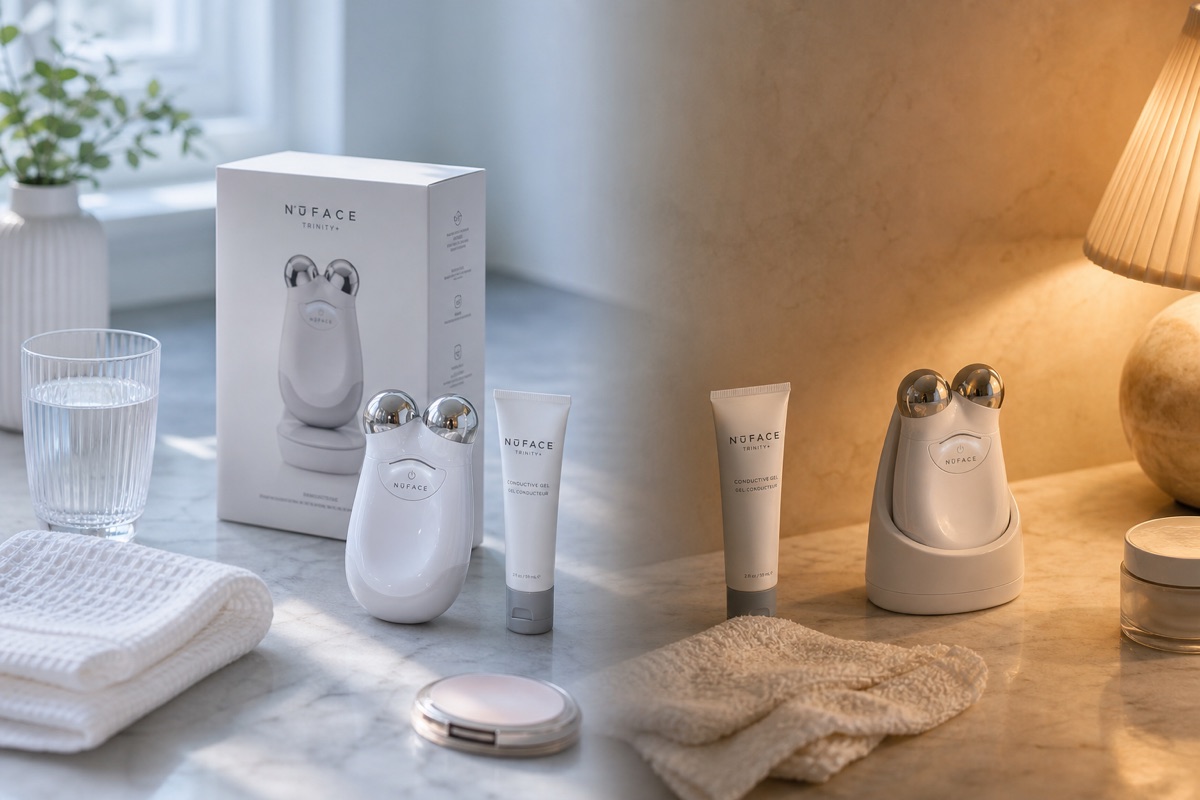
NUFACE Trinity+ Microcurrent Facial Device Kit
$395
"Best fit for a structured microcurrent routine when the user wants a full-face device, app-guided consistency, and a manufacturer-specific protocol."
What real Amazon buyers say
3.8★· 89 reviews"This device works -t does what it says it does. Big Hint: you must use their liquid products WITH THE ELECTRONIC DEVICE. Their products. Not anything else with the electronic device. You will get noticeable results right away. So it is worth using the whole program."
"The NuFACE Trinity+ has quickly become my new favorite part of my skincare routine. Even after just a couple of days, my skin already looks more refreshed and sculpted, and I love how easy it is to use as part of my daily routine."

FOREO
FOREO Bear Microcurrent Facial Device
$174.99
"A lower-priced microcurrent option for users who want short sessions and a compact device, provided they follow FOREO's gel and safety instructions."
What real Amazon buyers say
4.3★· 977 reviews"I think it works. I still have my wrinkles, but my face is much fuller after the first month. I'm 52 and I was desperate to find a device that works. I'm looking at myself differently. If there is anything to report it's an increase in confidence! which is really what I want more than to get rid of the wrinkles. HA!!!"
"Update: the company fixed my device! It also happened pretty quickly! While the device malfunctioning was frustrating, not everything can be perfect all the time. I really do enjoy the device and I'm really glad to have it back!"

Solawave
Solawave 4-in-1 Red Light Therapy Wand for Face and Neck
$144.97
"Best fit for users who prefer a small-area beauty-tech wand and want to pair device time with a simple, repeatable morning or evening habit."
What real Amazon buyers say
4.4★· 839 reviews"The Solawave Wand has been such a great addition to my skincare routine. It’s sleek, easy to use, and feels soothing on the skin. I’ve noticed my face looks brighter and more refreshed after consistent use, and it really gives that spa-like treatment at home."
"I’ve been using the Solawave 4-in-1 Red Light Therapy Wand for a few weeks now, and I’m genuinely impressed. The combination of red light therapy, microcurrent, facial massage, and therapeutic warmth makes each session feel like a mini spa treatment."
What you'll learn
- There is no strong evidence that morning microcurrent is biologically better than evening microcurrent; consistency and skin tolerance matter more than clock time.
- Morning sessions make the most sense when the goal is temporary de-puffing before sunscreen, makeup, work, or an event.
- Evening sessions can work well if you have more time, but use the device before retinoids or exfoliating acids and stop if skin is irritated.
- Every device session needs clean skin and a water-based conductive gel; oils, balms, and dry skin are poor choices for current flow.
- Avoid use or ask a clinician first if you have a pacemaker, implanted electronic device, seizure disorder, pregnancy-related restriction, open skin, or a listed contraindication.
Steps
-
1 Step 1: Decide whether your goal is same-day polish or adherence
Choose morning if you mainly want a temporary less-puffy, more lifted-looking finish before sunscreen and makeup. Choose evening if you are more likely to complete the routine after cleansing. The PubMed-indexed studies BeautySift analyzed report use duration and outcomes, including an 8-week split-face trial and a 50-person randomized study, but they do not show that AM timing outperforms PM timing.
-
2 Step 2: Start on clean skin before moisturizer, oil, or sunscreen
Use the device after cleansing, not over makeup, facial oil, occlusive balm, heavy moisturizer, or sunscreen. Microcurrent needs a wet conductive layer and even contact. If the session is in the morning, cleanse or rinse first, use conductive gel, complete the device passes, then move to moisturizer and broad-spectrum sunscreen. If the session is at night, cleanse thoroughly before gel and device use.
-
3 Step 3: Apply enough conductive gel and keep it wet
A water-based conductive gel or the brand's activator is not a decorative step; it is what allows current to travel comfortably and evenly. Reapply gel if it dries before you finish a zone. Do not substitute facial oil, petrolatum balm, silicone primer, or an exfoliating acid serum under the device unless the manufacturer explicitly allows it. Stinging, zapping, or dragging usually means the skin is too dry, the device angle is poor, or the surface is irritated.
-
4 Step 4: Use morning microcurrent when retinoids dominate your night routine
Morning is the cleaner default if your evening routine includes tretinoin, retinal, retinol, glycolic acid, lactic acid, or salicylic acid. DailyMed tretinoin labeling supports bedtime application and cautions about irritation with drying or abrasive topical products. Using microcurrent in the morning keeps the device step away from your most irritating actives and lets sunscreen remain the last daytime step.
-
5 Step 5: Use evening microcurrent before actives, not over them
If evening is the only time you will stay consistent, place microcurrent immediately after cleansing and before leave-on actives. Finish the device session, remove or smooth excess gel as directed, let skin feel calm, then apply a simple moisturizer. If you also use tretinoin or exfoliating acids, apply them only if your skin is not stinging or flushed, and consider alternating nights if the combination makes your barrier feel tight or reactive.
-
6 Step 6: Keep the session short and repeatable
Follow the exact schedule in your device manual. US editorial guidance from Wirecutter and CNET describes common at-home routines as brief, repeated sessions with conductive gel, but the interval varies by device. Do not compensate for missed days by doubling time, increasing intensity beyond comfort, or pressing harder. A sustainable 3-to-10-minute routine is more defensible than an aggressive session that leaves skin irritated.
-
7 Step 7: Track results conservatively
Judge microcurrent by same-light photos every two weeks, not by one mirror check after a salty meal, poor sleep, or a dry travel day. Same-day changes can reflect de-puffing, massage, hydration from gel, or temporary contour. Longer-term claims are limited by small study sizes, short follow-up, and the fact that some published device studies combine microcurrent with RF, ultrasound, or light rather than isolating microcurrent alone.
-
8 Step 8: Pause for safety signals
Stop the session if you feel burning, persistent zapping, unusual facial twitching, headache, rash, worsening redness, or pain. Do not use the device over open blemishes, dermatitis, sunburn, fresh procedure sites, or areas your manual excludes. Ask a clinician first if you have a pacemaker or implanted electronic device, seizure disorder, heart condition, pregnancy-related restriction, active cancer care, metal implants, or another contraindication listed by the device maker.
The short answer: consistency beats the clock
Microcurrent routines are often marketed as a morning “lift” or an evening “repair” step, but the evidence does not support a strict AM-versus-PM hierarchy. BeautySift analyzed PubMed-indexed home-device studies, openFDA NuFACE 510(k) records, dermatologist-led US editorial guidance, DailyMed tretinoin labeling, and Amazon product snapshots. The most defensible conclusion is practical: use the device at the time that lets you prep skin correctly, use enough conductive gel, and avoid irritating active ingredients.
Affiliate disclosure: we may earn a commission on links. Affiliate availability does not influence our evidence weighting.
When morning microcurrent makes sense
Morning is the better default if you want a polished look before work, video calls, makeup, or an event. A short device session after cleansing can fit before moisturizer and sunscreen, and it avoids crowding the same routine with nighttime tretinoin or exfoliating acids.
Use this order:
- Cleanse or rinse.
- Apply conductive gel in the first zone.
- Use the device according to its map and time limit.
- Remove excess gel if the manual says to.
- Apply moisturizer.
- Finish with broad-spectrum sunscreen.
Morning is also a logical choice for perimenopausal skin that feels drier or more reactive at night. If your evening routine already includes a prescription retinoid, a morning device session separates the electrical device step from the ingredient most likely to cause dryness, peeling, or stinging.
When evening microcurrent makes sense
Evening is useful when your morning is rushed. A device routine that you actually complete four or five times a week, if your manual calls for that frequency, is more realistic than a perfect morning plan you skip.
The sequence still matters. Do not put the device over retinoid cream, acid toner, facial oil, or sleeping balm. Use microcurrent after cleansing, while the skin is bare and covered with conductive gel. Then decide whether your skin is calm enough for the rest of your routine.
If you use tretinoin, retinol, retinal, glycolic acid, lactic acid, or salicylic acid, consider alternating nights at first. DailyMed tretinoin labeling emphasizes irritation management and bedtime use; it does not specifically discuss microcurrent, but it does support a cautious routine when other drying or irritating products are involved.
Evidence-weighted product context
NUFACE Trinity+ is the most structured choice in this set because it is a dedicated microcurrent system and NuFACE has multiple openFDA 510(k) records. FOREO Bear is the more compact lower-priced microcurrent option in the Amazon snapshot. Solawave is a targeted beauty-tech wand rather than a full-face microcurrent substitute, so BeautySift treats it as a routine-friendly device for users who prefer small-area sessions.
Using the BeautySift product-comparison rubric, these products should not be scored as if they had identical evidence. Dedicated microcurrent devices score higher for protocol fit. Multi-technology wands may score higher for ease of habit formation or price, but evidence claims should stay narrower unless the exact device has peer-reviewed data.
What the research can and cannot prove
The 2024 Lasers in Medical Science split-face study followed 36 healthy women for 8 weeks and reported improvements in hydration, elasticity, roughness, pore size, and eye-wrinkle volume with a home multi-energy device. That is relevant to home beauty technology, but it is not a pure microcurrent-only timing study.
The 2016 Journal of Cosmetic and Laser Therapy study included 50 adults ages 30-70 and found eyebrow-area lifting effects with a device using RF and low-level transdermal microcurrent pulsations. Again, it supports cautious interest in at-home energy devices, not a claim that nighttime use changes collagen more than morning use.
The 2024 review in Clinical, Cosmetic and Investigational Dermatology covered 18 clinical studies of home facial rejuvenation devices. Its broader message fits this guide: home devices can improve appearance to a limited extent, but studies are often small, short, and device-specific.
A simple decision rule
Choose morning if:
- You want a temporary more awake look before makeup.
- You use retinoids or exfoliating acids at night.
- You are more likely to remember the device before sunscreen.
- Your skin feels calmer earlier in the day.
Choose evening if:
- You have more time after cleansing.
- You do not use strong actives every night.
- You can keep the session gentle and short.
- You will not fall asleep with conductive gel sitting under occlusive products unless the manual allows it.
Safety notes for US shoppers
FDA 510(k) clearance and over-the-counter availability do not mean every user is a good candidate. Device manuals vary, and some contraindications are non-negotiable. Avoid use or ask a clinician first if you have a pacemaker, implanted electronic device, seizure disorder, heart condition, pregnancy-related restriction, active cancer care, metal implants, recent injectables or energy treatments, open skin, active rash, or any condition listed by the manufacturer.
Stop if the device causes burning, persistent zapping, rash, unusual twitching, or worsening sensitivity. More intensity is not a shortcut to better results.
Related BeautySift reading
Guide: How to use a microcurrent device correctly -> /guides/how-to-use-microcurrent-device-correctly-2026/
More device routines -> /guides/
Beauty-tech coverage -> /beauty-tech/