
Morning vs Evening Phytoestrogen Creams: A Routine Guide
An evidence-led guide for US women 35-55 on when to use phytoestrogen-adjacent creams in the morning, at night, or both.
We analyzed 3,836 Amazon ratings across Vichy, Caudalie, and Vichy night-cream listings, plus PubMed estrogen-skin research from 2000, 2007, and 2021. Use lightweight phytoestrogen-adjacent serums in the morning under SPF; reserve richer firming creams for evening repair and retinoid-buffer nights.
Editor's top Amazon picks for this guide
Real Amazon products that match this protocol. Affiliate links — your purchases support BeautySift.

Vichy
Neovadiol Serum for Peri and Post Menopause
$31.99
"Best morning phytoestrogen-adjacent layer in this protocol because Vichy positions Neovadiol for peri- and post-menopause, and Amazon US shows 4.4/5 across 988 ratings."
What real Amazon buyers say
4.4★· 988 reviews"This serum is perfect for dry skin. It sinks in and relives any dryness and hydrates skin. Never any sensitive with this brand."
"It may seem greasy initially, but give it a minute or two to soak in. My dry/sensitive skin absorbs it almost immediately."

Caudalie
Resveratrol-Lift Firming Cashmere Cream
$69
"Best evening cream for a phytoestrogen-adjacent ingredient story: resveratrol has PubMed estrogen-receptor literature, and Amazon US shows 4.6/5 across 457 ratings."
What real Amazon buyers say
4.6★· 457 reviews"The texture is very soft and it truly leaves a cashmere-like feel on the skin. It provides great hydration and keeps the skin comfortable throughout the day."
"Oh I love this brand so much! And this cream is amazing and immediate results! Worth the price!"
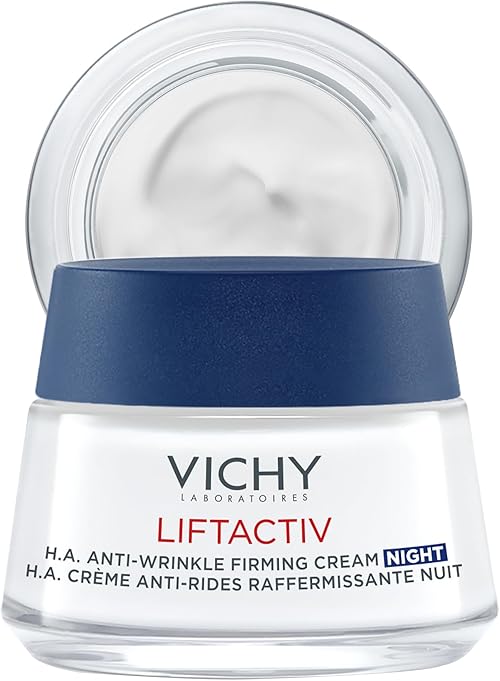
Vichy
LiftActiv Supreme Night Cream
$47.75
"Best non-phytoestrogen night buffer in the routine when retinoids or dryness make a richer PM step useful; Amazon US shows 4.5/5 across 3,912 ratings."
What real Amazon buyers say
4.5★· 3,912 reviews"The texture is smooth and it absorbs well without feeling too heavy. By the morning my skin feels softer and hydrated."
"Always love this cream. It feels so smooth and hydrating. Sinks into skin no greasiness, just give it a few minutes."
What you'll learn
- Use lightweight phytoestrogen-adjacent serums in the morning only if they sit comfortably under sunscreen without pilling or shine.
- Reserve richer resveratrol or firming creams for evening when dryness, fine lines, or retinoid-buffering matter more than makeup wear.
- Phytoestrogen-adjacent skincare is cosmetic support, not hormone therapy; avoid treating it like a medical estrogen replacement.
- Give the routine 8 to 12 weeks for visible fine-line and texture judgment, while judging stinging, pilling, and breakouts within 7 to 14 days.
Steps
-
1 Separate hormone language from cosmetic claims
Start by treating phytoestrogen-adjacent creams as cosmetic moisturizers or firming products, not as hormone therapy. PubMed reviews by Thornton 2000 and Verdier-Sevrain 2007 explain why estrogen biology matters for skin, but FDA cosmetic guidance still requires brands to avoid drug-like claims unless a product is approved as a drug.
-
2 Use lighter formulas in the morning
In the morning, choose a serum or light cream that can sit between cleansing and broad-spectrum sunscreen. Amazon US lists Vichy Neovadiol Serum at 4.4/5 across 988 ratings, and the brand positions Neovadiol around peri- and post-menopause skin concerns. If the layer pills under SPF, move it to evening rather than skipping sunscreen.
-
3 Use richer firming creams at night
At night, use a richer resveratrol or firming cream after cleansing because comfort and repeat use matter more than makeup finish. Gehm 1997 identified resveratrol as a phytoestrogen in estrogen-receptor signaling research, while Caudalie Resveratrol-Lift Cashmere Cream has 4.6/5 across 457 Amazon ratings in our May 2026 snapshot.
-
4 Buffer retinoid nights instead of stacking everything
If you use retinol, do not stack a new firming cream, exfoliating acid, and retinoid on the same night at first. Use moisturizer before retinoid as a buffer, after retinoid for comfort, or on separate recovery nights. The 2021 Dermatol Ther menopause-skin review supports the broader idea that estrogen-deficient skin often needs barrier and hydration support.
-
5 Judge comfort fast and fine lines slowly
Judge stinging, clogged pores, fragrance sensitivity, and sunscreen pilling within 7 to 14 days. Judge fine-line appearance, plumpness, and texture over 8 to 12 weeks because cosmetic moisturizers rarely create meaningful visible changes overnight. Keep notes on AM wear, PM comfort, and any irritation pattern.
-
6 Stop shopping and get advice when symptoms look medical
A cosmetic cream is reasonable for dryness, dullness, and the look of fine lines. It is not the right answer for bleeding, crusting, swelling, severe itch, new rash, or persistent flushing. Those patterns need medical advice, especially during perimenopause when rosacea, eczema, and medication changes can overlap with ordinary dryness.
Quick answer: Based on 3,836 Amazon ratings across three US listings and PubMed estrogen-skin reviews from 2000, 2007, and 2021, the practical split is simple: lightweight phytoestrogen-adjacent serums belong in the morning if they behave under SPF; richer resveratrol or firming creams usually make more sense at night.
Why timing matters after 40
Perimenopause can make a familiar skincare routine feel less predictable. A cleanser that used to be fine may leave cheeks tight. Sunscreen may catch on flakes. Retinoid nights may suddenly create more peeling than payoff. The goal of a phytoestrogen-adjacent cream routine is not to replace estrogen or make medical claims. It is to support the look and feel of skin that is drier, less bouncy, or more lined than it was a few years ago.
The evidence base is mixed but useful when kept in context. Thornton 2000 and Verdier-Sevrain 2007 review estrogen’s role in skin biology, including collagen, thickness, dryness, and receptor signaling. Gehm 1997 specifically describes resveratrol as a phytoestrogen in estrogen-receptor research. Those papers do not prove that every botanical cream reverses wrinkles. They do explain why women 35-55 are interested in formulas built around menopause-positioned moisturizers, resveratrol, and firming support.
The timing question is more practical than hormonal: what layer can you repeat without disrupting sunscreen, makeup, retinoids, or sleep? That is where morning versus evening matters.
Morning: use the layer that can survive sunscreen
The morning routine has one job that outranks every cream: broad-spectrum sunscreen. If a phytoestrogen-adjacent serum pills, turns greasy, makes sunscreen sting, or encourages you to use less SPF, it is in the wrong time slot.
A workable morning sequence is gentle cleanse or rinse, hydrating serum if used, lightweight phytoestrogen-adjacent serum or cream, then sunscreen. Vichy Neovadiol Serum is the cleanest fit in this article’s product set because Vichy positions Neovadiol for peri- and post-menopause skin, and the Amazon US listing shows 4.4/5 across 988 ratings in our May 2026 snapshot. The texture logic matters: a serum is easier to place under sunscreen than a cushiony night cream.
Morning is also the right time if your main complaint is midday tightness. If cheeks feel fine at bedtime but dry by lunch, using the supportive layer only at night may miss the problem. Start with a small amount in the morning for 7 days and watch three signals: sunscreen pilling, shine by noon, and whether foundation or concealer clings less to fine lines.
Evening: use richer creams when finish does not matter
Evening is more forgiving. You do not need to worry about sunscreen film, office lighting, or makeup wear. That makes night the better slot for richer firming creams, formulas with a more noticeable scent, and products that leave a dewy or cushioned finish.
Caudalie Resveratrol-Lift Firming Cashmere Cream is the most direct phytoestrogen-adjacent night example here because resveratrol has PubMed estrogen-receptor literature, and the Amazon US listing shows 4.6/5 across 457 ratings. This does not make it a hormone product. It means the ingredient story is more relevant than a generic firming cream when the shopping question is specifically about phytoestrogen creams.
A simple evening sequence is cleanse, optional hydrating serum, phytoestrogen-adjacent cream, then a tiny amount of plain occlusive only on cracked or flaky patches. If you use prescription or over-the-counter retinoid, keep the first two weeks conservative: use the firming cream on non-retinoid nights, or use a bland moisturizer to buffer retinoid before adding the more active-feeling cream back in.
The 2-routine protocol
Use this protocol if you are unsure where to start.
Week 1: choose one slot, not both. If sunscreen or makeup is the pain point, use the product in the morning. If retinoid dryness, tight cheeks at bedtime, or waking up creased is the pain point, use it at night. Keep every other step boring.
Week 2: decide based on tolerance. If there is no stinging, no new clogged pores, and no sunscreen conflict, continue. If you started in the morning and it pills, move the same product to night before declaring it a bad formula. If you started at night and wake up greasy, use less or switch to a lighter serum.
Weeks 3-12: judge visible change slowly. Fine lines are not a 48-hour claim. Moisturizer comfort can improve quickly, but visible texture and plumpness need consistency. The 2021 Dermatol Ther review of estrogen-deficient skin supports hydration and barrier support as a rational routine priority, while FDA guidance reminds us that cosmetic products should not be framed as disease treatments or hormone therapy.
Where a non-phytoestrogen night cream fits
A routine guide can include a non-phytoestrogen support product because real routines need buffers. Vichy LiftActiv Supreme Night Cream is included for that role: Amazon US shows 4.5/5 across 3,912 ratings, and the richer night-cream format can help when a resveratrol cream is too expensive or when retinoid tolerance is the main concern.
Think of it as the recovery-night option. Use the phytoestrogen-adjacent product on the nights you want firming or menopause-positioned support. Use a more traditional night moisturizer when skin feels dry, overworked, or reactive. Alternating nights is often more sustainable than layering three active-feeling products and hoping your barrier tolerates it.
Who should skip phytoestrogen-adjacent creams
Skip or delay this category if you are currently dealing with a rash, swelling, crusting, bleeding, severe itch, or a new persistent flush. Those are clinician questions, not shopping questions. Also be cautious if fragrance reliably triggers headaches, flushing, or dermatitis; many firming creams in this category are more sensorial than bland.
If you are pregnant, breastfeeding, using prescription hormone therapy, have a history of hormone-sensitive cancer, or have been told to avoid estrogenic compounds, ask your clinician before using products marketed around phytoestrogens. Topical cosmetic exposure is not the same as oral hormones, but the peace of mind is worth a medical conversation.
Product fit notes
Vichy Neovadiol Serum is the best morning starting point in this protocol because it is menopause-positioned and light enough for sunscreen layering. Caudalie Resveratrol-Lift Firming Cashmere Cream is the best evening phytoestrogen-adjacent cream because the resveratrol story is directly supported by Gehm 1997, while its richer texture is better suited to PM use. Vichy LiftActiv Supreme Night Cream is the practical recovery-night buffer when the routine needs moisture more than another botanical claim.
Affiliate disclosure: BeautySift may earn a commission from Amazon links. Product placement is based on evidence weighting, ingredient relevance, user-review volume, and routine fit, not commission rate.