Neck Creams After 40: Evidence-Led Dos and Don'ts
A practical guide to using neck creams after 40, with evidence-backed dos and don'ts for sagging, fine lines, sunscreen, retinoids, and texture.
We analyzed 35,627 Amazon ratings across 3 neck-focused products, FDA anti-aging cosmetic guidance, AAD sunscreen advice, and 2 PubMed skin-aging papers. After 40, neck creams work best as moisturizer-plus-support: daily SPF, gentle actives, and consistent application, not surgery-level tightening.
Editor's top Amazon picks for this guide
Real Amazon products that match this protocol. Affiliate links — your purchases support BeautySift.

Gold Bond
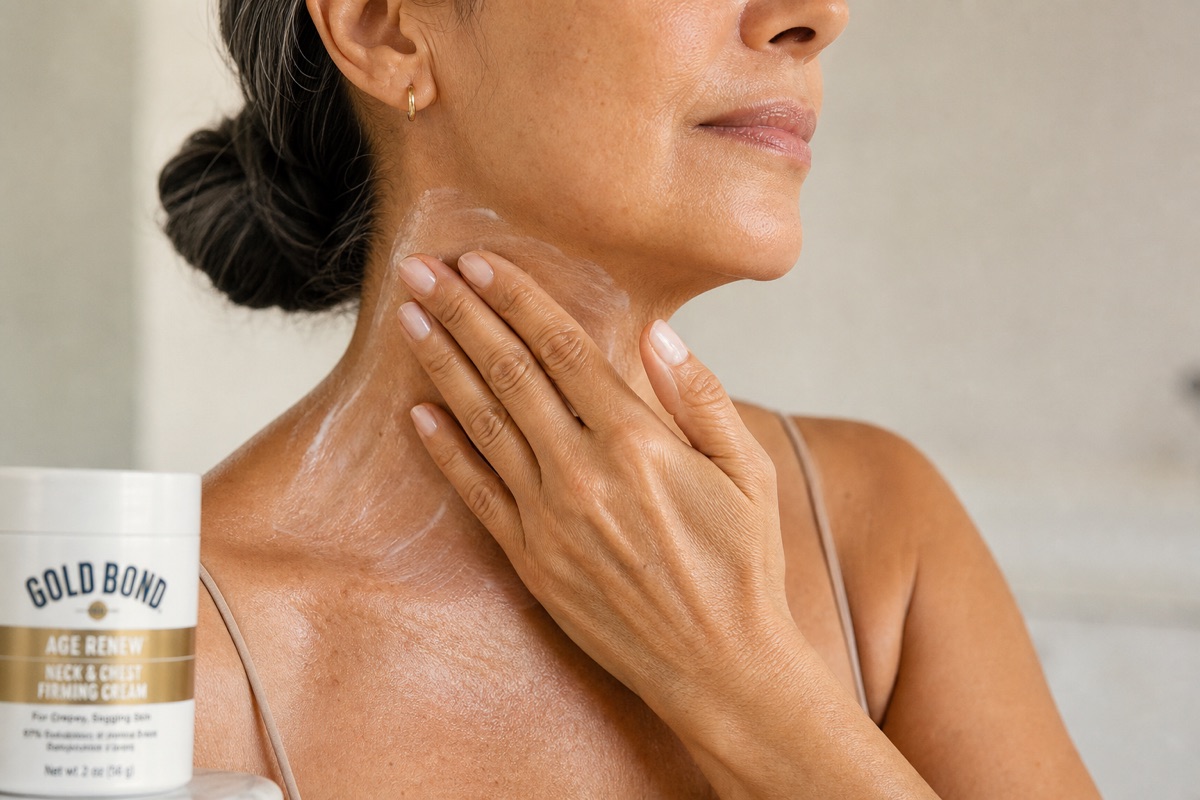
Gold Bond Age Renew Neck & Chest Firming Cream
$11.97
"Best budget neck-and-chest moisturizer lane: 4.4/5 across 19,158 Amazon ratings, unscented positioning, and a product-page user-test claim of up to 97% visibly firmer and smoother skin in 2 weeks."
What real Amazon buyers say
4.4★· 19,158 reviews"This cream REALLY makes a huge visible difference. In a few days of use my skin is firmer and tighter."
"The texture is rich without being greasy, so I don't feel like a slippery seal after applying it, and it actually stays put."

RoC
RoC Multi Correxion 5 in 1 Chest Neck Face Moisturizer SPF 30
$28.49
"Best daytime neck-cream lane because it combines moisturizer claims with broad-spectrum SPF 30; Amazon snapshot showed 4.5/5 across 6,744 ratings."
What real Amazon buyers say
4.5★· 6,744 reviews"SPF is a plus to reduce the products in my skincare routine."
"I love how lightweight and moisturizing this product is!"

StriVectin
StriVectin TL Advanced Tightening Neck Cream PLUS
$46.50
"Best prestige neck-specific cream lane: Amazon snapshot showed 4.3/5 across 853 ratings, and the product page cites 94% visible improvement in firmness, age spots, radiance, and youthful appearance in 4 weeks."
What real Amazon buyers say
4.3★· 853 reviews"I have been using this cream from Amazon literally, for years without fail."
"It goes on smooth, not greasy, and absorbs pretty quickly. My skin feels tighter and more hydrated, especially in the morning."

No7
No7 Restore & Renew Multi Action Serum for Face & Neck
$31.98
"Best serum-under-cream lane: Amazon snapshot showed 4.5/5 across 8,872 ratings, with peptide and hyaluronic-acid positioning for face and neck."
What you'll learn
- Neck creams can improve the look of dryness, crepey texture, and fine lines, but cosmetic claims should not be treated as surgical lifting claims.
- After 40, the highest-value neck routine is daily broad-spectrum SPF, a barrier-supportive cream, and slow introduction of actives such as peptides or retinoids.
- Do not scrub, acid-stack, or pull aggressively on the neck; irritation can make texture and horizontal lines look more obvious.
- Product choice should match the job: budget hydration, daytime SPF, richer peptide cream, or a serum layered under moisturizer.
- Judge neck-cream results over 4 to 12 weeks, not overnight, and escalate to dermatology care for laxity that cosmetics cannot realistically address.
Steps
-
1 Start with sunscreen every morning
Apply broad-spectrum SPF 30 or higher down the neck and onto the upper chest every morning. A neck cream without daytime UV protection cannot offset ongoing photoaging, and the AAD recommends SPF 30 or higher for exposed skin.
-
2 Use moisturizer before chasing stronger actives
Choose a comfortable cream or serum that improves dryness, texture, and barrier feel first. Humectants such as hyaluronic acid and glycerin can plump the look of fine lines temporarily, while emollients reduce the dry, papery finish that makes the neck look older.
-
3 Add one active category at a time
If your neck tolerates moisturizer and SPF, add peptides, niacinamide, or a low-frequency retinoid lane one at a time. Retinol evidence is stronger over months in PubMed literature, but the neck is more irritation-prone than the cheeks, so slow use beats aggressive use.
-
4 Apply upward without tugging
Use a small amount from collarbone to jawline with light pressure. Direction matters less than consistency and avoiding harsh rubbing; the practical goal is even coverage on the neck folds and chest, not a massage strong enough to redden skin.
-
5 Separate neck actives from peel nights
Do not combine a retinoid neck cream with glycolic pads, strong vitamin C, scrubs, or at-home peels on the same night. If the neck stings, flakes, or develops a rash, pause actives and return to bland moisturizer until skin is calm.
-
6 Reassess at 4, 8, and 12 weeks
Use 4 weeks to judge hydration and texture, 8 weeks to judge whether fine lines look softer, and 12 weeks to decide if the product deserves a repurchase. Deep laxity, platysmal bands, and major sagging usually require an in-office consultation rather than another jar.
Bottom line
Neck creams after 40 are most useful when you treat them as a consistent support step, not as a substitute for a procedure. The strongest everyday protocol is simple: sunscreen in the morning, a moisturizer or serum that keeps the neck comfortable, one active category at a time, and enough patience to judge results over weeks instead of days.
BeautySift did not test these products on a panel. We analyzed 35,627 Amazon ratings across Gold Bond, RoC, StriVectin, and No7 neck-focused products, Amazon customer review excerpts, FDA cosmetic anti-aging guidance, American Academy of Dermatology sunscreen guidance, PubMed retinoid literature, brand-published product-page claims, and INCI-level tolerability patterns. We may earn a commission from Amazon links, but affiliate status does not influence product selection or evidence weighting.
The realistic promise: neck creams can make dry, crepey, lined skin look smoother and more hydrated. Some formulas add peptides, niacinamide, retinoids, exfoliants, or SPF to support a firmer-looking surface. The unrealistic promise: that any jar can erase deep laxity, platysmal bands, or major sagging. The FDA’s wrinkle-treatment guidance is a useful guardrail here: cosmetics can improve appearance, but they are not approved to change skin structure like drugs.
Why the neck changes after 40
The neck is easy to neglect because most people build a face routine first. By the time the neck becomes a priority, the visible changes often overlap: horizontal lines from movement and posture, crepey texture from dryness and sun exposure, and laxity from collagen loss, genetics, weight change, and menopause-related dryness.
That mix is why one neck cream rarely solves everything. A rich moisturizer can make crepiness look better quickly because hydrated skin reflects light more evenly. A retinoid or peptide formula may help the look of fine lines over time. Daily sunscreen reduces ongoing UV damage, which is critical because the neck and upper chest are exposed in V-necks, scoop necks, workout tops, and Florida summer humidity as often as the face.
The PubMed evidence base is stronger for retinoids than for most dedicated neck creams. Kafi et al. studied 0.4% retinol in naturally aged skin for 24 weeks in a randomized, vehicle-controlled trial with 36 participants; that timeline is a reminder that meaningful cosmetic change is usually slow. A neck product that claims visible change in 1 to 4 weeks may be describing hydration, texture, radiance, or consumer perception, not permanent tightening.
Do: protect the neck every morning
If you do only one neck-specific thing after 40, bring sunscreen below the jaw. The AAD recommends broad-spectrum SPF 30 or higher for exposed skin, and the neck is exposed skin. This is where many otherwise careful routines fail: sunscreen stops at the chin, while the neck and chest continue to collect UV exposure.
A daytime product such as RoC Multi Correxion 5 in 1 Chest Neck Face Moisturizer SPF 30 fits this job because it combines a moisturizer format with SPF 30. Amazon’s US snapshot showed 4.5/5 across 6,744 ratings, and the product page describes visible improvements in wrinkles, crepiness, discoloration, elasticity, radiance, and hydration in 4 weeks. Those are brand-published claims, so we weight them below PubMed evidence, but the SPF format solves a real routine problem: fewer steps in the morning.
Do not rely on a night neck cream to do a daytime sunscreen job. If your chosen neck cream has no SPF, apply your regular facial sunscreen down the neck and onto the upper chest. Reapply when outdoors, sweating, swimming, or spending long periods near windows. The neck is not a special exception to photoprotection.
Don’t: expect lifting from moisturizer alone
A good moisturizer can make the neck look better. It can reduce the dry, crinkly finish that makes fine lines more visible. It can make makeup, sunscreen, or self-tanner sit more evenly. It can also make skin feel less tight during Midwest winter cold or Southwest dryness.
What it cannot do is lift a lax neck in the surgical sense. If a product page says firming, tightening, or lifting, read those words as appearance claims unless the source is a medical procedure or clinician-directed treatment. This distinction matters because women 35-55 are often marketed to with language that blurs hydration, collagen support, and true tissue repositioning.
Gold Bond Age Renew Neck & Chest Firming Cream is a practical budget example. Amazon’s US snapshot showed 4.4/5 across 19,158 ratings at $11.97, and the product page states that up to 97% had visibly firmer and smoother skin in 2 weeks in user testing. Its role in a routine is not replacing dermatology care; it is affordable daily hydration for neck and chest skin that looks crepey, dry, or slightly lax.
Do: match the product to the job
Use the product’s job description before you use the marketing headline. If your main issue is dry crepey texture, a budget neck-and-chest cream may be enough. If your morning routine is inconsistent, an SPF moisturizer may matter more than a richer night cream. If you already have a moisturizer you love, a serum can be layered under it. If you want a richer dedicated neck product, a prestige peptide cream can be reasonable if the price does not crowd out sunscreen.
No7 Restore & Renew Multi Action Serum for Face & Neck is the serum lane. Amazon’s US snapshot showed 4.5/5 across 8,872 ratings, and the page positions it around collagen peptides and hyaluronic acid. The product page also cites visible firming in 1 week and fine-line reduction in 2 weeks from a consumer study. Because that claim is brand-published and not a peer-reviewed trial, we treat it as directional product-page evidence, not a guarantee.
StriVectin TL Advanced Tightening Neck Cream PLUS is the richer neck-specific lane. Amazon’s US snapshot showed 4.3/5 across 853 ratings, and the product page states that 94% of participants saw visible improvements in firmness, age spots, radiance, and youthful appearance in 4 weeks. That is a stronger category-specific claim than a generic moisturizer claim, but it is still a cosmetic product-page claim. The practical question is whether the texture, price, and twice-daily use pattern fit your actual life.
Don’t: stack too many actives on thin neck skin
The neck often tolerates less than the face. A face that can handle retinol 4 nights weekly may have a neck that peels after 2 nights. A cheek that accepts glycolic acid may have a neck that turns itchy and red. After 40, when dryness is already more common, aggressive stacking can make lines look worse simply by inflaming the surface.
Avoid starting retinol, exfoliating acids, vitamin C, and a new fragranced neck cream in the same week. If you want a retinoid on the neck, use it 1 or 2 nights weekly at first and buffer with moisturizer. Keep glycolic, lactic, and salicylic acid products on separate nights. If the neck stings during application, feels hot, flakes, or develops a rash, pause the active and return to bland moisturizer.
Retinoid evidence is real but slow. Kafi et al.’s 24-week retinol study and Mukherjee et al.’s retinoid overview support retinoids as a better-studied anti-aging category than many trendy actives. That does not mean every neck should get a strong retinoid every night. Tolerability is part of efficacy because a product you abandon after 10 irritated days does not help the 12-week picture.
Do: apply consistently and gently
Application technique should be boring. Use enough product to cover the neck and upper chest in a thin, even layer. Spread from collarbone to jawline with light pressure, including the sides of the neck and the horizontal folds where sunscreen is often missed. The direction of application is less important than not dragging, scrubbing, or using a massage tool so aggressively that the skin reddens.
Morning routine: cleanse or rinse, apply a neck serum or moisturizer if using one, then sunscreen if the product does not already provide SPF. Night routine: cleanse, apply serum or active if scheduled, then moisturizer. On recovery nights, use moisturizer only. If you are using a retinoid, wait until skin is fully dry before applying it; damp skin can increase the chance of irritation.
Consistency also means using the product at the labeled cadence. Gold Bond’s product page recommends applying generously to clean neck and chest skin twice daily. StriVectin’s page positions its cream for day and night use. If twice daily is unrealistic, choose a product that fits once-daily use rather than buying an expensive jar that sits untouched.
Don’t: ignore the line between cosmetics and dermatology
A neck cream is a reasonable first step for dryness, crepey texture, and fine lines. It is not the right endpoint for every concern. If your main concern is significant sagging, prominent vertical bands, sudden skin changes, a new growth, persistent rash, or irritation that does not resolve when you stop products, a dermatologist or qualified clinician is the better next step.
This is not a failure of skincare. It is the category boundary. Cosmetics can moisturize, improve the look of texture, support the appearance of firmness, and help skin reflect light more evenly. In-office options may address deeper laxity or muscle bands differently. The most honest neck-cream routine includes that distinction from the beginning.
It also protects your budget. A $12 cream used daily with sunscreen may outperform a $100 cream used randomly without SPF. A $46 neck cream may be worth it if you like the texture and use it consistently. Neither purchase should be framed as an alternative to a procedure if your actual goal is structural lifting.
A simple 12-week neck-cream protocol
Weeks 1 and 2: make sunscreen automatic. Apply SPF 30 or higher to the neck and chest every morning. Add a basic neck cream or your regular moisturizer at night. Do not start retinol or acids yet if the neck is already dry or reactive.
Weeks 3 and 4: choose one product lane. Pick budget hydration, daytime SPF, serum-under-moisturizer, or richer peptide cream. Take a quick phone photo in consistent light if you want a practical baseline. Do not obsess over daily changes; hydration shifts with weather, sleep, and salt intake.
Weeks 5 through 8: if skin is calm, consider one active category. That could be a peptide serum, niacinamide formula, or a low-frequency retinoid. Keep recovery nights. If the neck becomes itchy, shiny, scaly, or sore, stop the active and return to moisturizer.
Weeks 9 through 12: decide whether the routine earns its place. Look for smoother texture, less dry crepiness, softer-looking fine lines, better sunscreen consistency, and fewer irritation episodes. If the main concern is still deep sagging, do not keep buying more neck creams in hope of a different physics problem.
Product lanes we would consider
Gold Bond Age Renew Neck & Chest Firming Cream is the value lane for a shopper who wants a dedicated neck-and-chest product without prestige pricing. Its 19,158-rating Amazon snapshot gives it the broadest user base in this guide, and its unscented, dermatologist-tested positioning makes sense for a body-area cream.
RoC Multi Correxion 5 in 1 Chest Neck Face Moisturizer SPF 30 is the daytime lane. The SPF 30 format is its main strength because neck aging prevention depends on UV behavior, not just night cream. It is best for someone who wants fewer morning steps and is willing to apply enough product down the neck and chest.
StriVectin TL Advanced Tightening Neck Cream PLUS is the neck-specific prestige lane. Its product-page claim that 94% of participants saw visible improvements in 4 weeks is notable, but the lower Amazon rating count than Gold Bond or No7 means we would frame it as a targeted splurge, not a universal default.
No7 Restore & Renew Multi Action Serum for Face & Neck is the serum lane. It suits someone who already has a moisturizer but wants a peptide and hyaluronic-acid step for face and neck. Because serums can feel lighter than creams, it may be easier to layer under sunscreen or a richer night moisturizer.