Top 10 Perimenopause Skincare Mistakes to Avoid in 2026
An evidence-weighted guide to the 10 most common perimenopause skincare mistakes, from over-exfoliation and retinol overuse to ignoring barrier repair.
Based on 8 sources including a 2021 PubMed menopause-skin review, Bissett 2005 on 5% niacinamide in 50 women, Kafi 2007 on 0.4% retinol over 24 weeks, AAD dry-skin guidance, and FDA sunscreen rules, the biggest perimenopause skincare mistake is treating newly reactive skin like resilient pre-40 skin: too much exfoliation, too many actives, and too little barrier support.
Editor's top Amazon picks for this guide
Real Amazon products that match this protocol. Affiliate links — your purchases support BeautySift.

Eucerin
Eucerin Original Healing Cream
$31.56
"A richer, fragrance-free emollient cream for very dry, sensitive, or compromised skin when the reset routine needs heavier barrier support."

Aveeno
Aveeno Calm + Restore Oat Gel Facial Moisturizer
$11.75
"A fragrance-free oat-and-feverfew gel cream for reactive facial skin when a heavier tub cream feels too occlusive."

La Roche-Posay
La Roche-Posay Toleriane Double Repair Face Moisturizer
$24.99
"A lighter facial moisturizer option when a tub cream feels too heavy under sunscreen or makeup."

Aquaphor
Aquaphor Healing Ointment Advanced Therapy
$17.59
"A targeted occlusive for cracked corners, lips, hands, and retinoid-dry patches rather than a full-face requirement."
What you'll learn
- The most common perimenopause skincare mistake is escalating exfoliants and retinoids when the skin barrier is asking for fewer irritants.
- Retinol, vitamin C, and acids can still have a place after 40, but frequency and recovery nights matter more than using every active daily.
- Barrier support should be the anchor: gentle cleansing, moisturizer, sunscreen, and targeted occlusion before optional treatment steps.
- Dryness, stinging, flushing, and new sensitivity are signals to simplify for 7 to 14 days rather than buying a stronger peel.
- Evidence-weighted product choices should prioritize tolerability, fragrance-free formulas, and routine consistency over aggressive claims.
Steps
-
1 Mistake 1: Exfoliating through dryness
Over-exfoliation is the fastest way to turn perimenopause dryness into stinging, flaking, and sunscreen avoidance. If skin feels shiny-tight, burns with bland moisturizer, or flakes around the nose and mouth, stop scrubs, peel pads, acid toners, and cleansing brushes for 7 to 14 days. Restart with only one exfoliating step weekly after the barrier feels calm.
-
2 Mistake 2: Starting retinol at nightly frequency
Retinol evidence is measured in months, not days. Kafi 2007 followed 0.4% retinol over 24 weeks in 36 participants, which supports patience and slow frequency. For dry or sensitive perimenopausal skin, begin at 1 to 2 nights weekly, apply to dry skin, and use moisturizer before or after. Persistent peeling is a tolerability failure, not proof that the product is working better.
-
3 Mistake 3: Treating vitamin C sting as normal
Traditional L-ascorbic acid formulas can be acidic; Pinnell 2001 reported absorption depended on pH below 3.5 in its model. That helps explain why some vitamin C serums feel sharp on compromised skin. If vitamin C stings for more than a few seconds, use it less often, apply over a buffer layer, switch formats, or pause until moisturizer no longer burns.
-
4 Mistake 4: Skipping moisturizer because skin feels congested
Perimenopause skin can feel both dry and breakout-prone. Skipping moisturizer often backfires because tight skin is less tolerant of sunscreen, retinoids, and brightening products. Choose a fragrance-free lotion or cream and apply a thin layer rather than jumping straight to heavy oils. The goal is comfort and sunscreen adherence, not a greasy finish.
-
5 Mistake 5: Using too many actives in one routine
A routine with glycolic acid, low-pH vitamin C, retinol, benzoyl peroxide, and a strong cleanser may look advanced but often underperforms because irritation interrupts consistency. Keep vitamin C and sunscreen in the morning if tolerated, retinol at night on scheduled nights, and exfoliating acids on separate nights. Change one variable at a time every 2 to 4 weeks.
-
6 Mistake 6: Ignoring sunscreen when focusing on fine lines
Fine-line routines lose value if sunscreen is inconsistent. FDA guidance emphasizes broad-spectrum sunscreen before sun exposure and reapplication at least every 2 hours outdoors. If sunscreen stings, fix the barrier and moisturizer step underneath rather than dropping SPF. For hyperpigmentation-prone skin, irritation plus UV exposure can make tone concerns harder to manage.
-
7 Mistake 7: Assuming all fragrance-free products are equally bland
Fragrance-free is a useful filter, but it is not the entire INCI analysis. During a reactive phase, also watch for strong acid blends, essential oils, high-alcohol textures, and botanical-heavy formulas that add many potential variables. A bland cream such as Vanicream or a ceramide cream such as CeraVe is easier to troubleshoot than a complex active mask.
-
8 Mistake 8: Using hyaluronic acid without sealing it
Hyaluronic acid can support hydration, and a 2024 randomized xerosis study in older skin supports topical hyaluronic acid as a hydration tool. But humectants work best when followed by a cream, especially in Southwest dryness, Midwest winter cold, or low indoor humidity. If a hyaluronic serum leaves skin tighter after 20 minutes, add cream sooner or skip the serum.
-
9 Mistake 9: Slugging the whole face when only patches are dry
Petrolatum and ointments are useful for cracked corners, chapped lips, retinoid-dry patches, and wind-exposed areas, but full-face occlusion is not necessary for everyone. If you are acne-prone or milia-prone, use ointment only where the skin is actually cracked or stinging. Barrier repair does not require turning every night routine into a heavy mask.
-
10 Mistake 10: Not recognizing when it is not a routine problem
A simple skincare reset can help mild tightness and product-related irritation, but sudden severe dryness, rash, swelling, bleeding, intense itching, scaling, or persistent flushing deserves medical input. Eczema, rosacea, allergic contact dermatitis, psoriasis, thyroid changes, and medication effects can overlap with cosmetic dryness. Do not keep adding actives to a pattern that needs diagnosis.
Bottom line
Perimenopause can change skin tolerance before it changes your product shelf. The routine that once handled daily acids, nightly retinol, foaming cleanser, and a light gel moisturizer may start producing tightness, flushing, flakes, or a burning sensation with products that used to feel normal.
BeautySift did not test these mistakes on a panel. We analyzed PubMed-indexed dermatology literature, AAD dry-skin guidance, FDA sunscreen guidance, INCI patterns, and verified Amazon product listings for representative routine products. We may earn a commission from Amazon links, but affiliate status does not influence the evidence weighting.
The 10 mistakes at a glance
- Exfoliating through dryness.
- Starting retinol at nightly frequency.
- Treating vitamin C sting as normal.
- Skipping moisturizer because skin feels congested.
- Using too many actives in one routine.
- Ignoring sunscreen when focusing on fine lines.
- Assuming all fragrance-free products are equally bland.
- Using hyaluronic acid without sealing it.
- Slugging the whole face when only patches are dry.
- Not recognizing when it is not a routine problem.
The shared pattern is barrier neglect. Strong actives are not automatically wrong after 40, but they need a routine architecture that leaves room for recovery.
A safer 14-day reset
Use this reset if your face is stinging, flaky, or newly reactive:
Morning:
- Rinse or use a gentle cleanser only if needed.
- Apply a fragrance-free moisturizer.
- Use broad-spectrum sunscreen.
Evening:
- Cleanse gently.
- Apply a bland or ceramide-focused moisturizer.
- Add a tiny amount of ointment only on cracked patches.
Pause acid toners, scrubs, peel pads, retinol, strong vitamin C, fragranced masks, and cleansing devices for 7 to 14 days. If skin becomes comfortable again, reintroduce only one active at a time.
How to reintroduce actives without repeating the cycle
Choose one priority for the next month. If fine lines are the priority, reintroduce retinol 1 to 2 nights weekly. If tone is the priority, reintroduce vitamin C in the morning 2 to 4 times weekly or use niacinamide as the gentler bridge step. If texture is the priority, use a low-frequency acid once weekly rather than restarting multiple exfoliants.
A practical rule: never increase strength and frequency in the same week. If you move retinol from 2 nights to 3 nights, do not also add an acid toner. If you switch to a stronger vitamin C formula, keep the rest of the routine steady.
Evidence-weighted product roles
Using the product-comparison framework, products for this guide were weighted toward tolerability, formulation logic, accessibility, and value. That is why the featured products are barrier-support examples rather than aggressive peel pads.
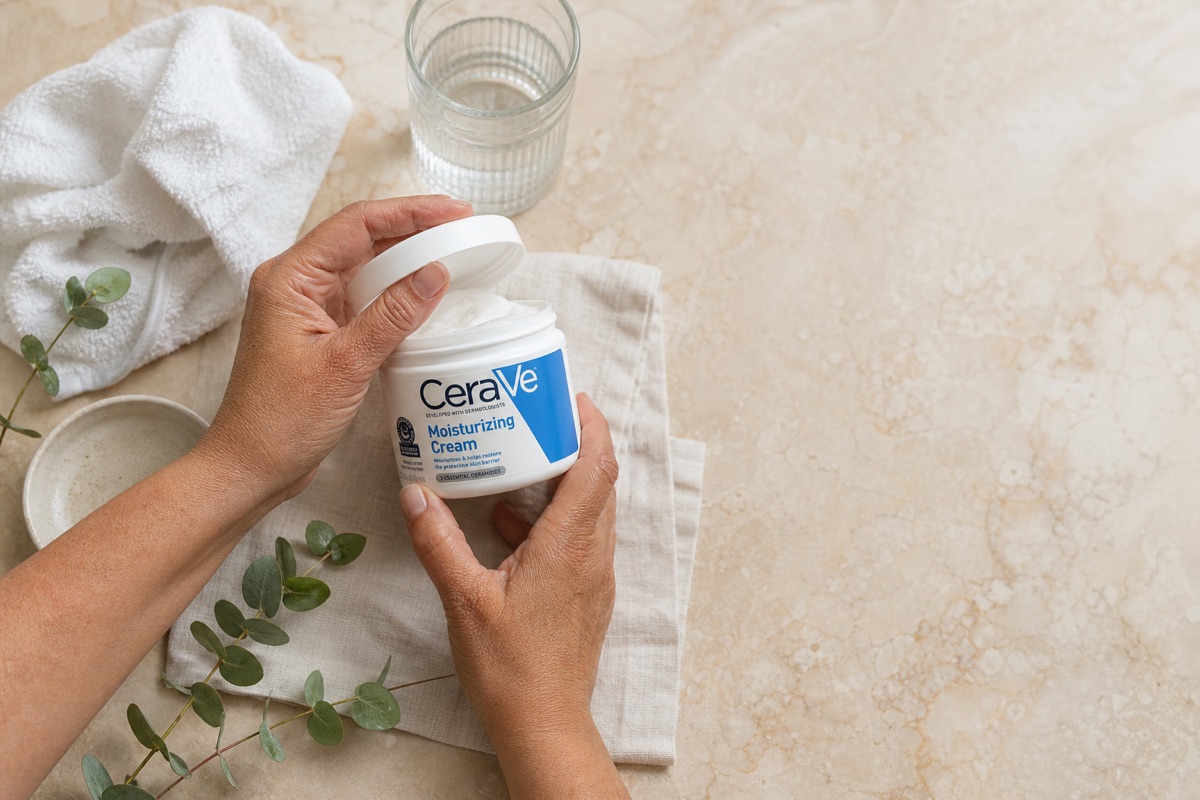
- CeraVe Moisturizing Cream: best fit when dryness needs ceramides plus occlusive support in one widely available cream.
- Vanicream Moisturizing Cream: best fit when skin reacts to fragrance, botanical extracts, or complex active blends.
- La Roche-Posay Toleriane Double Repair: best fit when facial skin needs a lighter moisturizer under sunscreen.
- Aquaphor Healing Ointment: best fit as a small patch seal over moisturizer on cracked areas.
When to get medical advice
Skincare mistakes can cause temporary irritation, but not every flare is a product problem. See a board-certified dermatologist or qualified clinician if dryness is painful, bleeding, widespread, suddenly severe, or paired with rash, swelling, intense itch, scaling, or persistent flushing. A simple routine can support comfort, but it should not delay evaluation for eczema, rosacea, allergic contact dermatitis, psoriasis, thyroid changes, or medication-related dryness.
Related BeautySift reading
Guide: Barrier repair routine for perimenopause dryness -> /guides/barrier-repair-routine-perimenopause-dryness-2026/
Guide: How to layer vitamin C, niacinamide, and retinol -> /guides/how-to-layer-vitamin-c-niacinamide-retinol-2026/
Guide: How to build a perimenopause skincare routine -> /guides/how-to-build-skincare-routine-perimenopause-starter-2026/