
When to Add Azelaic Acid Products to Your Routine
An evidence-led guide to adding azelaic acid for redness, blemish marks, and hormonal-looking breakouts without overloading mature skin.
We analyzed 10,227 Amazon ratings across 3 azelaic-acid products, 2 PubMed rosacea trials, a 2006 systematic review, FDA Finacea labeling, and brand INCI pages. Add azelaic acid when redness, blemish marks, or hormonal-looking breakouts persist after your cleanser, moisturizer, and SPF are stable.
Editor's top Amazon picks for this guide
Real Amazon products that match this protocol. Affiliate links — your purchases support BeautySift.

Anua
Anua Azelaic Acid 10 Hyaluron Redness Soothing Serum
$22
"Best hydrating redness-support lane: 10% azelaic acid positioning, hyaluronic acid support, and 4.5/5 across 4,317 visible Amazon ratings."
What real Amazon buyers say
4.5★· 4,317 reviews"I've been really impressed with this Anua Azelaic Acid serum - it's one of those products that feels gentle but still delivers noticeable results."
"This stuff transformed my skin in 5 days! I've had issues with random breakouts and redness ever since I turned 40"

Good Molecules
Good Molecules 10% Azelaic Acid Treatment
$11.99
"Best budget gel-cream lane: disclosed 10% azelaic acid treatment, fragrance-free positioning, and 4.5/5 across 749 visible Amazon ratings."
What real Amazon buyers say
4.5★· 749 reviews"The gel absorbed quickly into my skin and did not feel sticky or oily."
"I could tell a difference the very first time I used it as far as it’s brightening and smoothing effects."
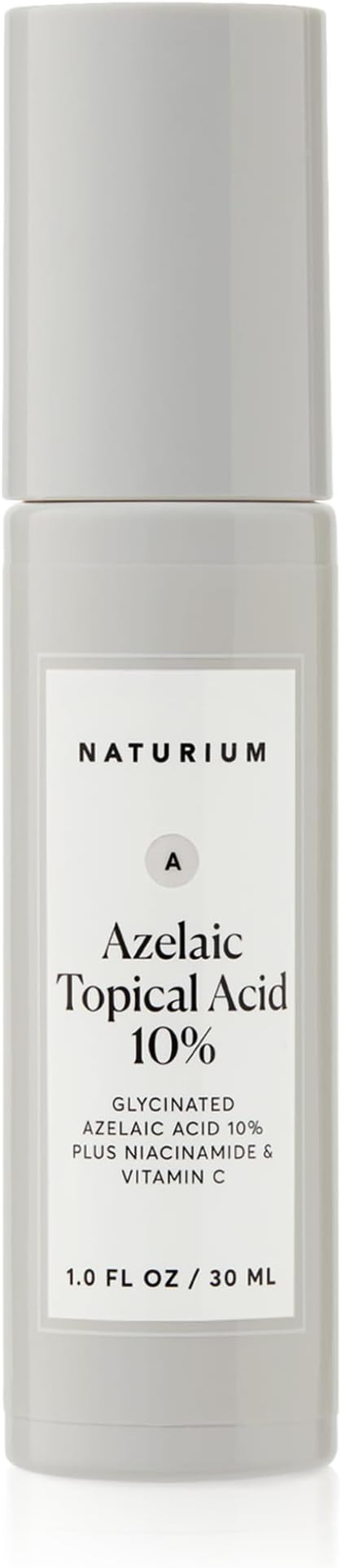
Naturium
Naturium Azelaic Topical Acid 10%
$19.88
"Best multi-active lane: 10% azelaic acid positioning with niacinamide and vitamin C derivatives, plus 4.4/5 across 5,161 visible Amazon ratings."
What real Amazon buyers say
4.4★· 5,161 reviews"It fades sun damaged skin and evens out overall tone. Goes on easily, and dries quickly."
"The texture is smooth and lightweight, almost like a light cream rather than a typical treatment"
What you'll learn
- Add azelaic acid after your basic cleanser, moisturizer, and daily sunscreen have been steady for at least 2 weeks.
- The strongest evidence is for prescription-strength 15% azelaic acid in rosacea trials, while most Amazon products here are cosmetic 10% routines.
- For women 35-55, azelaic acid is most useful when redness, blemish marks, or hormonal-looking jawline congestion overlap with sensitive skin.
- Start 2 to 3 nights weekly, keep retinoids and exfoliating acids separate at first, and judge tolerability before increasing frequency.
- Pause during a hot-flash flare, sunburn, rash, peel recovery, or any routine phase where moisturizer or sunscreen already stings.
Steps
-
1 Confirm that your baseline routine is calm
Use a gentle cleanser, moisturizer, and broad-spectrum sunscreen consistently before adding azelaic acid. If your face stings when you moisturize or sunscreen burns on contact, the timing is premature because azelaic acid can tingle even when the formula is reasonable.
-
2 Choose the role azelaic acid should play
Use azelaic acid as a redness-and-blemish-mark support step, not as an all-purpose cure. A 10% cosmetic serum can fit a maintenance routine, while persistent inflammatory rosacea or acne symptoms may need clinician guidance because FDA-labeled azelaic acid products sit in prescription-drug territory.
-
3 Start on alternate nights
Apply a thin layer 2 to 3 nights weekly after cleansing and before moisturizer, or after moisturizer if you are dry or reactive. Keep the first 2 weeks simple: no new retinol, peel pads, benzoyl peroxide, or vitamin C experiment on the same nights.
-
4 Watch for irritation versus useful tingling
Brief tingling can happen, but burning, swelling, welts, crusting, or lasting redness means pause the active and rebuild the barrier. Women dealing with hot flashes may need more recovery nights because heat and flushing can make otherwise tolerable actives feel sharper.
-
5 Reassess after 8 to 12 weeks
Do not judge azelaic acid after one weekend. PubMed rosacea trials and cosmetic review patterns point to multi-week routines. At 8 to 12 weeks, assess redness frequency, post-blemish marks, jawline congestion, texture, and whether the product fits your life without constant irritation.
Bottom line
Add azelaic acid when your routine is stable and your main complaints are redness, post-blemish marks, uneven-looking tone, or hormonal-looking congestion that does not justify another harsh exfoliant. For many US women 35-55, that moment arrives after the basics are already boring: a cleanser that does not leave tightness, a moisturizer that does not sting, and daily sunscreen that you actually wear.
BeautySift did not test azelaic acid products on a panel. We analyzed 10,227 visible Amazon ratings across three routine-fit products, verified-purchase review excerpts visible on Amazon product pages, PubMed-indexed rosacea evidence, FDA Finacea labeling, official brand product pages, Reddit routine discussions, and INCI-level tolerability logic. We may earn a commission from Amazon links, but affiliate status does not influence product selection or evidence weighting.
The practical answer: add azelaic acid after 2 calm weeks of cleanser, moisturizer, and SPF. Start 2 to 3 nights weekly, use moisturizer as a buffer if you flush easily, and keep retinol, peel pads, and benzoyl peroxide separate until you know your skin can handle the new variable.
Why azelaic acid is a smart middle lane after 35
Azelaic acid sits in a useful middle lane. It is not as cosmetically aggressive as a strong glycolic acid peel, and it is not a vitamin A derivative like retinol. It is often discussed for the overlap zone many women notice in their late 30s, 40s, and 50s: redness, clogged-looking texture, post-blemish marks, and uneven tone that seems more reactive than it did at 28.
The strongest evidence is not for every 10% serum on Amazon. It is for prescription-strength 15% azelaic acid in rosacea research. Thiboutot et al. reported two randomized, vehicle-controlled phase III studies in the Journal of the American Academy of Dermatology in 2003, with 329 patients in study 1 and 335 in study 2. In those studies, 15% azelaic acid gel reduced mean inflammatory lesion counts by 58% versus 40% for vehicle in study 1 and 51% versus 39% in study 2.
Another randomized trial by Elewski et al. in Archives of Dermatology compared 15% azelaic acid gel with 0.75% metronidazole gel across 251 patients over 15 weeks. The azelaic acid group had a 72.7% mean inflammatory lesion decrease versus 55.8% for metronidazole gel, according to the PubMed abstract. A 2006 systematic review by van Zuuren et al. included 5 randomized studies and 873 patients, which is why azelaic acid has more clinical weight than many trending redness ingredients.
For over-the-counter skincare, translate that evidence carefully. A cosmetic 10% serum is not the same thing as prescription Finacea. FDA labeling for Finacea addresses inflammatory papules and pustules of mild to moderate rosacea as a drug indication. BeautySift treats Amazon 10% products as routine-support options, not medical treatment substitutes.
Step 1: make cleanser, moisturizer, and SPF boring first
Before adding azelaic acid, give your skin 2 weeks with no new active. The baseline should be simple: cleanse or rinse, moisturize if needed, and apply broad-spectrum sunscreen every morning. If sunscreen burns, moisturizer stings, or your face feels hot after washing, azelaic acid is not the next move yet.
This matters more during perimenopause because skin can feel less predictable. Hot flashes, sleep disruption, indoor heating, and drier skin can all make a previously easy routine feel sharper. Azelaic acid can tingle even in well-formulated products. If you add it when your barrier is already annoyed, you may blame the ingredient when the real issue was timing.
A good starting signal is boring skin. Makeup sits normally. Moisturizer feels comfortable. Sunscreen does not sting. You can identify what changed because only one thing changes: the azelaic acid product.
Step 2: pick the right azelaic acid lane
Use product selection to match the job. Anua Azelaic Acid 10 Hyaluron Redness Soothing Serum is the hydrating starter lane in this guide. Amazon showed 4.5/5 across 4,317 visible ratings, and the brand positions it around 10% azelaic acid plus hyaluronic-acid support. That makes it a logical pick when redness and tightness overlap.
Good Molecules 10% Azelaic Acid Treatment is the budget treatment lane. Amazon showed 4.5/5 across 749 visible ratings and a $11.99 snapshot price. The format reads more like a gel-cream treatment than a watery serum, so it suits shoppers who want a low-cost azelaic acid step without committing to a prestige routine.
Naturium Azelaic Topical Acid 10% is the multi-active lane. Amazon showed 4.4/5 across 5,161 visible ratings. Naturium positions the formula with azelaic acid, niacinamide, and vitamin C derivatives, which can be appealing for uneven tone but may be too many actives for someone whose skin is actively flushing or stinging.
None of these is a universal winner. Product-comparison weighting favored Anua for hydration cues and rating volume, Good Molecules for value, and Naturium for multi-active convenience. If your skin is highly reactive, the best choice may be the plainest-feeling texture, not the product with the longest ingredient story.
Step 3: start with nights, not mornings
Azelaic acid can be used in morning or evening routines, but beginners usually learn more from night use. Night removes makeup layering, sunscreen pilling, and rushed morning timing from the equation. Apply a thin layer after cleansing and before moisturizer. If you are dry, flushed, or sensitive, reverse the order: moisturizer first, azelaic acid second, moisturizer again if needed.
Start 2 to 3 nights weekly for the first 2 weeks. Do not add retinol, peel pads, benzoyl peroxide, or a new vitamin C serum in the same window. That is the fastest way to lose track of what caused burning or bumps.
A simple schedule works: Monday azelaic acid, Tuesday recovery, Wednesday recovery or a familiar moisturizer-only night, Thursday azelaic acid, Friday recovery, weekend flexible. If your skin stays comfortable after 2 weeks, move toward every other night. Daily use is optional, not a badge of seriousness.
Step 4: use it around hormonal-looking breakouts carefully
Azelaic acid is appealing for hormonal-looking breakouts because it can support a routine without adding another harsh scrub or peel. For women 35-55, the common pattern is jawline congestion, redness around old blemishes, and marks that linger longer than they used to. That is a reasonable cosmetic use case for an over-the-counter 10% product.
It is not a reason to ignore painful cysts, sudden adult acne, or persistent rosacea-like flushing. If breakouts are deep, tender, scarring, or clustered with irregular cycles, hair growth changes, or medication changes, get clinician input. Azelaic acid can be part of a plan, but it should not delay medical care when symptoms are more than cosmetic.
Layering matters. If you already use a prescription retinoid, benzoyl peroxide, or topical antibiotic, ask your prescriber before adding another active. If you use an over-the-counter retinol, separate it from azelaic acid at first: retinol one night, azelaic acid another night, recovery nights between.
Step 5: adjust for hot flashes and redness flares
Hot flashes complicate active timing because heat can make skin feel prickly, itchy, or more reactive. On nights when your face is already flushed, skip azelaic acid and moisturize only. This is not failure; it is good routine management.
The same rule applies after sun exposure, waxing, threading, peels, lasers, microneedling, or a windy outdoor day. If your skin is inflamed, an active that is normally useful can feel unnecessarily harsh. Pause until your face is calm for several days.
For daytime redness, sunscreen matters as much as the active. Azelaic acid routines disappoint when UV exposure keeps dark marks and redness cycling. The PubMed trials cited here studied prescription gel under controlled conditions; your home routine has more variables, including sun, heat, cleansing habits, and product stacking.
Step 6: judge results at 8 to 12 weeks
Do not judge azelaic acid after 3 days unless your skin is clearly reacting badly. The clinical literature around 15% azelaic acid uses multi-week frames, including the 15-week Elewski et al. trial. Cosmetic 10% routines also need consistency before you can assess tone and mark fading.
At 8 weeks, ask better questions than “Did it work?” Did redness episodes feel less frequent? Are post-blemish marks fading more predictably? Did jawline congestion calm without peeling? Does the product pill under moisturizer or sunscreen? Did you need to pause constantly?
If the answer is positive, continue. If irritation is the main result, reduce frequency or stop. If you see no benefit after 12 weeks of consistent use, azelaic acid may not be your best active lane. Niacinamide, prescription options, or a dermatologist-guided rosacea or acne plan may make more sense.
A simple starter protocol
Week 0 is the baseline: cleanser, moisturizer, sunscreen, and no new actives. Take a plain daylight photo for your own reference if you want, but do not obsess over daily changes.
Weeks 1 and 2: use azelaic acid 2 nights weekly. Apply a thin layer. Moisturize generously. Keep acids, retinoids, and benzoyl peroxide off those nights.
Weeks 3 and 4: if skin is calm, increase to every third night. If you flush easily during hot flashes, keep the lower schedule. Comfort beats speed.
Weeks 5 through 12: decide whether every other night is useful. Keep daily sunscreen. Reassess at 8 to 12 weeks using redness, marks, congestion, and tolerability as the scorecard.