When to Add Ceramide Moisturizers to Your Routine
An evidence-led guide to adding ceramide moisturizers for dry, sensitive, perimenopausal skin without overloading your routine.
We analyzed 7,384 Amazon ratings across 3 ceramide-focused moisturizers, AAD dry-skin guidance, and a 2023 PubMed ceramide-moisturizer meta-analysis. Add a ceramide moisturizer when skin feels tight, stings with bland products, flakes, or needs recovery nights between retinoid, acid, or vitamin C use.
Editor's top Amazon picks for this guide
Real Amazon products that match this protocol. Affiliate links — your purchases support BeautySift.

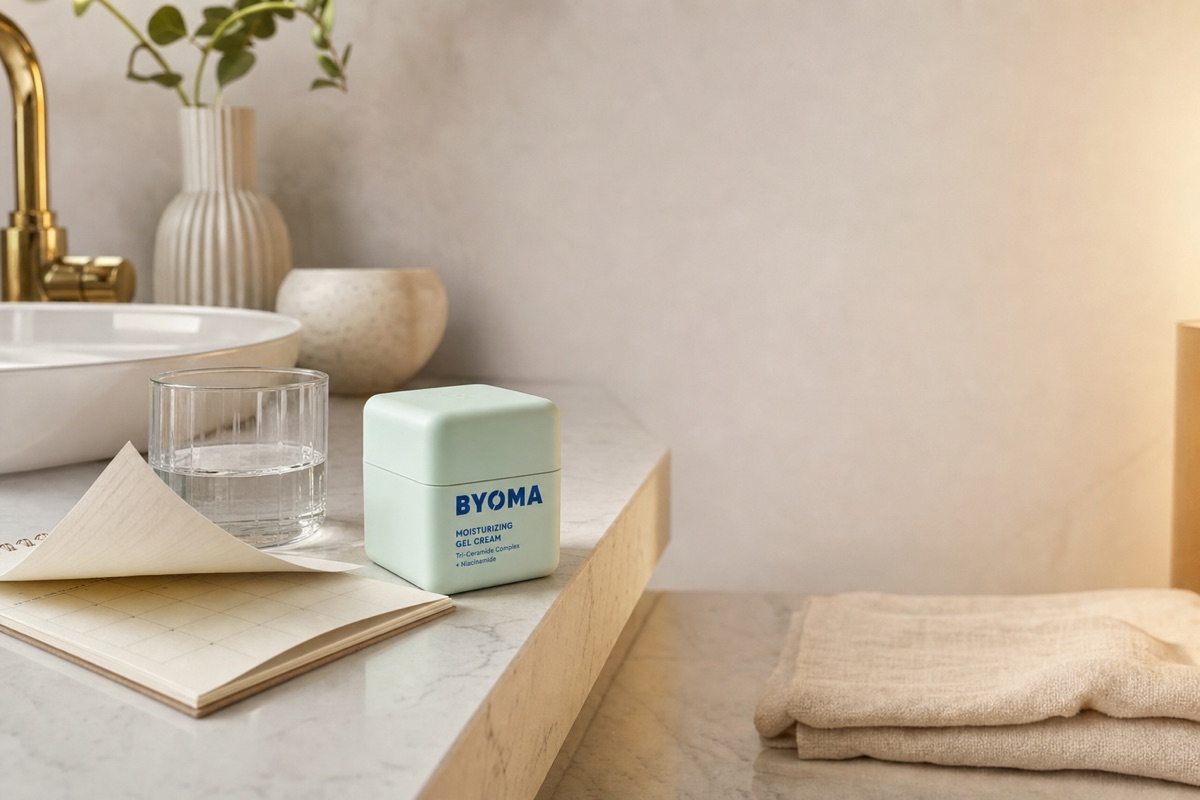
BYOMA
BYOMA Moisturizing Gel Cream
$14.99
"Best lightweight starting point for combination or daytime routines: 4.5/5 across 5,014 Amazon reviews and a gel-cream texture."
What real Amazon buyers say
4.5★· 5,014 reviews"What I love the most is how fast it absorbs into the skin without leaving any greasy feeling. My skin feels soft, fresh, and balanced right after applying it."

Naturium
Naturium Plant Ceramide Rich Moisture Cream
$24.99
"Richer cream for dry, mature skin or recovery nights, with 4.4/5 across 1,447 Amazon reviews."
What real Amazon buyers say
4.4★· 1,447 reviews"Non greasy for locking in other products at night. Good absorption. This is a great barrier repair product."

Paula's Choice
Paula's Choice Omega+ Complex Lightweight Face Moisturizer
$42
"Best silky moisturizer for dry and sensitive skin under daytime layers, with 4.5/5 across 923 Amazon reviews."
What real Amazon buyers say
4.5★· 923 reviews"I used a few different types and I like this one for the daytime it’s not greasy it seems to seal moisture."
What you'll learn
- Add a ceramide moisturizer when tightness, flaking, retinoid dryness, or stinging suggests your barrier needs support before more actives.
- Use it after water-based serums and before sunscreen in the morning, or after treatments and before optional ointment at night.
- For US women 35-55, ceramides are most useful as a consistency tool: they help routines tolerate sunscreen, retinoids, acids, and dry climates.
- Do not treat ceramides like an emergency cure for rash, swelling, bleeding, severe itch, or persistent flushing; those patterns deserve medical advice.
- Choose texture by skin feel: gel-cream for combination skin, richer cream for dry mature skin, and lightweight cream under sunscreen or makeup.
Steps
-
1 Check for barrier clues before buying another active
Look for tightness after cleansing, moisturizer that suddenly stings, flaking around the nose or mouth, retinoid peeling, windburn-style cheeks, or sunscreen that feels sharper than usual. Those signals point to barrier support, not a stronger exfoliant.
-
2 Place the ceramide moisturizer after serums
In the morning, apply it after hydrating or antioxidant serums and before broad-spectrum sunscreen. At night, use it after retinoid, acid, or peptide steps if tolerated, or make it the only leave-on product during a 7 to 14 day reset.
-
3 Use recovery nights between retinoid or acid nights
If you use retinoids, glycolic acid, lactic acid, salicylic acid, or low-pH vitamin C, schedule ceramide-only recovery nights. This keeps the routine consistent without turning every evening into an active-treatment night.
-
4 Choose texture by climate and skin feel
Gel-creams suit humid Southeast mornings and combination skin. Rich creams fit Midwest winter cold, indoor heat, or mature skin that flakes. Lightweight cream textures are easiest under sunscreen, makeup, and daytime routines.
-
5 Escalate only if the pattern is cosmetic dryness
Ceramide moisturizers can support dryness and comfort, but they are not a substitute for medical care. Sudden rash, swelling, bleeding, intense itch, scaling, or persistent flushing should be evaluated rather than covered with more products.
Bottom line
Add a ceramide moisturizer when your routine is losing tolerance: skin feels tight after cleansing, bland moisturizer stings, sunscreen burns, retinoid nights create flakes, or makeup catches on dry patches. For women 35-55, that pattern often appears when a once-reliable routine meets hormonal dryness, indoor heat, low humidity, or too many actives in the same week.
BeautySift did not test these moisturizers on a panel. We analyzed Amazon US review snapshots for BYOMA, Naturium, and Paula’s Choice; official brand positioning; AAD dry-skin guidance; INCI patterns; and PubMed-indexed skin-barrier literature. We may earn a commission from Amazon links, but affiliate status does not influence product selection or evidence weighting.
Skill level: beginner. The goal is not to build a complicated barrier-repair ritual. The goal is to know when your skin is asking for moisturizer support before you add another acid, retinoid, or brightening serum.
What ceramides do in plain English
Ceramides are lipid molecules found naturally in the outer skin barrier. In cosmetic moisturizers, they are used to support the barrier layer that helps skin hold water and tolerate daily stress. A ceramide moisturizer usually does not rely on ceramides alone. The better routine fit often comes from the whole formula: humectants to pull in water, emollients to soften, barrier lipids to support comfort, and sometimes occlusive ingredients to slow water loss.
That matters because dry, sensitive skin rarely needs only one thing. It may need less cleansing friction, fewer active nights, and a cream texture that makes sunscreen wearable the next morning. A 2023 PubMed systematic review and meta-analysis compared ceramide-containing moisturizers with other moisturizers in atopic dermatitis, which is a higher-need barrier context than ordinary cosmetic dryness. We do not translate that into a disease-treatment claim, but it supports why ceramides are reasonable to consider when barrier comfort is the routine problem.
The AAD’s dry-skin guidance also keeps the advice practical: use fragrance-free products, moisturize promptly, and choose cream or ointment formats when dryness is significant. That aligns with the way ceramide moisturizers fit a 35-55 routine: they are not glamour steps, but they often make the active steps easier to tolerate.
Add one when your skin gives these signals
The clearest time to add a ceramide moisturizer is when your existing routine starts causing friction. If your face feels tight 10 minutes after washing, your cleanser may be too stripping or your moisturizer too light. If a product that used to feel neutral now stings, your barrier may be irritated. If retinol creates flakes that last into the next morning, you may need recovery nights rather than a stronger exfoliant.
This is especially relevant around perimenopause and menopause, when many women report that skin feels drier, thinner, or more reactive than it did in their 30s. The practical move is not to diagnose the cause from your bathroom mirror. The practical move is to simplify the routine and add a barrier-supporting moisturizer before changing three other variables.
Use a ceramide moisturizer sooner if you live with Southwest dryness, Midwest winter cold, forced-air heat, or frequent air travel. Use it sooner if you are restarting retinol after a break, increasing exfoliation, or using a low-pH vitamin C formula that feels sharp on contact. Use it cautiously if your skin is suddenly swollen, hot, intensely itchy, scaly, bleeding, or rashy; those are not shopping cues.
Where it goes in a morning routine
In the morning, a ceramide moisturizer belongs after water-based serums and before sunscreen. A simple order is cleanser or rinse, hydrating serum if you use one, ceramide moisturizer, then broad-spectrum sunscreen. If vitamin C stings, place the moisturizer before sunscreen and use vitamin C less often until your skin feels calm again.
Do not use moisturizer as an excuse to skip SPF. If sunscreen burns, the issue may be the sunscreen formula, the skin barrier, or both. A ceramide moisturizer can make sunscreen more comfortable by reducing the tight, over-cleansed feeling underneath. If every sunscreen suddenly stings, pause optional actives and use a bland moisturizer routine for several days before judging the SPF category.
Texture matters. BYOMA Moisturizing Gel Cream is the lightest of the three featured products we analyzed: Amazon lists it at 4.5/5 across 5,014 reviews, and the gel-cream format is easier for combination skin or humid mornings. It makes sense when you want barrier support but dislike heavy creams under sunscreen or makeup.
Where it goes in an evening routine
At night, a ceramide moisturizer can be the support layer after treatments or the main event on recovery nights. If you use retinol, apply the moisturizer before retinol to buffer, after retinol to reduce tightness, or both if your skin is dry. If you use acids, keep acid nights separate from retinoid nights and follow with moisturizer rather than adding more exfoliating steps.
The phrase “recovery night” is useful because it makes barrier care feel intentional instead of like you skipped skincare. A recovery night can be cleanser, ceramide moisturizer, and nothing else. If your skin is very dry, you can add a tiny amount of ointment only to cracked corners, lip edges, or wind-chapped patches. Full-face slugging is optional, not mandatory.
Naturium Plant Ceramide Rich Moisture Cream fits this richer-night role better than a gel texture. Amazon lists it at 4.4/5 across 1,447 reviews, and recent verified review excerpts on the listing emphasize non-greasy night use and barrier-repair language. It is a better match when skin feels dry by bedtime or when retinoid nights need cushioning.
How to choose the right ceramide texture
Choose by the problem you can feel, not by the longest ingredient list. If skin is tight but also clog-prone, start with a lighter gel-cream. If skin flakes, feels rough, or looks crepey by late afternoon, choose a richer cream. If the main problem is sunscreen pilling or makeup separating, choose a lightweight cream and use less product, not more.
Paula’s Choice Omega+ Complex Lightweight Face Moisturizer is the priciest of the three featured options at the Amazon snapshot we reviewed, but it fills a different texture slot. Amazon lists it at 4.5/5 across 923 reviews, and the formula is positioned for dry and sensitive skin without fragrance. It is most useful when you want a smoother daytime moisturizer that still feels less dense than a heavy night cream.
Ingredient analysis should also include what is not there. For sensitive skin, fragrance-free positioning is helpful. So is avoiding a moisturizer that doubles as an exfoliating treatment when your skin is already reactive. Ceramides do not cancel out irritation from too many strong actives in the same formula.
A 14-day barrier reset protocol
If your skin is actively stinging, make the first 7 to 14 days boring. Morning: rinse or use a gentle cleanser, apply a ceramide moisturizer, then sunscreen. Evening: cleanse gently, apply the ceramide moisturizer, and stop there. Avoid scrubs, peel pads, acid toners, new vitamin C, new retinoids, and fragranced masks during the reset.
After the reset, reintroduce one active at a time. Retinoid first if fine lines and texture are the priority; vitamin C first if tone is the priority; acid exfoliation last if flakes are the priority. Keep at least two recovery nights weekly if your skin is dry or sensitive. If a product burns again, the answer is frequency reduction, not automatically buying a stronger moisturizer.
This protocol is cosmetic guidance, not treatment advice. If symptoms are severe, spreading, painful, crusted, swollen, or persistent, a dermatologist or qualified clinician is the better next step. Barrier-support products can help ordinary dryness, but they should not delay care for a medical skin condition.
Product roles we would match to the protocol
For a light morning layer: BYOMA Moisturizing Gel Cream. The strongest fit is combination skin, humid weather, and anyone who quits creams because they feel greasy. Its 5,014-review Amazon footprint makes it the highest-volume product in this specific set.
For dry night recovery: Naturium Plant Ceramide Rich Moisture Cream. The richer texture makes sense when your cheeks feel tight by bedtime, when retinoid use creates flakes, or when winter air dries skin faster than a gel can handle.
For a polished daytime cream: Paula’s Choice Omega+ Complex Lightweight Face Moisturizer. It is the higher-price option, but the role is specific: dry or sensitive skin that needs a moisturizer under sunscreen and makeup without a heavy finish.
You do not need all three. Pick one texture that solves the routine problem in front of you. If your skin changes by season, keep the lighter one for summer mornings and the richer one for winter nights.
Common mistakes to avoid
Do not layer a ceramide moisturizer over exfoliation every night and call that barrier repair. If the irritant load stays high, the moisturizer may only make the routine feel temporarily more comfortable. Reduce active frequency first.
Do not assume burning means a product is working. A bland moisturizer should not produce a lasting sting. A few seconds of sensation can happen on compromised skin, but repeated burning is a stop signal.
Do not replace sunscreen with barrier care. Ceramide moisturizers can make sunscreen more wearable, but they do not provide UV protection unless the product is explicitly an SPF, and none of the three featured products here are sunscreens.
Do not chase every ceramide product at once. Cleanser, serum, cream, and mask all labeled ceramide can still be too much if the formulas contain other irritants. One well-chosen moisturizer is usually the cleanest first move.
FAQ
Can ceramide moisturizer make acne worse?
Any moisturizer can feel too heavy for some acne-prone users. If you clog easily, start with a lighter gel-cream, apply a thin layer, and avoid adding face oil on top. If breakouts are inflamed or persistent, treat that as a separate acne question rather than only a dryness question.
Should I use hyaluronic acid before a ceramide moisturizer?
You can, but you do not have to. If a hyaluronic acid serum leaves your skin tighter after 20 minutes, skip it or seal it faster with moisturizer. A well-formulated ceramide cream may already include humectants.
Is a ceramide moisturizer enough for very dry skin?
Sometimes. If skin still feels dry, use a richer cream at night or add a tiny amount of ointment to cracked patches. If dryness is sudden, severe, itchy, or scaly, get medical advice instead of only escalating cosmetic products.