When to Add Perimenopause Moisturizers to Your Routine
An evidence-led guide for US women 35-55 on the right time to add perimenopause moisturizers for dryness, stinging, and sensitive skin.
We analyzed 62,726 Amazon ratings across 3 moisturizer roles, a 2021 PubMed menopause-skin review, AAD dry-skin guidance, and FDA cosmetic rules. Add a perimenopause moisturizer when tightness, stinging, flakes, or sunscreen discomfort appears for 7 days, before adding stronger actives.
Editor's top Amazon picks for this guide
Real Amazon products that match this protocol. Affiliate links — your purchases support BeautySift.

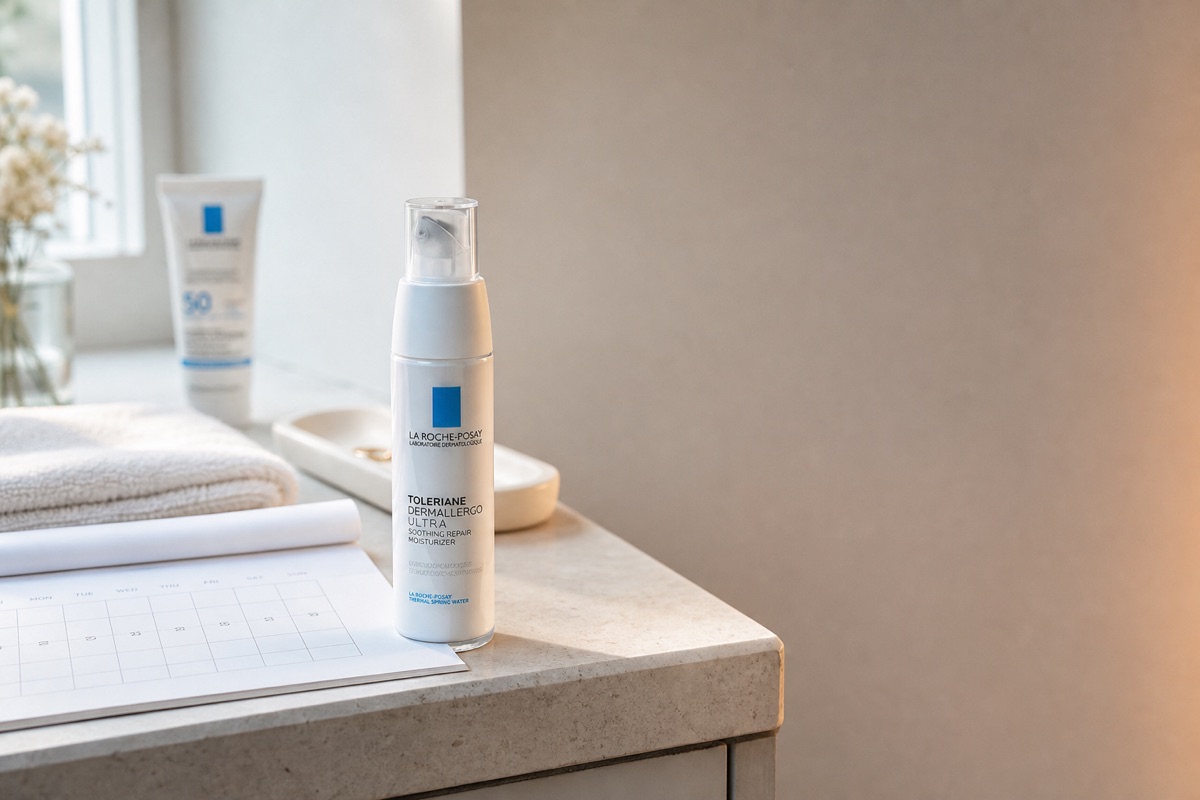
La Roche-Posay
Toleriane Dermallergo Ultra Soothing Repair Face Moisturizer
$31.97
"Best face-first pick for reactive perimenopause dryness; Amazon US shows 4.6/5 across 6,584 ratings and the brand positions it for sensitive skin."
What real Amazon buyers say
4.6★· 6,584 reviews"This moisturizer has been a game changer for my sensitive skin. It's lightweight but still deeply hydrating, and it absorbs quickly without leaving any greasy or heavy feeling."
"Hydrates without feeling heavy. Great for my super sensitive skin!"
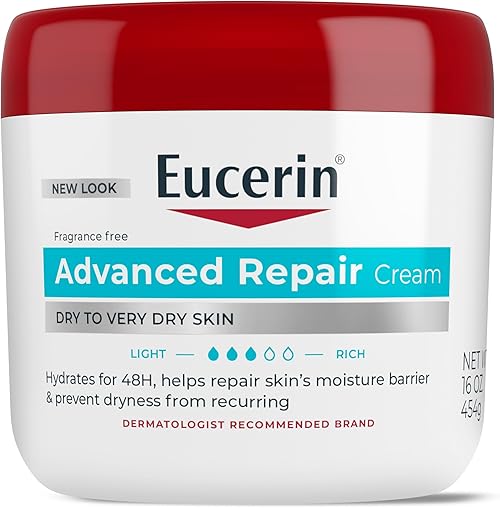
Eucerin
Advanced Repair Body Cream
$13.99
"Best value body option for persistent leg, hand, and arm dryness; Amazon US shows 4.7/5 across 51,128 ratings."
What real Amazon buyers say
4.7★· 51,128 reviews"I've been using Eucerin Advanced Repair Body Cream for my very dry skin, and it works great. It absorbs quickly, is not greasy, and keeps my skin moisturized all day."
"This lotion is fantastic for dry skin. It moisturizes without feeling greasy, and it absorbs well so you're not walking around feeling like you just dipped your arms in oil."

BYOMA
BYOMA Moisturizing Gel Cream
$14.99
"Best lightweight starting point for combination skin, humid mornings, or sunscreen layering; Amazon US shows 4.5/5 across 5,014 reviews."
What real Amazon buyers say
4.5★· 5,014 reviews"What I love the most is how fast it absorbs into the skin without leaving any greasy feeling. My skin feels soft, fresh, and balanced right after applying it."

Naturium
Naturium Plant Ceramide Rich Moisture Cream
$24.99
"Richer recovery-night option when a gel cream is not enough; Amazon US shows 4.4/5 across 1,447 reviews."
What you'll learn
- Add a perimenopause moisturizer when dryness, stinging, flaking, or sunscreen discomfort lasts about a week, not after months of irritation.
- Use a moisturizer before escalating retinoids, acids, vitamin C, or brightening serums because low tolerance can make good actives impossible to use.
- Match the product role to the signal: a face cream for reactive cheeks, a body cream for shins and hands, and a lighter gel-cream for daytime or humid weather.
- Give a simplified moisturizer routine 7 to 14 days before judging whether you need stronger actives or a different dermatologist-guided plan.
- Seek medical advice for swelling, bleeding, crusting, severe itch, spreading rash, or persistent flushing rather than trying to solve those patterns with shopping.
Steps
-
1 Step 1: Confirm the dryness pattern for 7 days
Track tightness after cleansing, stinging when bland moisturizer touches skin, flakes under sunscreen, rough shins, cracked hands, and cheeks that feel hot after actives. If at least two of those show up repeatedly for about 7 days, a moisturizer change is reasonable before adding another treatment serum.
-
2 Step 2: Pause escalation before buying stronger actives
Do not respond to perimenopause dryness by increasing retinoid strength, adding acid pads, or using strong vitamin C more often. For 7 to 14 days, reduce optional actives and make moisturizer the anchor step so you can see whether the problem is barrier tolerance rather than a lack of exfoliation.
-
3 Step 3: Put moisturizer in the right AM and PM positions
In the morning, apply moisturizer after any hydrating serum and before broad-spectrum sunscreen. At night, apply it after gentle cleansing and before any targeted occlusive on cracked patches. If you use retinoid, moisturizer can go before it as a buffer, after it as comfort, or on separate recovery nights.
-
4 Step 4: Choose the texture by location and climate
Use a lighter face moisturizer under sunscreen or in humid Southeast weather, a richer cream on body dryness or Midwest winter skin, and a gel-cream when heavy creams make you skip the step. Texture is not cosmetic fluff; it determines whether you repeat the routine every day.
-
5 Step 5: Reintroduce treatments one at a time
After 7 to 14 calmer days, reintroduce one active category at a time. Start retinoid 1 to 2 nights weekly if lines and texture are the goal, or use a gentler brightening step if uneven tone is the goal. Keep at least two moisturizer-only recovery nights if skin is dry or sensitive.
-
6 Step 6: Escalate to a clinician when symptoms look medical
Moisturizers are appropriate for cosmetic dryness, tightness, and routine tolerance. They are not a substitute for evaluation if skin is painful, swollen, bleeding, crusting, intensely itchy, spreading, or persistently flushed. Those patterns need medical judgment, not more product layers.
Quick answer
Add a perimenopause moisturizer when your skin starts acting less tolerant than it did a few months ago: tight after cleansing, stingy with bland products, flaky under sunscreen, rough on the shins or hands, or dry again by midday. We analyzed 62,726 Amazon ratings across three moisturizer roles, a 2021 PubMed review on estrogen-deficient skin, AAD dry-skin guidance, FDA cosmetic rules, and INCI patterns. The evidence-weighted answer is simple: add moisturizer support before you add stronger actives.
BeautySift did not test these moisturizers on a panel. We aggregate public evidence, user review snapshots, ingredient logic, and US availability. We may earn a commission from Amazon links, but affiliate status does not influence product selection, routine order, or evidence weighting.
Why the timing changes around 35-55
Many women notice that a routine that worked in their 30s starts feeling different in their 40s or early 50s. The cleanser feels sharper. Sunscreen that used to be fine starts stinging. Retinol leaves flakes that last longer than one morning. Makeup catches around the mouth or cheeks. That does not mean every dryness episode is hormonal, but it does mean the old routine may no longer have enough barrier support.
The 2021 PubMed review, “Menopause and the Skin: Old Favorites and New Innovations in Cosmeceuticals for Estrogen-Deficient Skin,” discusses skin changes associated with estrogen-deficient states. BeautySift treats that as context, not a diagnosis. For a US shopper standing in front of a moisturizer shelf, the practical question is not, “Is this definitely perimenopause?” It is, “Is my skin showing a repeated dryness or sensitivity pattern that a simple moisturizer step could support?”
Moisturizers work through a few well-described cosmetic mechanisms. Loden’s 2001 Clinics in Dermatology review describes humectant, emollient, and occlusive roles in barrier function. In plain English: some ingredients help attract water, some smooth roughness, and some slow water loss. A good perimenopause moisturizer routine usually needs all three jobs represented somewhere, even if one product does not do everything.
Add one when sunscreen or makeup becomes harder to wear
One of the most useful triggers is sunscreen discomfort. If sunscreen suddenly stings, pills, clings to flakes, or makes your cheeks feel tight, do not assume the answer is a more expensive SPF first. The AAD dry-skin guidance recommends fragrance-free products and prompt moisturizing; that logic also applies under sunscreen. A moisturizer can make the sunscreen layer more wearable by reducing the tight, over-cleansed feeling underneath.
Morning placement is straightforward: rinse or cleanse gently, apply a lightweight moisturizer while skin is slightly damp, then apply broad-spectrum sunscreen. If you use a hydrating serum, place it before moisturizer. If you use vitamin C and it stings, reduce frequency and keep the moisturizer-sunscreen base stable for a week before judging the whole routine.
For this role, a lighter formula often works better than a rich night cream. BYOMA Moisturizing Gel Cream is a representative lightweight option in our product set: Amazon US lists it at 4.5/5 across 5,014 reviews, and the review excerpt we captured specifically mentions fast absorption without a greasy feeling. That does not make it the only choice, but it explains the role: daytime hydration that does not make you skip sunscreen.
Add one when retinoids or acids start costing you recovery days
Retinoids, exfoliating acids, and low-pH vitamin C can be useful, but they are not free. If a retinoid night creates flakes for three days, or an acid toner makes moisturizer burn, your routine is asking for recovery space. A perimenopause moisturizer should be added before you increase strength or frequency.
A practical 14-day reset is boring on purpose. Morning: gentle rinse or cleanser, moisturizer, sunscreen. Evening: gentle cleanser, moisturizer, and no optional actives until stinging settles. If skin feels comfortable for 7 to 14 days, reintroduce one active at a time. For retinoid users, that might mean 1 to 2 nights weekly, with moisturizer before retinoid as a buffer or after retinoid as a comfort layer. Do not restart retinoid and acid exfoliation in the same week if your skin is sensitive.
This is where a face-first sensitive-skin moisturizer can earn its place. La Roche-Posay Toleriane Dermallergo Ultra has a 4.6/5 Amazon US snapshot across 6,584 ratings, and the brand’s US page positions it as fragrance-free and sensitive-skin oriented. In our evidence-weighted scoring logic, that combination gives it a stronger tolerability role than an active-heavy anti-aging cream when the immediate goal is to make your routine usable again.
Add a body moisturizer when dryness moves beyond the face
Perimenopause dryness is not always a cheek problem. Shins, forearms, hands, elbows, and the neck can become drier, especially in Midwest winter cold, Southwest dryness, frequent air travel, or homes with forced-air heat. If you are using a small face moisturizer on your whole body, you may be overpaying and under-moisturizing.
Body dryness usually benefits from a cream format, not a watery lotion you forget to reapply. Apply after showering while skin is still slightly damp, and keep showers warm rather than hot. AAD dry-skin guidance specifically emphasizes moisturizing promptly after washing, which is why timing matters as much as the product.
Eucerin Advanced Repair Body Cream is the value anchor in our set. Amazon US lists it at 4.7/5 across 51,128 ratings, the largest rating footprint among the three core products analyzed here. The captured review language repeatedly mentions absorption, non-greasy feel, and all-day moisture. Its role is not to replace a facial moisturizer under makeup; its role is to make large-area dryness easier to address consistently.
What kind of moisturizer to add first
Start with the job your skin is asking for. If your cheeks sting and sunscreen is uncomfortable, choose a fragrance-free face moisturizer with a low-irritant positioning. If your body feels rough after showering, choose a richer body cream. If you are combination-skinned or live in Florida summer humidity, choose a gel-cream or lighter lotion for mornings and save richer textures for night.
Ingredient lists can help, but do not turn them into a scavenger hunt. Look for a mix of humectants such as glycerin or hyaluronic acid, emollients that soften roughness, and barrier-support ingredients such as ceramides, dimethicone, petrolatum, shea butter, or similar occlusive agents. FDA OTC skin-protectant rules list ingredients such as petrolatum, dimethicone, glycerin, and colloidal oatmeal within regulatory contexts; for this guide, we use that as support for conservative wording around barrier support rather than treatment claims.
Avoid buying a moisturizer that quietly doubles as an exfoliating treatment if your skin is already reactive. Acids, retinoids, fragrant essential oils, and aggressive brightening blends can be useful in the right formula, but they complicate the first two weeks. The first perimenopause moisturizer should make the routine more predictable, not more stimulating.
A simple decision tree
Use this quick screen before you buy:
- If sunscreen stings or makeup clings to flakes, add a lightweight face moisturizer in the morning.
- If retinoid, acid, or vitamin C nights leave peeling for more than a day, add a recovery-night moisturizer and reduce active frequency.
- If shins, hands, or arms feel rough after showering, add a body cream and apply it within a few minutes of towel-drying.
- If moisturizer itself burns, simplify to a fragrance-free formula and pause optional actives for 7 to 14 days.
- If skin is swollen, bleeding, crusting, very itchy, painful, or rashy, treat that as a medical question rather than a product-selection problem.
The product-comparison lens favors tolerability first for this topic. A moisturizer with elegant actives but repeated irritation complaints is less useful than a plain cream that people actually repeat. For women 35-55, consistency often beats complexity because the same routine has to coexist with sunscreen, makeup, retinoids, sleep changes, climate shifts, and fluctuating dryness.
How to fit it into your current routine
If your routine is already simple, add the moisturizer without changing everything else. Use it twice daily for a week and watch three outcomes: less tightness after cleansing, better sunscreen comfort, and fewer flakes by morning. If all three improve, keep the moisturizer and avoid adding another active immediately.
If your routine is crowded, remove variables first. Pause scrubs, peel pads, strong acid toners, fragranced masks, and duplicate serums with overlapping claims. Keep sunscreen in the morning if you can tolerate it. Keep a gentle cleanser at night if you wear makeup or water-resistant SPF. Make moisturizer the stable step while you troubleshoot.
If you already use a rich moisturizer but still feel dry, check timing and amount before buying another jar. Apply while skin is slightly damp. Use enough for the full face and neck. On dry body areas, use a body-appropriate amount rather than a pea-sized facial dose. If the issue is still unresolved after 14 days of consistent use, the next step may be a formula change or clinician input, depending on severity.
Product roles that match the protocol
La Roche-Posay Toleriane Dermallergo Ultra fits the reactive-face role. It is the product we would consider first when cheeks sting, sunscreen is harder to tolerate, and fragrance-free positioning matters. Its Amazon US rating snapshot is 4.6/5 across 6,584 ratings, and the official US brand page frames it for sensitive skin.
Eucerin Advanced Repair Body Cream fits the large-area dryness role. Its 51,128-rating Amazon US footprint makes it the highest-volume product in this guide’s featured set, and the value per use is more realistic for legs, arms, and hands than stretching a small facial moisturizer everywhere.
BYOMA Moisturizing Gel Cream fits the lightweight morning role. The gel-cream texture makes sense for combination skin, humid weather, or anyone who dislikes a heavy cream under sunscreen. Naturium Plant Ceramide Rich Moisture Cream, included as a fourth featured product, fits the opposite slot: a richer night option when lightweight textures are not enough.
You do not need all four. Pick one role based on your strongest signal. The best perimenopause moisturizer addition is the one that solves the problem that is making you skip sunscreen, quit retinoid, or feel tight every day.
Common mistakes to avoid
Do not wait until your skin is in a full irritation cycle. If tightness, flakes, or stinging persist for about a week, add moisturizer support and reduce active pressure early. Waiting months often leads to buying stronger products for a barrier problem.
Do not assume price equals tolerance. A prestige cream can still contain fragrance or active blends that do not suit newly reactive skin. A drugstore body cream can be the better choice for shins and hands. Evidence-weighted selection looks at formula role, rating footprint, irritant load, and routine fit, not just the most polished packaging.
Do not use moisturizer to justify daily exfoliation. If the routine keeps causing irritation, the moisturizer may only mask the problem for a few hours. Reduce exfoliation frequency, separate retinoid and acid nights, and keep recovery nights on the calendar.
Do not treat severe symptoms as a beauty shopping issue. Sudden swelling, spreading rash, bleeding, crusting, intense itch, pain, or persistent flushing deserves medical advice. Cosmetic moisturizers can support dryness and comfort, but they should not delay care when symptoms look outside ordinary dryness.