When to Add Red Light Therapy Panels to Your Routine
An evidence-led guide to adding red and near-infrared light therapy panels for fine lines and mild firmness concerns without overbuilding your routine.
Based on Lee et al. 2007 (n=76), Wunsch & Matuschka 2014 (n=136), and FDA 510(k) device-language review, add a red/NIR panel after sunscreen, cleanser, and moisturizer are stable. Use clean, dry skin, follow the panel distance, and judge fine lines after 8-12 weeks, not one week.
Editor's top Amazon picks for this guide
Real Amazon products that match this protocol. Affiliate links — your purchases support BeautySift.

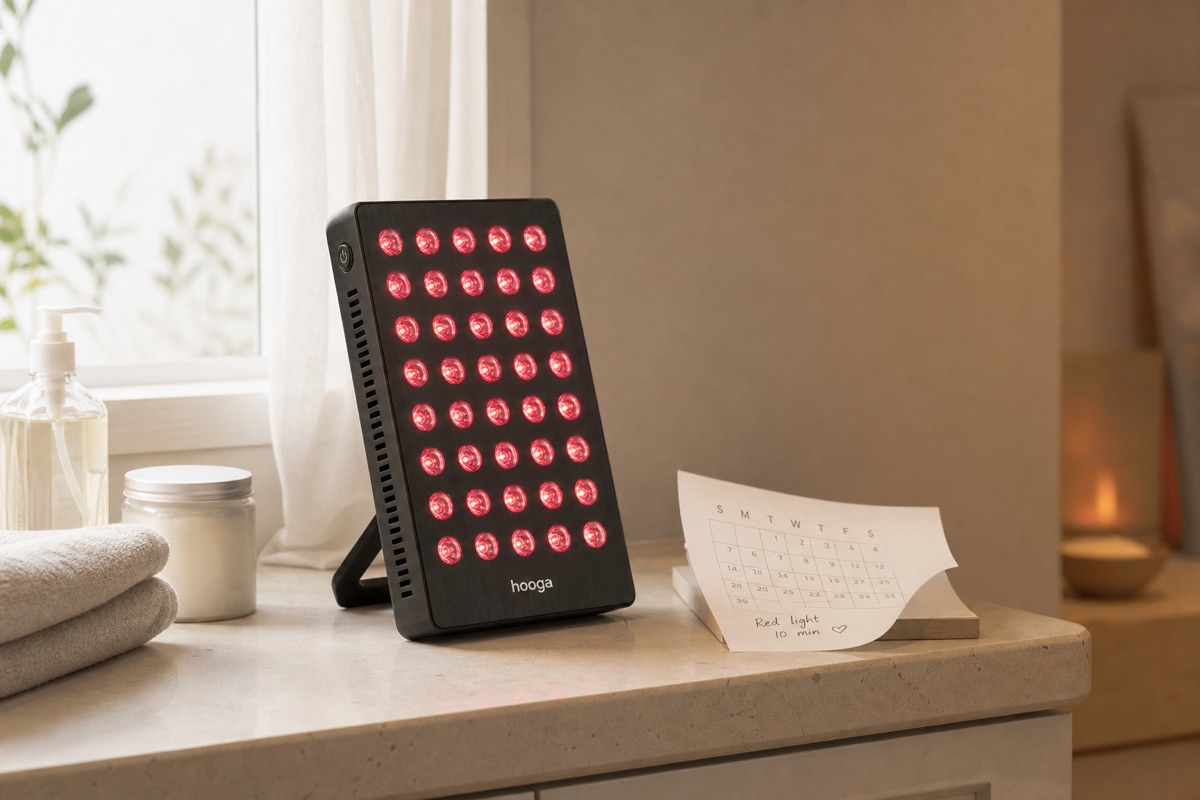
Hooga
Hooga HG300 Red Light Therapy Panel
"A compact red/NIR panel format that fits the beginner protocol better than a full-body wall panel."
What real Amazon buyers say
4.4★· 15,064 reviews"Very resourceful light and easy to setup and use"
"I have been enjoying the benefits of this red light and love the convenience of the stand!"

Bestqool
Bestqool Red Light Therapy Panel
"A red and near-infrared panel-style listing for shoppers who want face, neck, and chest coverage from one setup."
What real Amazon buyers say
4.6★· 1,082 reviews"So far, this red light therapy device looks amazing. It feels very high quality — sturdy, well-built, and stable."
"The build quality feels solid, and the dual-chip LED design gives off strong, even coverage."

Viconor
Viconor Red Light Therapy Panel Lamp
"A lamp-style panel option for users who need a small-footprint device and can follow fixed-distance directions."
What you'll learn
- Add a red or near-infrared panel only after the basics are steady: daily SPF, gentle cleansing, moisturizer, and a calm skin barrier.
- The strongest consumer expectation is gradual fine-line, texture, and skin-quality support; dramatic sagging reversal is not well supported.
- Use the panel on clean, dry skin before serums or creams, because heavy layers may interfere with light reaching the skin.
- A fair trial is usually 8-12 weeks of consistent sessions, not longer single sessions or daily overuse beyond the manual.
Steps
-
1 Confirm that your basic routine is already consistent
Do not buy a panel before the routine foundation is solved. For fine lines and firmness concerns, daily broad-spectrum SPF, a gentle cleanser, moisturizer, and a tolerated active such as a retinoid or vitamin C usually come first. Red and near-infrared light is best treated as an adjunct. If your barrier is flaky, stinging, sunburned, or irritated from acids or retinoids, stabilize the skin before adding another device.
-
2 Choose the right moment to add a panel
A panel makes the most sense when your concerns are early-to-moderate fine lines, rough texture, dullness, crepey neck or chest texture, or mild firmness changes. Lee et al. and Wunsch & Matuschka support repeated red/NIR exposure for skin rejuvenation markers, but the evidence does not justify facelift-style promises. If your main issue is jowling, deep folds, or significant laxity, consider the panel supportive skin care rather than the primary treatment.
-
3 Use clean, dry skin before products
Cleanse first, dry completely, and use the panel before oils, sunscreen, thick moisturizers, or reflective makeup. Morning or evening can both work; consistency matters more than the clock. If you use retinoid at night, a conservative order is cleanse, panel, moisturizer, then retinoid only if your skin already tolerates it. If irritation appears, separate retinoid and panel nights until the barrier is calm.
-
4 Follow distance and session time exactly
Panels vary more than masks because irradiance changes with distance. Follow the device manual for inches from skin, eye protection, and minutes per area. The clinical pattern is repeated exposure over weeks: Wunsch & Matuschka used 30 sessions, Lee et al. studied twice-weekly sessions over 4 weeks, and Russell et al. used 9 treatments over 5 weeks with later follow-up. More minutes at a closer distance is not automatically better.
-
5 Build an 8-12 week trial before judging results
Start with the manual's beginner schedule, commonly several sessions per week, then take same-lighting photos at baseline, week 4, week 8, and week 12. At week 4, judge tolerance and consistency. At weeks 8-12, look for fine-line softness, smoother texture, and a healthier look to the neck or chest. For sagging, use conservative language: support for the appearance of firmness, not lifting.
-
6 Pause for contraindications and warning signs
Ask a clinician before using a panel if you have a photosensitivity disorder, take photosensitizing medication, have active skin cancer or precancer in the area, are pregnant, have eye disease, or recently had laser, peel, microneedling, or injectable treatment. Stop if you notice burning, persistent redness, swelling, worsening pigmentation, headache, or eye discomfort. FDA clearance is device-specific and should not be read as a guarantee for every generic panel.
The best time to add a panel
Add a red light therapy panel when your routine is boring in the best way: sunscreen is daily, cleansing is gentle, moisturizer keeps your barrier calm, and any active ingredients are already tolerated. A panel should not be the first anti-aging purchase, and it should not replace sunscreen or a proven retinoid.
Affiliate disclosure: we may earn a commission from Amazon links. Commission does not affect evidence weighting, product inclusion, or safety guidance.
The evidence is most useful for fine lines, texture, skin feel, and collagen-related skin quality. Lee et al. studied 76 subjects with red and near-infrared LED settings, while Wunsch & Matuschka studied 136 volunteers across 30 sessions. Those studies support consistency over intensity.
What red and near-infrared panels can realistically do
Red and near-infrared light devices are usually discussed under photobiomodulation. The goal is not to peel, wound, or heat the skin aggressively. The better-supported cosmetic claim is gradual support for the appearance of smoother texture, fine-line softening, and healthier-looking skin quality.
Sagging is different. At-home panels may help the skin look a little firmer when used consistently, but they do not reposition tissue. If the concern is lower-face laxity, deep folds, or neck bands, a panel belongs in the supportive category, not the procedure-replacement category.
A conservative starter protocol
Use the device manual as the source of truth. If the manual gives a distance, session time, and eye-protection step, follow those exactly. As a general routine framework, cleanse, dry the skin, use the panel, then apply hydrating and treatment products afterward.
For an 8-12 week trial, track four things: whether you actually complete the sessions, whether your skin stays calm, whether same-lighting photos show texture changes, and whether the routine still feels worth the time. Longer single sessions should not be used to compensate for missed weeks.
Safety notes for US shoppers
Look for device-specific FDA clearance language when available, but read it carefully. FDA 510(k) clearance is not the same thing as FDA approval of every red light claim, and it is not transferable to unrelated panels.
Use eye protection if the manual recommends it, avoid staring into bright LEDs, and stop if the device causes burning, persistent redness, eye discomfort, headaches, or worsening pigmentation. Ask a clinician first if you take photosensitizing medication or have a photosensitive condition.
Related BeautySift reading
Guide: LED mask treatment schedule -> /guides/led-mask-treatment-schedule-2026
Guide: How to use a microcurrent device correctly -> /guides/how-to-use-microcurrent-device-correctly-2026
Guide: How to firm sagging skin without injectables -> /guides/how-to-firm-sagging-skin-without-injectables-2026