When to Add Retinol Serums to Your Routine
An evidence-led guide to adding retinol serums for fine lines after 35, with timing, frequency, buffering, and sensitive-skin guardrails.
We analyzed 18,454 Amazon ratings across 3 routine-fit products, AAD retinol guidance, FDA anti-aging cosmetic guidance, and 2 PubMed studies. Add a retinol serum when your barrier is calm, sunscreen is daily, and fine lines or texture are persistent enough to justify a slow night routine.
Editor's top Amazon picks for this guide
Real Amazon products that match this protocol. Affiliate links — your purchases support BeautySift.
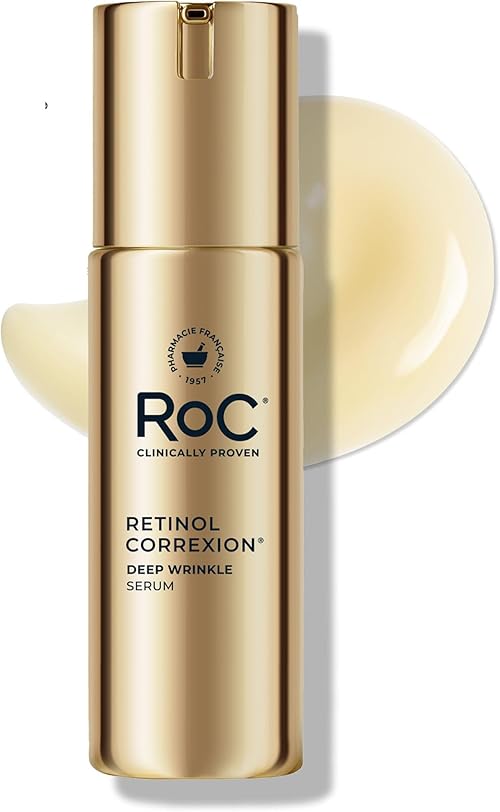
RoC
RoC Retinol Correxion Deep Wrinkle Retinol Face Serum
$21.97
"Best value retinol-serum example for a cautious night routine: 4.4/5 across 15,362 visible Amazon ratings in the source snapshot."
What real Amazon buyers say
4.4★· 15,362 reviews"The serum is heavenly. It has a very light floral scent, is non greasy, goes on very smooth and dries quickly."
"It made my face softer. It is lightweight and goes on easily. Very good quality."

The Ordinary
The Ordinary Retinal 0.2% Emulsion
$14.90
"Best step-up lane for users already comfortable with retinoids: 4.6/5 across 2,591 visible Amazon ratings and disclosed 0.2% retinal."
What real Amazon buyers say
4.6★· 2,591 reviews"Everything is great and its always reliable. And affordable!"

Herbivore
Herbivore Bakuchiol Retinol Alternative Face Serum
$47.60
"Best delay-retinol lane for reactive skin: 4.5/5 across 501 visible Amazon ratings and clear retinol-alternative positioning."
What real Amazon buyers say
4.5★· 501 reviews"I like this product for my face. I usually use it at night after washing my face before I go to sleep."
"A drop or two will cover, lasts a long time. Moisturizing, lightweight, works on wrinkles."
What you'll learn
- Add retinol only after your cleanser, moisturizer, and daily broad-spectrum sunscreen are boringly consistent for at least 2 weeks.
- Start at night 1 to 2 times weekly, use a pea-sized amount for the full face, and increase frequency only when skin is not stinging or peeling.
- For women 35-55, retinol is most useful when fine lines, uneven texture, or photoaging are priorities and the skin barrier is already calm.
- Do not add retinol during pregnancy or nursing without clinician guidance, during a rash, after a peel, or while your face is already irritated.
- Buffering with moisturizer and separating retinol from exfoliating acids reduces the chance that a good active becomes an abandoned routine.
Steps
-
1 Stabilize sunscreen and moisturizer first
Use a gentle cleanser, a moisturizer that does not sting, and broad-spectrum sunscreen every morning before adding retinol. If sunscreen is inconsistent or moisturizer burns, retinol timing is premature because irritation and UV exposure will make the routine harder to sustain.
-
2 Choose your starting lane
Pick a lower-risk role, not the strongest label. A mass-market retinol serum can suit value-focused users, a low-step retinal product fits users already comfortable with retinoids, and a bakuchiol alternative fits people who need to delay retinol because their skin is reactive.
-
3 Patch test and start with 1 to 2 nights weekly
Apply a small amount near the jaw for several nights before using it all over. Once you begin, use a pea-sized amount on dry skin at night, avoid eyelids and lip corners, and keep the first 2 weeks to 1 or 2 applications weekly.
-
4 Buffer instead of pushing through irritation
Use moisturizer before retinol, after retinol, or both if your skin is dry or sensitive. Persistent burning, scaling, swelling, or rash is not a normal progress signal; reduce frequency, pause actives, and get medical advice if symptoms are severe or prolonged.
-
5 Review results at 8 to 12 weeks, not 8 days
Retinol routines are slow. PubMed retinol studies and editorial guidance usually discuss multi-week to multi-month timelines, so judge consistency, tolerability, and sunscreen adherence before escalating strength.
Bottom line
Add a retinol serum when your routine is already stable, not when your skin is already frustrated. For most US women 35-55, the right moment is after you have a cleanser that does not leave tightness, a moisturizer that does not sting, and daily broad-spectrum sunscreen you actually wear. Then retinol becomes a planned night active for fine lines and texture, not a rescue product for every visible change after 40.
BeautySift did not test retinol serums on a panel. We analyzed 18,454 Amazon ratings across three routine-fit products, Amazon review excerpts captured in prior BeautySift source work, American Academy of Dermatology retinol guidance, FDA anti-aging cosmetic guidance, Allure and Byrdie dermatologist-informed editorial coverage, and PubMed retinoid literature. We may earn a commission from Amazon links, but affiliate status does not influence product selection or evidence weighting.
The practical answer: add retinol after 2 calm weeks of moisturizer and sunscreen, start with 1 to 2 nights weekly, use a pea-sized amount on dry skin, and keep exfoliating acids on separate nights. If your face is already peeling, burning, rashy, sunburned, newly waxed, or post-procedure, wait.
Why retinol timing matters after 35
Retinol is not a moisturizer with better marketing. It is a vitamin A derivative used in cosmetics to support smoother-looking texture, fine-line softening, and more even-looking tone over time. The evidence base is stronger than most cosmetic actives, but the irritation trade-off is real. Kafi et al. reported improvement in naturally aged skin in a 24-week randomized 0.4% retinol study in Arch Dermatol; that is a multi-month timeline, not a weekend glow promise.
The FDA’s consumer guidance on wrinkle treatments is a useful guardrail: cosmetic products may change the appearance of skin, but they are not approved to alter skin structure like drugs. That matters for expectations. Retinol can be a smart cosmetic step, but it should not be described as a treatment for a medical skin condition or as a substitute for prescription retinoids when a clinician recommends one.
Women in their late 30s, 40s, and 50s often add retinol when fine lines around the eyes, mouth, forehead, or neck become more persistent in daylight. That is a reasonable trigger if the skin barrier is calm. It is a poor trigger if your routine is already overloaded with acid toners, peel pads, vitamin C, benzoyl peroxide, scrubs, and fragranced masks.
Step 1: make the routine boring first
Before retinol, your morning should be predictable: cleanse or rinse, moisturize if needed, and apply sunscreen. The AAD’s retinol education emphasizes gradual use and sun protection, and that is not a cosmetic technicality. Retinol routines are harder to tolerate when UV exposure, barrier dryness, and over-cleansing are already creating inflammation signals.
A simple 2-week baseline helps you separate cause and effect. If your skin stings during those 2 weeks, retinol is not the next step. Adjust cleanser, moisturizer, or sunscreen first. If your skin feels calm and makeup sits normally, you have a better starting point.
This is especially important for sensitive skin. Sensitive does not always mean allergic; sometimes it means your skin objects to too many variables at once. A low-risk retinol launch is boring on purpose: one active, one schedule, one moisturizer backup, and no new exfoliant in the same week.
Step 2: pick the right starting lane
Use the product category as a lane, not a personality test. A value retinol serum such as RoC Retinol Correxion Deep Wrinkle Retinol Face Serum makes sense if you want a familiar mass-market retinol step and can tolerate a classic serum texture. Amazon’s US snapshot for RoC showed 4.4/5 across 15,362 ratings, which gives it the largest review base among the three products featured here.
A step-up retinal option such as The Ordinary Retinal 0.2% Emulsion is a different lane. The Ordinary’s Amazon snapshot showed 4.6/5 across 2,591 visible ratings and disclosed 0.2% retinal. Retinaldehyde sits closer to retinoic acid in the conversion pathway than retinol, so we would not treat it as the gentlest beginner default for reactive skin.
A retinol alternative such as Herbivore Bakuchiol Retinol Alternative Face Serum belongs in a third lane: people who want a night serum ritual but know retinol is poorly timed right now. Amazon’s source snapshot showed 4.5/5 across 501 ratings. PubMed evidence for bakuchiol is more limited than retinol, but Dhaliwal et al. reported comparable wrinkle and hyperpigmentation improvement versus retinol over 12 weeks, with more scaling and stinging in the retinol group. That makes bakuchiol a reasonable delay option, not proof that every shopper should skip retinol forever.
Step 3: start with frequency, not strength
The biggest beginner mistake is treating retinol like a nightly moisturizer. Start 1 to 2 nights weekly for the first 2 weeks. Apply it to clean, fully dry skin. Use a pea-sized amount for the entire face, avoiding eyelids, nostril creases, and lip corners unless the product is explicitly designed for those areas.
If skin is dry or sensitive, use the sandwich method: moisturizer, retinol, then moisturizer again. This does not make the active pointless. It makes the routine more sustainable. The goal is not to feel retinol working; the goal is to keep using it without triggering a cycle of burning, peeling, stopping, and restarting.
After 2 calm weeks, move to every third night. After another 2 to 4 calm weeks, consider every other night. Many people never need nightly retinol, especially if they also use vitamin C, acids, benzoyl peroxide, or prescription treatments. A consistent every-other-night routine can be more useful than an aggressive nightly start that collapses after 10 days.
Step 4: separate retinol from exfoliating acids
Do not add retinol on the same week you add glycolic acid pads, lactic acid serum, salicylic acid toner, or at-home peels. These categories can all have a place, but stacking them is how a promising routine turns into a barrier problem.
For a mature sensitive-skin routine, assign jobs by night. Retinol nights are for vitamin A derivatives. Recovery nights are for moisturizer only. Acid nights, if you use them, should be separate and less frequent than marketing copy suggests. If you are already using a prescription retinoid, do not add an over-the-counter retinol serum on top without clinician guidance.
A simple weekly template works well: Monday retinol, Tuesday recovery, Wednesday recovery or acid if you tolerate it, Thursday retinol, Friday recovery, weekend flexible. Adjust downward if the weather is dry, if you are traveling, or if Midwest winter indoor heat makes your moisturizer feel inadequate.
Step 5: know when to wait
Wait on retinol if your skin is sunburned, wind-chapped, peeling from a peel, newly waxed, threaded, lasered, or microneedled. Wait if your cleanser burns. Wait if your moisturizer burns. Wait if you have a rash, swelling, crusting, bleeding, or persistent flushing. Those are not signs that you need a stronger active.
Also ask a clinician if you are pregnant, nursing, trying to conceive, or using prescription acne, rosacea, eczema, or pigment medication. Many shoppers avoid retinoids during pregnancy and nursing, and personal medical guidance matters more than any beauty article.
If your concern is only mild dryness, retinol may still be possible with buffering and fewer nights. If your concern is true sensitivity with repeated burning, a retinol alternative or a longer barrier reset is the better choice. The Herbivore bakuchiol option in the featured products is included for that pause-and-reassess role, not because it has the same depth of evidence as retinol.
What to expect at 2, 8, and 24 weeks
At 2 weeks, success looks boring: no persistent stinging, no sheets of peeling, no new rash, and no dread before application. You may see no visible fine-line change yet. That is normal.
At 8 to 12 weeks, some users begin to notice smoother texture, more even makeup application, or less dullness. Keep the claim modest. User reviews can capture satisfaction, but fine-line change is hard to judge from anecdotes because sunscreen, moisturizer, lighting, and seasonal humidity all affect how skin looks.
At 24 weeks, PubMed evidence becomes more relevant. The Kafi et al. 2007 retinol study used a 24-week endpoint in naturally aged skin. That does not mean your over-the-counter serum will reproduce a study result exactly, but it does explain why retinol deserves patience. If a product is tolerable and sunscreen is consistent, give it a realistic runway before changing strength.
Product roles in this protocol
RoC Retinol Correxion Deep Wrinkle Retinol Face Serum is the value retinol lane. It has the largest Amazon rating sample in this article at 15,362 ratings, and user excerpts in our source file emphasize lightweight application and softness. Skip it if fragrance or a classic retinol-serum texture tends to bother you.
The Ordinary Retinal 0.2% Emulsion is the step-up lane. It is inexpensive in the captured Amazon snapshot and clearly names 0.2% retinal, but that clarity cuts both ways. It helps experienced users choose intentionally; it also means a very sensitive beginner should not assume low price equals low irritation risk.
Herbivore Bakuchiol Retinol Alternative Face Serum is the wait-on-retinol lane. It is useful when your barrier is too reactive for retinol or when you want a night serum while pregnancy, nursing, medication, or clinician guidance puts retinoids off the table. The evidence base is thinner than retinol’s, so we would not position it as the strongest wrinkle option.
You do not need all three. Pick one lane, keep the rest of the routine steady, and judge the protocol rather than chasing every vitamin A derivative at once.
Common mistakes to avoid
Do not start with daily use. Do not apply more than a pea-sized amount because you are impatient. Do not put retinol on damp skin if you are sensitive; damp skin can increase penetration and sting. Do not layer retinol with exfoliating acids because you saw both in a routine video.
Do not use retinol as a sunscreen substitute. It does not protect skin from UV exposure, and the AAD guidance explicitly pairs retinol routines with sun protection. If you are not willing to wear sunscreen most mornings, retinol is poorly timed for a fine-line routine.
Do not interpret burning as proof the product is working. Mild dryness can happen during adjustment. Persistent burning, swelling, rash, or painful peeling is a stop signal. Pause, simplify, and get qualified medical advice when symptoms are severe or do not resolve.
FAQ
Should retinol go before or after moisturizer?
If your skin is resilient, retinol can go before moisturizer. If your skin is dry, sensitive, or new to retinol, put moisturizer first, then retinol, then another light layer of moisturizer. The buffered method is often the better starting point for women 35-55 because hormonal dryness and seasonal climate shifts can make irritation more likely.
Can I use retinol with vitamin C?
Yes, but separate them and introduce slowly. Use vitamin C in the morning and retinol at night only after each product is tolerated on its own. If vitamin C stings or retinol causes peeling, pause one active instead of adding more moisturizer to force both.
How long should I wait before increasing retinol use?
Wait at least 2 calm weeks before increasing frequency. Move from 1 to 2 nights weekly, then every third night, then every other night if your skin stays comfortable. Daily use is optional, not a requirement.
Is retinol safe for sensitive skin?
It can be, but timing and frequency matter. Sensitive skin should start with fewer nights, buffering, and no acid stacking. If you have eczema, rosacea, persistent flushing, or prescription treatments in the routine, ask a clinician before adding retinol.
Should I stop retinol if my skin peels?
Mild flaking can happen, but painful peeling, burning, swelling, or rash is a reason to stop and simplify. Use moisturizer and sunscreen, avoid exfoliation, and restart only when the skin is calm. If symptoms are severe or persistent, seek medical guidance.