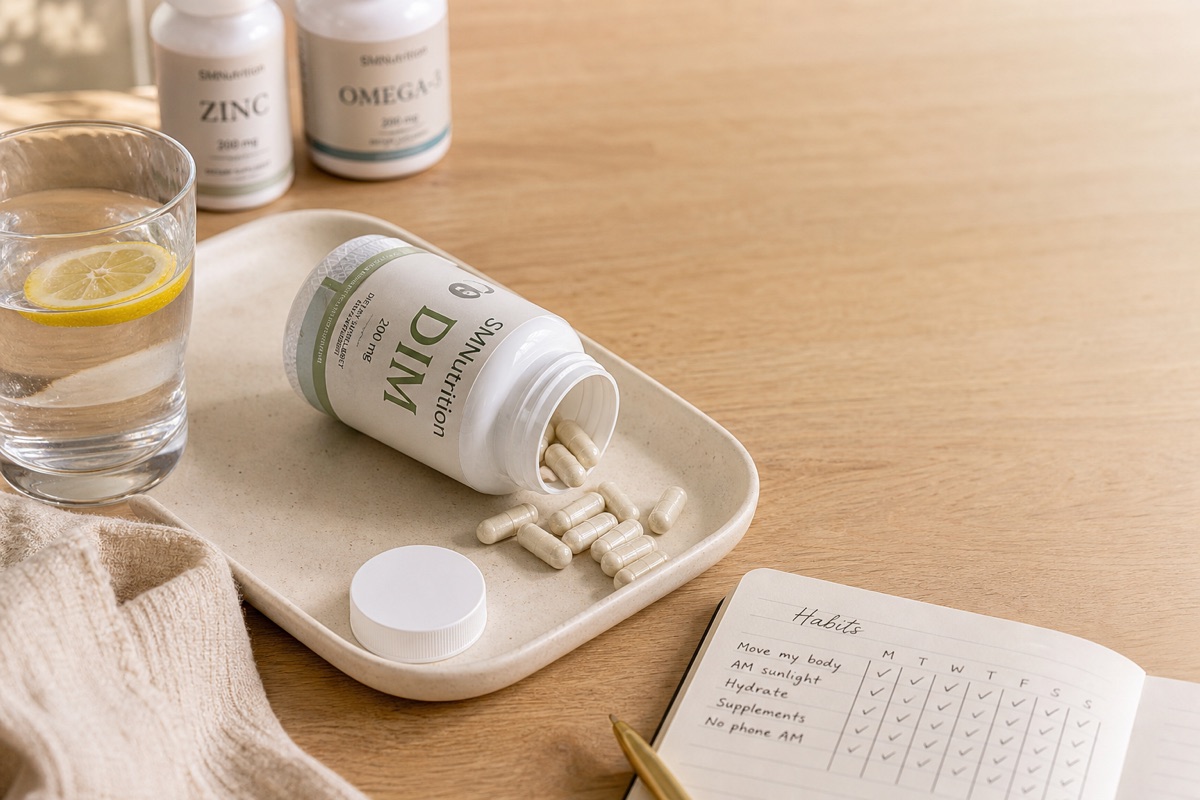
Best DHEA and Hormone-Balancing Supplements for Oily Skin in 2026
Evidence-weighted ranking of 10 Amazon US DHEA and hormone-support supplements for oily, hormonally reactive skin in perimenopause.
Published 2026-05-23 · Updated 2026-05-23 · v1.0 · Tested 2026-05-01 – 2026-05-23
We analyzed 10 Amazon US supplement listings totaling 149,168 visible ratings plus NIH, FDA, and PubMed sources. For oily skin, DIM and zinc rank ahead of DHEA because NIH MedlinePlus lists acne and oily skin as possible DHEA side effects.
Ranking summary (Top 10)
- 1 DIM Supplement 200 mg — SMNutrition 8.3/10
- 2 DIM Plus BioPerine 300 mg — Nutricost 8.1/10
- 3 DIM 200 with Calcium D-Glucarate — NOW Foods 7.9/10
- 4 DHEA 5 mg — Pure Encapsulations 7.2/10
- 5 Zinc 30 mg — Pure Encapsulations 7.1/10
- 6 Myo-Inositol and D-Chiro Inositol — Wholesome Story 7.0/10
- 7 Omega-3 Fish Oil 1250 — Sports Research 6.9/10
- 8 Spearmint Leaf 1000 mg — Nutricost 6.6/10
- 9 DHEA 25 mg — Life Extension 6.2/10
- 10 Saw Palmetto for Women — Carlyle 6.0/10
How we analyzed
BeautySift ranked Amazon US DHEA and hormone-support supplements by verified ASIN, visible Amazon rating volume, dose transparency, safety caveats, ingredient evidence fit, price, and relevance to oily or hormonally reactive skin. Scores were capped when evidence was indirect or when DHEA's androgenic profile could plausibly worsen oiliness. This is a source aggregation, not a clinical trial.
Based on 18 documented sources. See our full methodology.
Quick Answer
Based on 10 Amazon US supplement listings with 149,168 visible ratings and NIH, FDA, and PubMed evidence, the best DHEA-adjacent choice for oily, hormonally reactive skin is not a high-dose DHEA capsule. SMNutrition DIM 200 mg ranks first, followed by Nutricost DIM Plus BioPerine and NOW Foods DIM 200 with Calcium D-Glucarate. Pure Encapsulations DHEA 5 mg is the only DHEA product we would consider a cautious shortlist option, and only with clinician guidance.
Why this ranking is cautious about DHEA
This is a source analysis, not a BeautySift supplement trial. We did not test capsules, measure sebum, or run a clinical panel. We analyzed Amazon US listing data, public medical references, and dermatology literature to answer a narrower shopper question: if oily skin seems hormonal during perimenopause, which DHEA or hormone-support supplements are the most defensible to compare?
The answer starts with a warning. NIH MedlinePlus lists acne and oily skin as possible DHEA side effects and discusses short-term use up to 50 mg/day. That matters because DHEA is not a neutral beauty supplement. It is a hormone precursor that can be converted in tissues toward androgen or estrogen pathways. Thiboutot et al. described androgen-sensitive sebum production as a core acne factor in the 2009 JAAD acne consensus update. For a shopper already dealing with oilier skin, clogged pores, or jawline breakouts, adding an androgen precursor may be the wrong direction.
Perimenopause makes the question more confusing, not simpler. NIH’s National Institute on Aging notes that the menopause transition most often begins between ages 45 and 55 and lasts about 7 years on average. Adult acne also persists into this age range: Collier et al. reported acne in 26.3% of women in their 40s and about 15.3% in the older female group. That overlap does not prove low DHEA is the cause. It simply explains why many women search hormone language when their skin changes.
How we scored the products
We weighted each product across evidence fit, safety fit for oily skin, Amazon rating volume, dose transparency, value, and accessibility. DIM products scored higher than DHEA products because they are marketed for estrogen metabolism without directly adding DHEA. Zinc and omega-3 scored as useful non-hormonal comparators because they have acne-adjacent PubMed evidence. Spearmint and inositol scored in the middle because their evidence is more specific to PCOS, hirsutism, insulin resistance, or androgen markers than to perimenopausal oily skin.
The FDA context is important. FDA’s Dietary Supplements guidance says supplements are not approved for safety or effectiveness before marketing. FDA labeling guidance also separates structure/function claims from disease-treatment claims. So when a bottle says hormone balance, that does not mean it treats acne, reduces sebum, or replaces spironolactone, topical retinoids, benzoyl peroxide, or other clinician-guided acne care.
The 10 best DHEA and hormone-support supplements for oily skin
-
SMNutrition DIM Supplement 200 mg is our top pick because it has the largest DIM-specific Amazon rating base in this set: 4.4/5 across 29,857 visible ratings. DIM evidence is still indirect for oily skin, but this product is easier to justify than DHEA for acne-prone shoppers because it does not add an androgen precursor. It is best for someone comparing hormone-support supplements after ruling out urgent medical causes of sudden adult acne.
-
Nutricost DIM Plus BioPerine 300 mg ranks second for value. Amazon US showed 4.5/5 across 17,594 visible ratings at $17.66 in the May 2026 snapshot. The 300 mg dose and black pepper extract are clear on the listing, but piperine is a real caveat for prescription users because it can affect drug metabolism. This is a compare-with-your-clinician option, not a casual acne treatment.
-
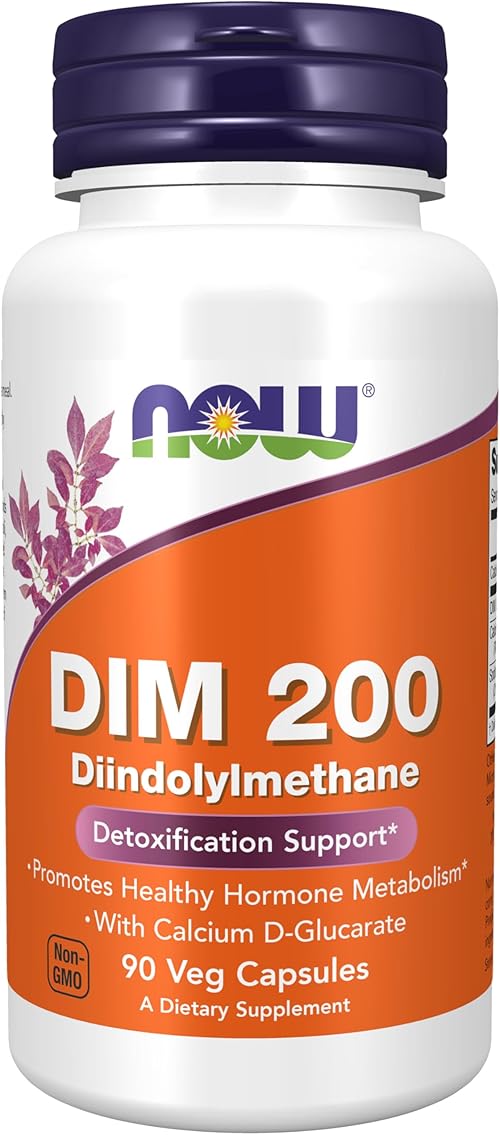
NOW Foods DIM 200 with Calcium D-Glucarate ranks third because it pairs a moderate DIM dose with calcium D-glucarate from a familiar supplement brand. Amazon US showed 4.6/5 across 1,602 visible ratings. The tradeoff is sample size: its rating base is far smaller than SMNutrition or Nutricost. Calcium D-glucarate may make sense for estrogen-metabolism shoppers, but it does not create direct proof of less oil.
-
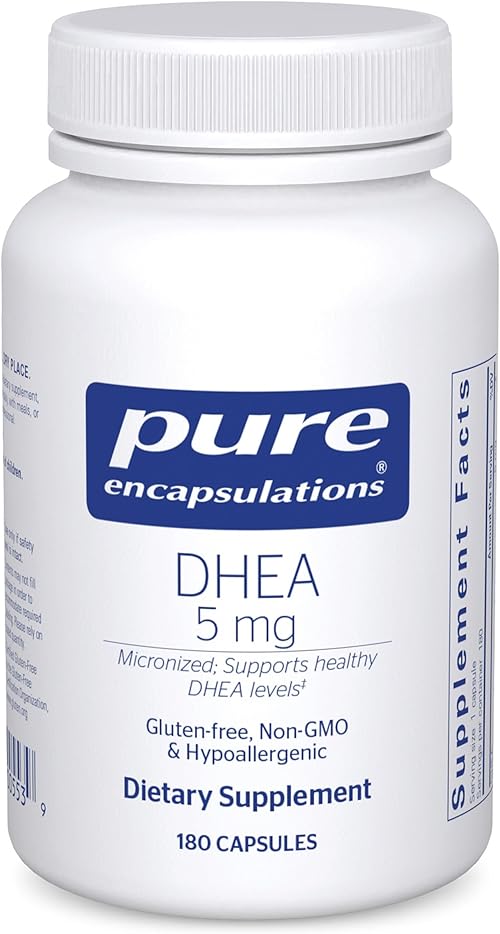
Pure Encapsulations DHEA 5 mg is the highest-ranked DHEA option because the dose is conservative compared with common 25-50 mg capsules. Amazon US showed 4.7/5 across 1,377 visible reviews. It still ranks below DIM because DHEA is hormone-active and NIH MedlinePlus specifically lists acne and oily skin as possible side effects. If you choose it, track skin changes and stop-and-call behavior should be clear before the first dose.
-
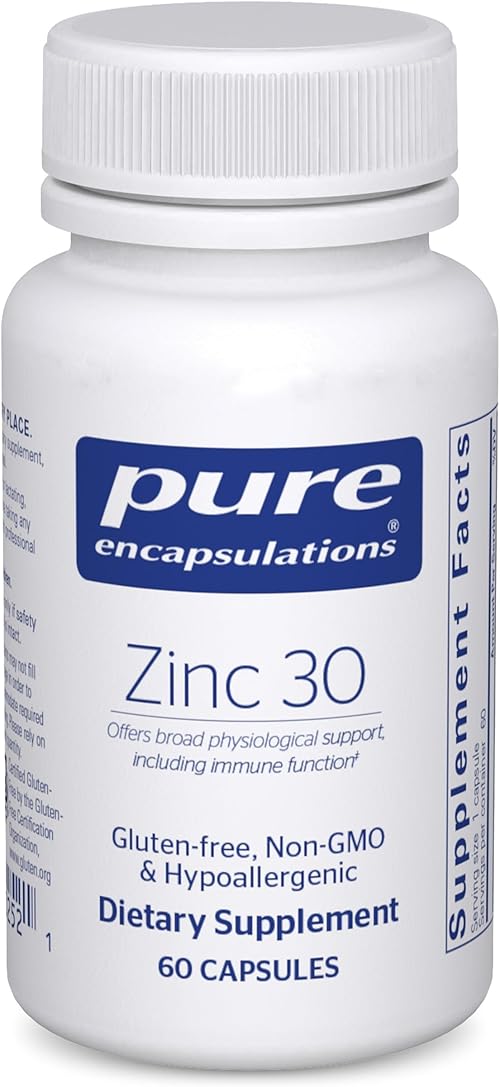
Pure Encapsulations Zinc 30 mg is the best non-hormonal skin-support pick. Amazon US showed 4.8/5 across 14,672 visible reviews, and zinc has more acne-adjacent clinical evidence than many hormone-balance supplements. Dose is the catch: NIH Office of Dietary Supplements lists the adult female RDA at 8 mg/day and the adult upper limit at 40 mg/day. A 30 mg capsule can be too much if your multivitamin, lozenges, or diet already adds substantial zinc.
-
Wholesome Story Myo-Inositol and D-Chiro Inositol is the strongest fit when oily skin sits alongside PCOS-like features such as irregular cycles or insulin-resistance conversations. Amazon US showed 4.4/5 across 35,430 visible reviews. Inositol is better supported for PCOS-related metabolic and ovulatory markers than for general perimenopausal oily skin, so we would not use it as a stand-alone skin supplement without a broader reason.
-
Sports Research Omega-3 Fish Oil 1250 is a non-hormonal inflammation-support option. Amazon US showed 4.7/5 across 59,558 visible reviews, the largest review base in this article. Jung et al. reported lesion-count improvements in a 10-week randomized acne trial using omega-3 or gamma-linolenic acid supplementation, but that does not make fish oil a direct oil-control product. NIH’s omega-3 fact sheet notes FDA safety guidance of no more than 3 g/day EPA+DHA total, including up to 2 g/day from supplements.
-
Nutricost Spearmint Leaf 1000 mg is mechanistically interesting because Grant’s 42-woman Phytotherapy Research trial found testosterone-marker changes after twice-daily spearmint tea for 1 month in PCOS/hirsutism. But this Amazon product is a capsule, not the exact tea protocol, and its listing had only 117 visible reviews in the May 2026 snapshot. It is worth considering only if you want a low-cost, low-hype anti-androgen-adjacent option and can accept limited evidence.
-
Life Extension DHEA 25 mg is included because many shoppers search for DHEA by dose and brand. Amazon US showed 4.6/5 across 4,129 visible reviews. The evidence fit for oily skin is weak: Nair et al. studied 50 mg/day DHEA for 2 years in older women and found biochemical hormone changes without broad functional benefit, and the study was not an acne or sebum trial. For oily skin, a 25 mg DHEA capsule belongs behind lower-risk comparisons unless your clinician specifically recommends it.
-
Carlyle Saw Palmetto for Women ranks last because the DHT-support idea is relevant in theory but weak in acne-specific human outcomes. Amazon US showed 4.4/5 across 326 visible reviews. If you are dealing with true hormonal acne, saw palmetto should not distract from better-supported dermatology options or from evaluating new facial hair, scalp shedding, irregular bleeding, or sudden acne flares.
What to do before buying
Start with the pattern of your skin, not the supplement label. Oily forehead and nose shine without inflamed acne may need a lighter moisturizer, sunscreen change, or retinoid adjustment. Jawline cysts, irregular cycles, new facial hair, or sudden adult-onset acne deserves clinician review. If dryness and oiliness are happening together, the barrier may be irritated; a hormone supplement will not fix over-exfoliation or a stripping cleanser.
If you still want a supplement discussion, bring the exact bottle, dose, and medication list to your clinician. DHEA is the biggest reason. Because it is hormone-active, it is not appropriate to treat like vitamin C or collagen powder. DIM, inositol, spearmint, zinc, and omega-3 also have caveats, especially with pregnancy, trying to conceive, hormone-sensitive conditions, tamoxifen, anticoagulants, or prescriptions affected by piperine.
Also separate oil control from barrier care. Many perimenopausal shoppers report both shine and flaking because harsh acne routines can strip the skin surface while hormones keep sebum active. A supplement ranking cannot solve that mismatch. If your cheeks feel tight but your T-zone is greasy, prioritize a gentle cleanser, non-comedogenic moisturizer, and daily sunscreen while you evaluate whether a supplement is even necessary.
Bottom line
For oily, hormonally reactive skin in 2026, the evidence-weighted ranking favors indirect hormone-support or non-hormonal options over DHEA. DIM has weaker acne-specific evidence than standard dermatology treatments, but it is less obviously mismatched to oily skin than DHEA. Zinc and omega-3 are useful comparators because their evidence is less hormone-disruptive. DHEA should be treated as a clinician-guided hormone supplement, not a beauty shortcut.
Related reading
Detailed rankings
DIM Supplement 200 mg
SMNutrition

- Best for
- Oily, hormonally reactive skin shoppers who want a high-review DIM option and understand that DIM evidence is indirect rather than acne-treatment proof.
- Skip if
- You take tamoxifen, hormonal medication, or want a supplement that has been clinically proven to reduce sebum output.
- Test result
- Amazon US shows 4.4/5 across 29,857 visible ratings; PubMed supports DIM estrogen-biomarker activity, not direct sebum reduction.
Pros
- Largest visible DIM rating base in this hormone-support ranking.
- Moderate 200 mg DIM dose is easier to compare than very high-dose formulas.
- Does not add DHEA, which matters because NIH MedlinePlus lists acne and oily skin as possible DHEA side effects.
Cons
- No direct clinical trial proves this product reduces oily skin or acne lesions.
- Hormone-balance label language should be read as supplement positioning, not FDA approval.
DIM Plus BioPerine 300 mg
Nutricost

- Best for
- Value-focused shoppers comparing DIM products for oily skin support who are comfortable with black pepper extract.
- Skip if
- You take prescriptions affected by piperine or prefer a lower 100-200 mg DIM starting point.
- Test result
- Amazon US shows 4.5/5 across 17,594 visible ratings at $17.66, giving it the strongest DIM value read in this set.
Pros
- High visible rating count improves confidence in user-sentiment weighting.
- Lower price than several lower-volume hormone-support formulas.
- Clear 300 mg DIM dose.
Cons
- Piperine may affect medication metabolism, so prescription users should ask a clinician.
- Higher DIM dose is not automatically better for oily skin.
DIM 200 with Calcium D-Glucarate
NOW Foods
- Best for
- Shoppers who prefer an established supplement brand and want DIM paired with calcium D-glucarate.
- Skip if
- You want the highest rating-count option or a single-ingredient capsule.
- Test result
- Amazon US shows 4.6/5 across 1,602 visible ratings; formula includes 200 mg DIM plus calcium D-glucarate.
Pros
- Moderate DIM amount and recognizable brand positioning.
- Calcium D-glucarate pairing may appeal to estrogen-metabolism shoppers.
- Higher visible star average than several larger DIM listings.
Cons
- Rating count is much smaller than SMNutrition and Nutricost DIM.
- Calcium D-glucarate does not turn the formula into an acne treatment.
DHEA 5 mg
Pure Encapsulations
- Best for
- Clinician-supervised shoppers who specifically need a low-dose DHEA option and are monitoring skin changes closely.
- Skip if
- Your main concern is oily skin, jawline acne, unwanted facial hair, or any androgen-sensitive symptom that worsens with hormone shifts.
- Test result
- Amazon US shows 4.7/5 across 1,377 visible reviews; NIH MedlinePlus lists acne and oily skin as possible DHEA side effects.
Pros
- 5 mg dose is more conservative than common 25-50 mg DHEA products.
- Strong visible Amazon rating average.
- Pure Encapsulations is a familiar practitioner-channel supplement brand.
Cons
- DHEA is hormone-active and may worsen oiliness or acne in susceptible users.
- Not appropriate as a self-directed oily-skin supplement without medical context.
Zinc 30 mg
Pure Encapsulations
- Best for
- Shoppers who want non-hormonal acne-adjacent support and already know their total zinc intake is not excessive.
- Skip if
- You already take a multivitamin with zinc, have copper-deficiency risk, or want a complete acne treatment plan from one capsule.
- Test result
- Amazon US shows 4.8/5 across 14,672 visible reviews; NIH lists the adult zinc upper limit at 40 mg/day.
Pros
- Non-hormonal, which may be safer for androgen-reactive oily skin than DHEA.
- Acne-relevant PubMed evidence is more direct than DIM or saw palmetto evidence.
- Highest visible Amazon star average in this ranking.
Cons
- 30 mg is close enough to the NIH 40 mg/day adult upper limit that total daily intake matters.
- Zinc can cause nausea and may affect copper status with chronic high intake.
Myo-Inositol and D-Chiro Inositol
Wholesome Story

- Best for
- Oily skin shoppers whose breakouts overlap with irregular cycles, PCOS discussions, or insulin-resistance concerns.
- Skip if
- You do not have PCOS-like context or want evidence that directly measures sebum reduction in perimenopause.
- Test result
- Amazon US shows 4.4/5 across 35,430 visible reviews; inositol evidence is strongest for PCOS-related metabolic and ovulatory markers.
Pros
- Very large visible Amazon review base.
- More relevant when oily skin is part of a broader PCOS-like pattern.
- Not an androgen precursor like DHEA.
Cons
- Indirect fit for perimenopausal oily skin without PCOS context.
- Can be over-marketed as universal hormone balance.
Omega-3 Fish Oil 1250
Sports Research

- Best for
- Shoppers who want non-hormonal inflammation support while keeping expectations modest for oily skin.
- Skip if
- You take blood thinners, have fish allergy concerns, or want a supplement targeted specifically at androgen-driven oiliness.
- Test result
- Amazon US shows 4.7/5 across 59,558 visible reviews; Jung et al. reported acne lesion-count improvement in a 10-week randomized omega-3 trial.
Pros
- Largest visible Amazon rating count in this ranking.
- Non-hormonal angle may fit users who flare with androgen shifts.
- Small PubMed acne trial evidence exists for omega-3 supplementation.
Cons
- Not a DHEA or direct hormone-balancing product.
- NIH notes FDA guidance of no more than 3 g/day EPA+DHA total, including up to 2 g/day from supplements.
Spearmint Leaf 1000 mg
Nutricost

- Best for
- Shoppers interested in spearmint's small anti-androgen evidence who prefer capsules to tea.
- Skip if
- You need robust acne trials, a long Amazon review history, or a supplement with established perimenopause-specific evidence.
- Test result
- Amazon US shows 4.3/5 across 117 visible reviews; Grant's 42-woman PCOS/hirsutism trial used twice-daily spearmint tea for 1 month.
Pros
- Mechanistically relevant to androgen-sensitive oiliness.
- Low listed price.
- Capsule format is easier than drinking tea twice daily.
Cons
- Amazon rating sample is small.
- The cited human trial used tea, not this capsule product, and did not prove acne clearing.
DHEA 25 mg
Life Extension

- Best for
- People whose clinician specifically recommends 25 mg DHEA and who will stop if oiliness, acne, or hair changes worsen.
- Skip if
- You are shopping mainly because your face is oily or your acne feels hormonal.
- Test result
- Amazon US shows 4.6/5 across 4,129 visible reviews; Nair et al. studied 50 mg/day DHEA for 2 years in older women but not for oily skin.
Pros
- Large enough review base to assess general Amazon sentiment.
- Lower price than many practitioner-channel hormone supplements.
- Useful comparison point for readers searching specifically for DHEA.
Cons
- DHEA can convert toward androgen pathways, which is the opposite direction many oily-skin shoppers want.
- No evidence that this product improves perimenopausal acne or sebum output.
Saw Palmetto for Women
Carlyle

- Best for
- Shoppers researching DHT-support supplements who want a low-cost option and understand the evidence is speculative for acne.
- Skip if
- You want PubMed-quality acne outcomes, are pregnant or trying to conceive, or use hormone-related medications.
- Test result
- Amazon US shows 4.4/5 across 326 visible reviews; acne-specific human evidence for saw palmetto supplements remains weak.
Pros
- Low price and simple Amazon availability.
- DHT-support positioning is theoretically relevant to androgen-sensitive oiliness.
- Does not add DHEA.
Cons
- Evidence fit is the weakest in this ranking.
- Not a substitute for acne therapies with guideline support.
Top Amazon picks
SMNutrition
DIM Supplement 200 mg
$23.95
"Largest DIM rating base in this set; indirect estrogen-metabolism evidence with less androgenic concern than DHEA."
What real Amazon buyers say
4.4★· 29,857 reviews"I have used one whole bottle."
Nutricost
DIM Plus BioPerine 300 mg
$17.66
"Strong value, high visible Amazon rating count, and clear 300 mg DIM dose; piperine caveat applies."
What real Amazon buyers say
4.5★· 17,594 reviews"Excellent supplement, been taking it for a month now."
NOW Foods
DIM 200 with Calcium D-Glucarate
$17.40
"Moderate DIM dose plus calcium D-glucarate from a widely stocked supplement brand."
What real Amazon buyers say
4.6★· 1,602 reviews"This product was recommended to me for perimenopause."
Pure Encapsulations
DHEA 5 mg
$36
"Lowest-dose DHEA option in this ranking; scored cautiously because DHEA can aggravate acne or oiliness."
Pure Encapsulations
Zinc 30 mg
$16
"Non-hormonal skin-support option with acne-relevant PubMed evidence and a high Amazon rating average."
Wholesome Story
Myo-Inositol and D-Chiro Inositol
$27.95
"Best fit when oily skin overlaps with PCOS-like cycle irregularity or insulin-resistance context."
Sports Research
Omega-3 Fish Oil 1250
$27.95
"Non-hormonal inflammation-support angle with small acne-specific PubMed trial evidence."
Nutricost
Spearmint Leaf 1000 mg
$11.95
"Spearmint has small human anti-androgen data, but this newer listing has a much smaller review base."
Life Extension
DHEA 25 mg
$10.50
"Widely reviewed DHEA option, but the 25 mg strength is a poor first choice for acne-prone oily skin without clinician input."
Carlyle
Saw Palmetto for Women
$9.99
"DHT-support positioning is theoretically relevant, but acne-specific human evidence is weak."