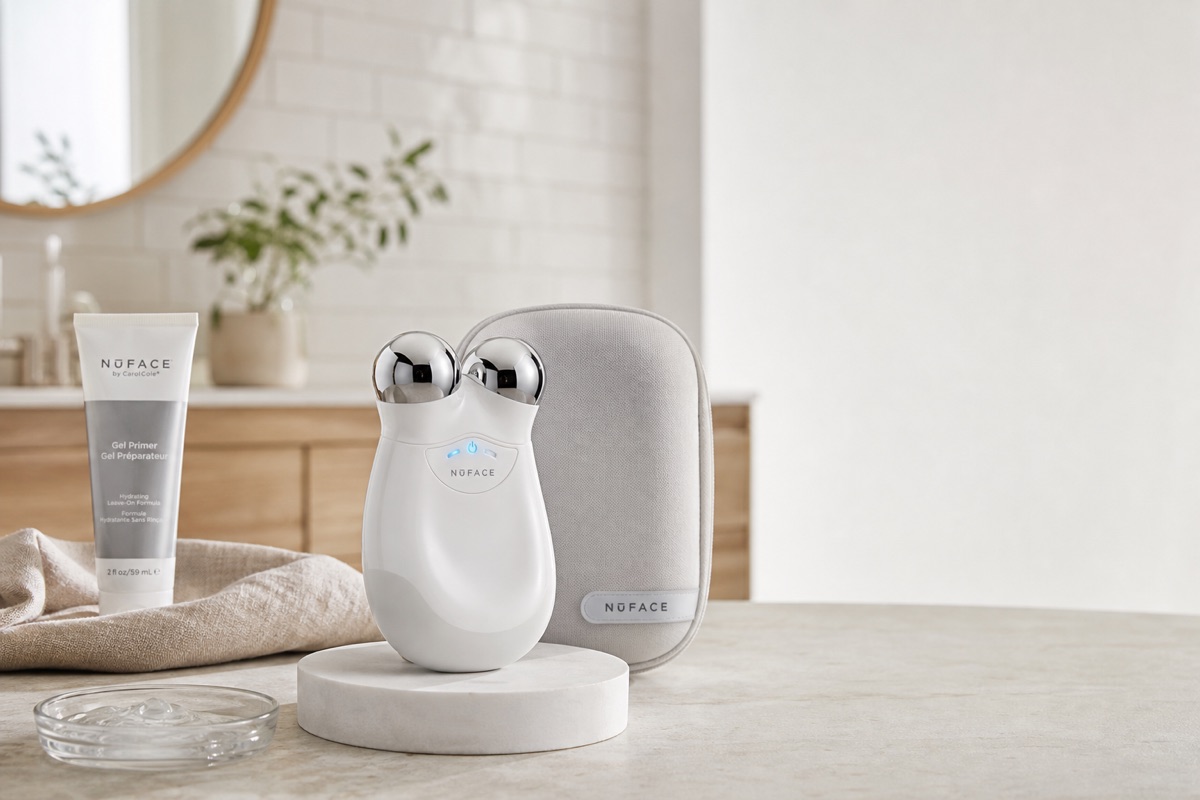
Best EMS Face Devices for Combination Skin in 2026
An evidence-weighted ranking of 10 EMS, microcurrent, and current-assisted face devices for combination skin, with Amazon US availability and conservative safety notes.
Published 2026-05-24 · Updated 2026-05-24 · v1.0 · Tested 2026-05-01 – 2026-05-24
We analyzed 10 Amazon US EMS and microcurrent face devices, 6,649 visible Amazon ratings, FDA 510(k) records for NuFACE and MyoLift, and US editorial roundups from Allure, Byrdie, and Vogue. For combination skin, NuFACE MINI+ ranks highest for FDA-cleared simplicity, while FOREO Bear and MyoLift QT Plus offer stronger app or protocol control.
Ranking summary (Top 10)
- 1 NuFACE MINI+ Microcurrent Face Massager Device — NuFACE 9.1/10
- 2 FOREO Bear Microcurrent Facial Device — FOREO 8.8/10
- 3 7E Wellness MyoLift QT Plus Premium — 7E Wellness 8.6/10
- 4 medicube Booster Pro — medicube 8.2/10
- 5 7E Wellness MyoLift Mini Microcurrent Facial Device — 7E Wellness 8.0/10
- 6 Solawave 4-in-1 Red Light Therapy Wand — Solawave 7.7/10
- 7 INIA SPHERA Upgraded 8-in-1 Microcurrent Facial Device — INIA 7.5/10
- 8 INIA 3-in-1 Red Light Therapy Face and Neck Device — INIA 7.3/10
- 9 Plum Beauty Microcurrent Toning Device — Plum Beauty 6.9/10
- 10 NuFACE Trinity+ Microcurrent Facial Device Kit — NuFACE 6.8/10
How we analyzed
BeautySift ranked these devices as meta-analysts, not testers. We weighted visible Amazon US rating volume, FDA 510(k) documentation where available, brand-published device descriptions, US editorial coverage from Allure, Byrdie, and Vogue, and PubMed background literature on electrical stimulation, iontophoresis, and photobiomodulation. Combination-skin suitability emphasized conductive-gel tolerance, adjustable intensity, short routines, non-greasy slip products, and whether the device can be used on oily T-zone and drier cheek areas without forcing a heavy cream layer.
Based on 12 documented sources. See our full methodology.
Quick answer for combination skin
For combination skin, the best EMS face device is not necessarily the strongest current tool. It is the one you will use consistently without turning your T-zone greasy or drying out your cheeks. Based on 6,649 visible Amazon ratings across 10 devices, FDA 510(k) records for NuFACE and MyoLift, and US editorial coverage from Allure, Byrdie, and Vogue, NuFACE MINI+ is the best overall choice because it pairs a compact routine with stronger regulatory documentation than most Amazon-first devices.
FOREO Bear ranks second because its 4.2/5 visible Amazon average across 977 ratings and silicone, app-guided format make it easier to live with if you dislike sticky device residue. 7E Wellness MyoLift QT Plus ranks third for shoppers who want more guided, protocol-driven microcurrent. It has a smaller Amazon review base, but the MyoLift QT FDA 510(k) record gives it a stronger documentation profile than most multi-mode beauty tools.
Combination skin changes the buying criteria. If your T-zone gets shiny by noon but your cheeks feel tight by dinner, a heavy conductive gel can be the reason you abandon a device. The best choices here allow lower intensity, quick sessions, easy cleanup, and targeted use on jawline, cheek, brow, and neck areas without forcing the same product layer everywhere.
How we ranked these EMS and microcurrent devices
BeautySift did not test these devices in a lab or run a user panel. We analyzed public evidence: Amazon US listings and visible rating counts, FDA 510(k) records where we could match a device family, official brand pages, PubMed background literature, and US editorial roundups. The scoring favored devices with stronger documentation, practical routines, adjustable intensity, and a price that makes sense for the evidence behind the device.
The highest evidence weight went to FDA records when they matched the device family. FDA 510(k) K133823 documents the NuFACE Mini Device, and K213078 documents MyoLift QT. That does not mean these devices guarantee a cosmetic result for every user. It does mean the regulatory paper trail is clearer than it is for many generic firming tools sold primarily through Amazon listings.
We also included current-assisted tools that are not classic EMS when they appear in the same shopper decision set. Solawave uses galvanic current with red light, warmth, and massage; medicube Booster Pro is a broader multi-mode beauty massager; INIA devices combine red light, vibration, warmth or cooling, and current-style modes. Those devices are useful for some combination-skin routines, but their claims should be read more conservatively than a documented microcurrent device.
What combination skin should look for before buying
The first filter is conductive product tolerance. Traditional microcurrent needs a water-based conductive medium. If that gel is too occlusive, oily areas can feel slick and congested. If it dries too quickly, cheeks and jawline can feel draggy. Combination skin usually does best with a lightweight gel that can be rinsed off, then a separate moisturizer only where needed.
The second filter is intensity control. A device that lets you lower the current around sensitive or drier patches is more useful than a one-setting tool. Higher intensity is not automatically better. Consumer microcurrent devices are meant to be used with patience and consistency; they are not substitutes for in-office tightening procedures.
The third filter is cleaning. Silicone or easy-wipe device surfaces can matter if you are acne-prone in the T-zone. Any device used with gel, serum, or facial oil should be cleaned according to the manual after every session. Do not share current-based facial devices with another person unless the brand specifically says the applicator can be disinfected safely.
The fourth filter is routine length. A 3-minute routine you use four nights a week is more realistic than a 25-minute protocol you abandon after two Sundays. This is why the NuFACE MINI+ and FOREO Bear outrank more complex options for many shoppers, even when those complex options offer more settings.
Why NuFACE MINI+ is the best overall pick
NuFACE MINI+ earns the top rank because it is the cleanest intersection of documentation, simplicity, and combination-skin practicality. Amazon US showed 3.7/5 across 615 ratings at the time of our source sweep, which is not the highest rating in the set. Its advantage is the NuFACE Mini FDA 510(k) record, the short routine, and the compact shape that can be moved around jawline, cheek, and brow zones without needing a large treatment head.
For women 35-55, sagging concerns often cluster around the lower face, jawline, and brow rather than being evenly distributed. MINI+ makes targeted passes realistic. The caveat is gel. If you already dislike sticky hydrators, budget for a conductive gel that rinses clean and avoid using a rich cream as your slip layer unless the brand specifically approves it.
FOREO Bear is the better pick if you want a softer device feel and app-guided structure. Its Amazon US listing showed 4.2/5 across 977 ratings, and FOREO’s official page describes microcurrent plus T-Sonic pulsations. We did not verify a clear FDA 510(k) match for the exact Bear model in this sweep, so it sits below NuFACE on evidence strength, but it remains one of the more user-friendly compact options.
Where MyoLift, medicube, and Solawave fit
7E Wellness MyoLift QT Plus is the most protocol-oriented choice in the top three. It is not the easiest device in this list, and Amazon US showed only 62 visible ratings, but FDA 510(k) K213078 for MyoLift QT gives it meaningful documentation. It is best for someone who likes guided routines and wants to understand placement, intensity, and treatment zones.
The MyoLift Mini is similar in spirit but more hands-on. Dual probes can be precise along the jaw and brow, yet they require more attention than a one-piece glide device. If you are trying microcurrent for the first time, the Mini may feel like buying a technique rather than buying a gadget.
medicube Booster Pro and Solawave answer a different question: what if you want a device that supports glow, product slip, and visible freshness more than classic EMS toning? medicube had the highest visible Amazon rating average in this set, 4.6/5 across 1,781 ratings, and its pore-care positioning is relevant for combination skin. Solawave had 4.2/5 across 840 ratings and offers red light, galvanic current, warmth, and massage. Both can be reasonable choices, but neither should be described as a one-to-one substitute for FDA-documented microcurrent.
Budget picks and evidence trade-offs
INIA’s 3-in-1 device and SPHERA 8-in-1 device are tempting because they offer many modes for less than prestige devices. The 3-in-1 option showed 4.4/5 across 1,818 Amazon ratings, the largest rating count in this ranking. SPHERA showed 4.5/5 across 183 ratings and adds cooling, warmth, red light, and microcurrent-style modes. Those numbers are useful for user-sentiment context, but they are not the same as FDA documentation or peer-reviewed trials on the exact device.
Plum Beauty is the low-cost trial pick. At about $29.99 with 35 visible Amazon ratings, it should not be expected to perform like a documented premium device. It belongs here because some shoppers want to learn whether they can tolerate the sensation and routine before spending $175 to $395. The trade-off is clear: low risk on price, low confidence on evidence.
NuFACE Trinity+ lands at rank 10 because the category has become more competitive for combination-skin shoppers. The NuFACE ecosystem is strong, and FDA records include NuFACE and Trinity-related documentation, but the Amazon US snapshot showed 3.8/5 across 90 ratings at a much higher $395 price. If you want the full-size NuFACE handle and attachment ecosystem, it can make sense. If you want the best fit for combination skin, MINI+ is easier to justify.
Safety notes for current-based facial devices
Current-based beauty devices are not for everyone. Avoid using an EMS or microcurrent facial device unless a clinician clears you if you have a pacemaker or implanted electronic device, are pregnant, have seizure concerns, have active facial skin lesions, or recently had a procedure in the treatment area. Follow the manual for your exact device; do not use a device over the thyroid area unless the brand instructions explicitly allow the placement.
Do not combine every active treatment on the same night. If you use retinoids, exfoliating acids, benzoyl peroxide, or strong vitamin C, keep your device routine bland. A simple pattern is cleanse, use conductive gel with the device, rinse if needed, then apply moisturizer. Save retinoids or acids for alternate nights if your skin is calm. This matters more for combination skin because the dry zones often show irritation before the oily zones do.
We may earn a commission from Amazon links, but affiliate availability does not influence ranking. Devices with weak documentation were scored lower even when their Amazon ratings looked strong, and high-price devices were penalized when the evidence did not clearly justify the jump.
Related reading
Detailed rankings
NuFACE MINI+ Microcurrent Face Massager Device
NuFACE

- Best for
- Combination skin shoppers who want the shortest FDA-cleared microcurrent routine with a compact device and separate conductive gel control.
- Skip if
- You dislike using conductive gel or want a device with many app-driven modes and cooling or heat features.
- Test result
- Amazon US showed 3.7/5 across 615 ratings; FDA 510(k) K133823 documents the NuFACE Mini Device category clearance.
Pros
- FDA-cleared NuFACE Mini documentation gives it stronger regulatory support than most low-cost EMS tools.
- Small head and three intensity levels make it easier to adjust around an oily T-zone and drier jaw or cheek areas.
- Short routine is realistic for inconsistent device users.
Cons
- Visible Amazon rating average is lower than several less-documented competitors.
- Requires conductive gel, which can feel tacky on oilier areas.
FOREO Bear Microcurrent Facial Device
FOREO

- Best for
- Users who want a washable-feeling silicone device, app routines, and a smoother glide experience for combination skin.
- Skip if
- You specifically want a clearly documented FDA 510(k) match for the exact model before buying.
- Test result
- Amazon US showed 4.2/5 across 977 ratings; FOREO's official Bear page describes microcurrent and T-Sonic pulsation features.
Pros
- Highest editorial familiarity among compact microcurrent devices in Allure, Byrdie, and Vogue-style roundups.
- Silicone body is practical for users who worry about residue after gel-based routines.
- Adjustable current and app support reduce guesswork for beginners.
Cons
- FDA clearance for the exact Bear model was not verified in our source sweep.
- App dependence may feel unnecessary if you want a simple on-off tool.
7E Wellness MyoLift QT Plus Premium
7E Wellness

- Best for
- Routine-focused users who want more professional-style microcurrent settings and guided treatment structure.
- Skip if
- You want the lowest-effort device or are unlikely to follow multi-step protocols consistently.
- Test result
- Amazon US showed 4.1/5 across 62 ratings; FDA 510(k) K213078 documents MyoLift QT clearance.
Pros
- FDA 510(k) documentation and brand education are stronger than most Amazon-first devices.
- Customizable settings help users lower intensity on sensitive dry patches and focus more on sagging-prone zones.
- App-guided routines support consistency.
Cons
- Visible Amazon rating count is much smaller than FOREO, medicube, or INIA.
- Higher price and protocol complexity are not ideal for casual users.
medicube Booster Pro
medicube

- Best for
- Combination skin that wants pore-care, glow, and firm-looking skin support in one device rather than a classic EMS-only tool.
- Skip if
- You want a pure EMS or microcurrent device with a verified FDA 510(k) record.
- Test result
- Amazon US showed 4.6/5 across 1,781 ratings, the highest rating average in this ranked set.
Pros
- Strong visible Amazon sentiment and high rating volume for a newer beauty-tech device.
- Pore-care and radiance positioning fits the oily-zone plus dull-cheek pattern common in combination skin.
- No heavy conductive gel requirement is a practical advantage for some users.
Cons
- Not the cleanest fit if your priority is classic microcurrent muscle stimulation.
- No clear FDA 510(k) match was found during source review.
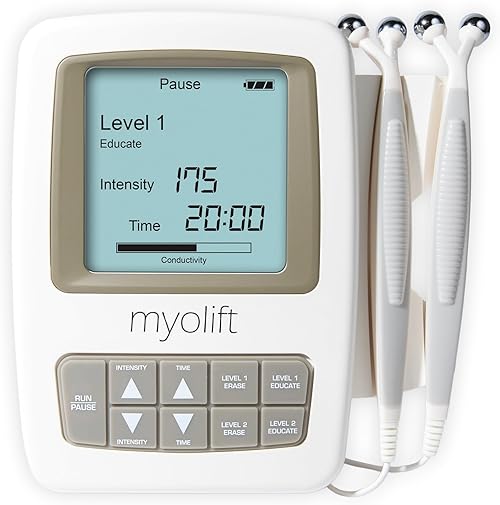
7E Wellness MyoLift Mini Microcurrent Facial Device
7E Wellness
- Best for
- Hands-on users who want dual probes and a more esthetician-style microcurrent routine at home.
- Skip if
- You prefer a one-piece glide tool or need a routine you can finish in only a few minutes.
- Test result
- Amazon US showed 4.0/5 across 248 ratings; the listing describes true microcurrent and up to 400 microamps.
Pros
- Dual-probe format gives precise placement along jawline, cheek, and brow areas.
- Brand has more microcurrent education depth than many generic Amazon devices.
- Useful if you want control over small sagging-prone areas rather than broad sweeps.
Cons
- Longer learning curve than NuFACE MINI+ or FOREO Bear.
- Related FDA documentation should not be treated as proof for every MyoLift Mini claim.
Solawave 4-in-1 Red Light Therapy Wand
Solawave

- Best for
- Users who want a gentle current-assisted wand with red light, warmth, and massage instead of a stronger EMS feel.
- Skip if
- You want a traditional microcurrent face-lifting device; Solawave is better categorized as galvanic-current adjunct beauty tech.
- Test result
- Amazon US showed 4.2/5 across 840 ratings; the listing describes red light, galvanic current, warmth, and massage.
Pros
- Lower-effort wand format can fit into a nightly routine without a long learning curve.
- Red-light adjunct has broader PubMed background support than many generic EMS claims.
- Good middle price point for users not ready for a $300-plus device.
Cons
- Galvanic current is not the same as classic EMS or microcurrent facial toning.
- Warmth may not suit users who flush easily.
INIA SPHERA Upgraded 8-in-1 Microcurrent Facial Device
INIA

- Best for
- Combination skin users who want multiple modes, including warmth, cooling, red light, vibration, and microcurrent in one device.
- Skip if
- You prefer established FDA-documented brands over feature-heavy Amazon-first devices.
- Test result
- Amazon US showed 4.5/5 across 183 ratings; the listing describes five custom modes and smart skin-contact sensing.
Pros
- Cooling and warmth options help tailor routines for oily T-zone days versus dry-cheek days.
- Feature set is broad for the price.
- Visible Amazon rating average is strong for a newer device.
Cons
- Evidence is mostly listing-level and user-rating based.
- Feature overload can make compliance worse if you prefer simple routines.
INIA 3-in-1 Red Light Therapy Face and Neck Device
INIA

- Best for
- Budget-focused shoppers who want red light and firming-style modes under $100.
- Skip if
- You need FDA-cleared microcurrent documentation or a prestige-device warranty ecosystem.
- Test result
- Amazon US showed 4.4/5 across 1,818 ratings, the largest visible Amazon rating count in this group.
Pros
- High visible rating count gives more user-sentiment signal than many budget tools.
- Face and neck format fits sagging-focused routines beyond the cheeks.
- Lower price reduces regret risk for first-time device users.
Cons
- Claims should be read conservatively because independent documentation is limited.
- Not as brand-established as NuFACE, FOREO, or 7E Wellness.
Plum Beauty Microcurrent Toning Device
Plum Beauty

- Best for
- Curious beginners who want the least expensive way to try a microcurrent-style facial toning device.
- Skip if
- You want robust review volume, FDA documentation, or a long-term device ecosystem.
- Test result
- Amazon US showed 4.3/5 across 35 ratings, making this the smallest evidence base in the ranking.
Pros
- Very low entry price for users unsure whether they will keep up with EMS routines.
- Simple format avoids app setup and complicated mode switching.
Cons
- Small Amazon rating base makes the score less stable.
- Weakest documentation profile among the ranked devices.
NuFACE Trinity+ Microcurrent Facial Device Kit
NuFACE

- Best for
- NuFACE loyalists who want a full-size handle and accessory ecosystem for more targeted areas.
- Skip if
- You want the best value or a compact device; MINI+ is easier to justify for most combination-skin users.
- Test result
- Amazon US showed 3.8/5 across 90 ratings; FDA records include NuFACE K072260 and Trinity-related K201906 documentation.
Pros
- Strong brand recognition and broader NuFACE device documentation.
- Better fit for users who want a premium device with attachments and a larger handle.
Cons
- Highest price in this list.
- Lower visible Amazon rating count than the MINI+ and several mid-price alternatives.
Top Amazon picks
NuFACE
NuFACE MINI+ Microcurrent Face Massager Device
$250
"Best balance of FDA-cleared NuFACE documentation, compact handling, and a short routine that suits oily T-zones and drier cheeks."
FOREO
FOREO Bear Microcurrent Facial Device
$174.99
"High visible Amazon rating volume, silicone body, app routines, and adjustable microcurrent make it practical for uneven oil and dryness zones."
7E Wellness
7E Wellness MyoLift QT Plus Premium
$329
"Protocol-heavy microcurrent choice backed by MyoLift QT FDA 510(k) documentation and adjustable treatment settings."
medicube
medicube Booster Pro
$220
"Strong Amazon rating volume and pore-care positioning make it useful for combination skin, though it is broader beauty tech rather than classic EMS."
7E Wellness
7E Wellness MyoLift Mini Microcurrent Facial Device
$315
"A more hands-on dual-probe microcurrent format for shoppers who want control and do not mind a longer learning curve."
Solawave
Solawave 4-in-1 Red Light Therapy Wand
$144.97
"A current-assisted wand with red light, warmth, and massage for buyers who want a lighter routine than full microcurrent."
INIA
INIA SPHERA Upgraded 8-in-1 Microcurrent Facial Device
$179.99
"Feature-dense Amazon option combining microcurrent, red light, warmth, cooling, and vibration for combination-skin routine flexibility."
INIA
INIA 3-in-1 Red Light Therapy Face and Neck Device
$99.99
"Budget-friendly red-light and current-assisted firming tool with the largest visible Amazon rating count in this set."
Plum Beauty
Plum Beauty Microcurrent Toning Device
$29.99
"Lowest-price microcurrent option in this ranking, best treated as a cautious starter device because rating volume is limited."
NuFACE
NuFACE Trinity+ Microcurrent Facial Device Kit
$395
"Full-size NuFACE option with stronger attachment ecosystem, but a higher price and lower visible Amazon rating count than the MINI+."