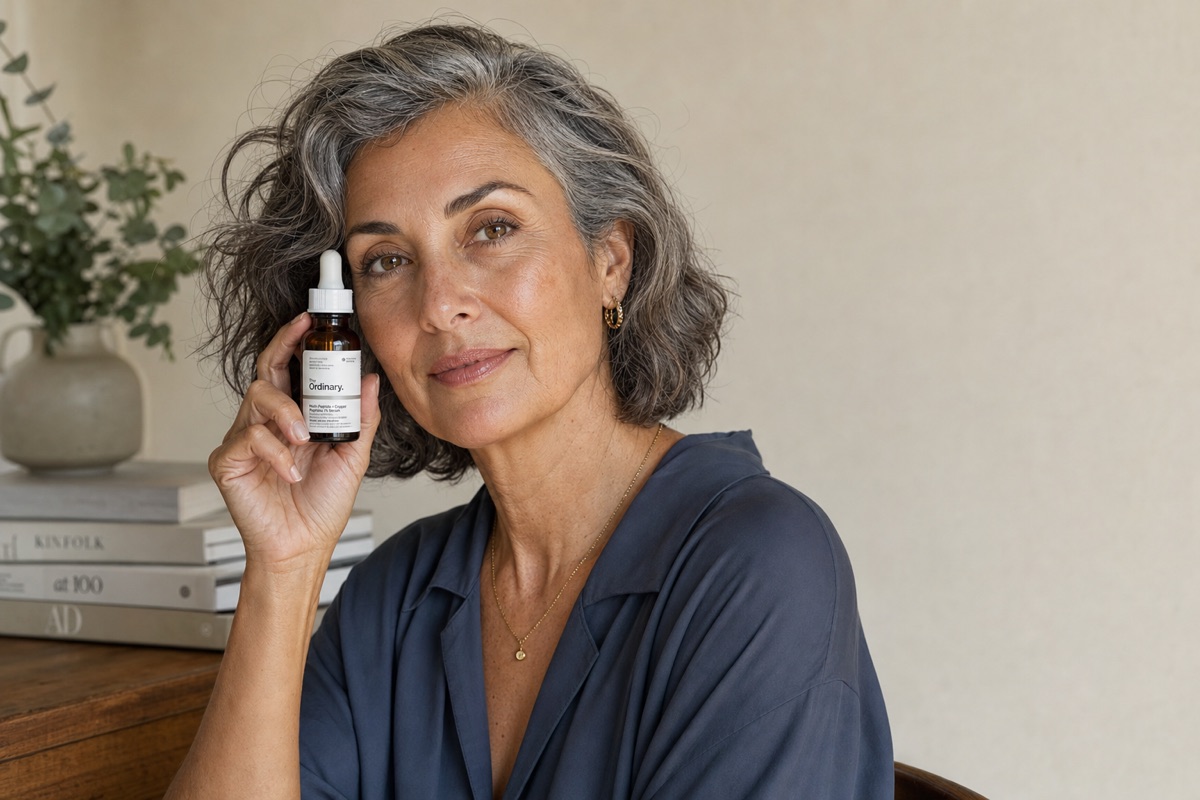
Best Vitamin A Alternatives for Fine Lines in 2026
Evidence-weighted ranking of 10 Amazon-available vitamin A alternatives for fine lines, sensitive skin, and mature routines in 2026.
Published 2026-05-23 · Updated 2026-05-23 · v1.0 · Tested 2026-05-23 – 2026-05-23
We analyzed 10 Amazon US listings, 13,020 visible Amazon ratings, 3 PubMed citations, Sephora pages, and FDA sunscreen guidance. The Ordinary Multi-Peptide + Copper Peptides 1% ranks #1 for a retinoid-free fine-line routine, while Paula's Choice 20% Niacinamide and La Roche-Posay Toleriane Dermallergo are stronger sensitive-skin supports.
Ranking summary (Top 10)
- 1 Multi-Peptide + Copper Peptides 1% Serum — The Ordinary 8.9/10
- 2 Clinical 20% Niacinamide Vitamin B3 Concentrated Face Serum — Paula's Choice 8.7/10
- 3 Toleriane Dermallergo Ultra Soothing Repair Face Moisturizer — La Roche-Posay 8.5/10
- 4 Dream Booster Bakuchiol Face Serum — Beekman 1802 8.3/10
- 5 Bakuchiol Retinol Alternative Face Serum — Herbivore 8.1/10
- 6 Bakuchiol Oil for Dry Skin — Good Molecules 7.9/10
- 7 Triple Lipid-Peptide Cream — Skinfix 7.8/10
- 8 Moon Fruit Bakuchiol Retinol Alternative Face Serum — Herbivore 7.6/10
- 9 The Blue Peptide Bakuchiol Plump Glow Serum — COSRX 7.4/10
- 10 Bakuchiol Face Cream — Geek Out of Water 7.1/10
How we analyzed
BeautySift did not test these products in a lab or on a panel. We ranked 10 US-available vitamin A alternatives for fine lines by aggregating Amazon US listing data captured in May 2026 source logs, Sephora and official brand ingredient-positioning pages, PubMed evidence for bakuchiol, niacinamide, hyaluronic acid, and moisturizer support, FDA sunscreen guidance for visible photoaging prevention, and INCI-style screening for fragrance, retinoid-free positioning, peptides, barrier lipids, and irritation risk. Scores weight likely fine-line relevance, sensitive-skin tolerability, texture, value, review signal, US Amazon accessibility, and evidence strength; affiliate commission did not affect ranking.
Based on 17 documented sources. See our full methodology.
Quick take
The best vitamin A alternative depends on why you are avoiding retinoids. If your skin is stable and you want a treatment-style serum, The Ordinary Multi-Peptide + Copper Peptides 1% is the strongest overall pick in this ranking because Amazon US showed 4.6/5 across 2,163 visible ratings and the official brand page positions it for visible signs of aging. If your skin is reactive, La Roche-Posay Toleriane Dermallergo is the smarter first step because dehydration and barrier stress can make fine lines look sharper before any active has a chance to help.
For bakuchiol specifically, Beekman 1802 Dream Booster ranks ahead of the prestige Herbivore options because it is easier to introduce slowly, costs less at the May 2026 snapshot, and has a sensitive-skin-friendly booster format. The PubMed context matters here: Dhaliwal et al. 2019 followed 44 adults for 12 weeks and reported fine-line improvement with fewer scaling and stinging reports than retinol. That supports bakuchiol as a reasonable cosmetic alternative, but not as a magic retinoid replacement.
How we ranked retinoid-free fine-line products
This is a meta-analysis, not a BeautySift test. We analyzed Amazon US listing data, official brand pages, Sephora product positioning, PubMed studies, FDA sunscreen guidance, and INCI-style formula signals. Scores favor products that can plausibly support fine-line routines without relying on vitamin A derivatives: peptides, copper peptides, niacinamide, bakuchiol, hyaluronic acid, barrier lipids, and moisturizers that reduce the look of dehydration lines.
We also weighted irritation profile heavily because the audience for this article is often avoiding retinol for a reason. A high-strength active that looks good on paper can be the wrong pick if it triggers redness, peeling, or burning. That is why Paula’s Choice scores high for evidence but carries a sensitivity caveat, and why La Roche-Posay outranks several more active bakuchiol formulas for shoppers whose barrier is already stressed.
What the evidence says about vitamin A alternatives
Retinoids remain the benchmark for cosmetic fine-line evidence, but alternatives can still be useful. Bakuchiol has the clearest retinol-alternative study in this group: the 2019 British Journal of Dermatology trial compared 0.5% bakuchiol with 0.5% retinol over 12 weeks in 44 participants. Retinol users reported more scaling and stinging, which is exactly the trade-off many sensitive-skin shoppers are trying to avoid.
Niacinamide has a different kind of evidence. Bissett et al. 2005 in Dermatologic Surgery reported two 12-week split-face studies using 5% niacinamide with 50 women per study. That does not prove every 20% niacinamide serum is better, but it does explain why niacinamide is more than a trend for texture, tone, and barrier appearance. Peptides and copper peptides are harder to score because consumer products vary widely, but The Ordinary gives the clearest product-positioning and review signal in this ranking.
Hydration and barrier repair are not glamorous, but they matter for fine lines after 40. Pavicic et al. 2011 followed 76 female subjects using 0.1% hyaluronic-acid creams for 60 days and reported improved hydration and elasticity. FDA sunscreen guidance also notes that broad-spectrum sunscreen, used as directed with other sun-protection measures, can reduce signs of early skin aging. No serum in this list should be used as an excuse to skip sunscreen.
Ranking notes for the top five
The Ordinary wins because it fits the query cleanly: no vitamin A positioning, a treatment-serum texture, copper peptides, a reasonable $32 snapshot price, and 4.6/5 across 2,163 visible Amazon ratings. It is not a retinol clone, and we would not frame it as one. Its advantage is lower expected irritation and an easy place in a mature routine: cleanse, apply serum, moisturize, and use sunscreen every morning.
Paula’s Choice earns second place because niacinamide has a better published ingredient trail than many cosmetic peptide blends. The caution is strength. The PubMed studies cited 5% niacinamide, while this product is positioned at 20%. That may be useful for some experienced users focused on pores and texture, but sensitive skin should patch-test and start slowly.
La Roche-Posay is third because many fine-line routines fail before the active step. If your face is tight, warm, flaky, or stinging, a retinol alternative may still be too much. A soothing moisturizer can reduce the look of dehydration lines and make the rest of the routine more tolerable. Amazon’s 6,584 visible rating signal gives it the largest product-specific review base in our top three.
Beekman and Herbivore are the more direct bakuchiol picks. Beekman is the better first bakuchiol because the booster format can be mixed or buffered. Herbivore is the better prestige serum if you want a more traditional treatment step and are comfortable paying more.
Texture, value, and mature-skin fit
For mature skin, texture can decide whether a product gets used. Lightweight serums such as The Ordinary and Paula’s Choice are easier under makeup and sunscreen. Richer creams such as Skinfix and Geek Out of Water make more sense at night or during Midwest winter cold. Oils such as Good Molecules can be comfortable for dry skin, but they are less practical in Florida summer humidity or under daytime SPF.
Value is not only price. Good Molecules is the lowest-cost pick at $9.99, but it is an oil, so it will not suit everyone. COSRX offers a larger 1.69 oz bottle at $27, which helps the price-per-ounce story, but its US editorial signal is weaker than the higher-ranked options. Skinfix is the most expensive cream in the list at $54, yet it may be worth considering if your main issue is a compromised barrier rather than the absence of an active.
How to use a vitamin A alternative without irritating your skin
Start with one product, two or three nights per week. If you are choosing bakuchiol, apply it after cleansing and before moisturizer unless the product is an oil or cream. If you are choosing peptides, avoid stacking them in the same routine with strong direct acids until you know the formula behaves well on your skin. If you are choosing niacinamide, use a pea-size amount and stop if flushing, prickling, or persistent warmth appears.
Do not judge fine-line results in a week. The studies cited in this article used 60-day to 12-week windows, and cosmetic changes are gradual. What you can judge quickly is tolerability: stinging, redness, pilling, breakouts, or a texture you dislike. A product you can use consistently is more valuable than a stronger active you abandon after three nights.
We may earn a commission from qualifying Amazon links. Commissions do not affect ranking, and every product here uses Amazon-only affiliate linking because BeautySift’s current affiliate setup is Amazon Associates.
Related reading
Detailed rankings
Multi-Peptide + Copper Peptides 1% Serum
The Ordinary

- Best for
- Fine lines, early crepiness, and mature sensitive skin that wants a retinoid-free peptide serum rather than vitamin A
- Skip if
- You want the strongest retinoid evidence class or you use strong exfoliating acids in the same routine
- Test result
- Amazon US showed 4.6/5 across 2,163 visible ratings, and The Ordinary US positions the serum for visible signs of aging and hydration support.
Pros
- Best overall balance of retinoid-free fine-line relevance, texture, and price
- Copper peptide positioning gives it a more targeted aging-support story than a basic hydrating serum
- Light serum texture should layer under moisturizer and sunscreen for most routines
- Official brand page supports the visible-aging positioning
Cons
- Peptide evidence is less direct than prescription retinoids or classic retinol studies
- Can be confusing to layer with direct acids, strong vitamin C, or exfoliating routines
Clinical 20% Niacinamide Vitamin B3 Concentrated Face Serum
Paula's Choice

- Best for
- Texture, enlarged-looking pores, uneven tone, and fine lines when you want a vitamin A alternative with a stronger PubMed ingredient trail
- Skip if
- Your skin flushes or stings with high-niacinamide formulas, or you prefer a low-percentage barrier serum
- Test result
- Amazon US showed 4.5/5 across 2,001 visible ratings; PubMed's Bissett et al. 2005 studies used 5% niacinamide in two 12-week split-face studies.
Pros
- Niacinamide has a more direct cosmetic-aging evidence trail than many trendy retinol alternatives
- Strong option when fine lines are paired with visible pores and uneven tone
- Fragrance-free brand positioning fits many sensitive-skin routines
- Fluid texture is easier to place before moisturizer than a heavy cream
Cons
- 20% niacinamide may be too strong for very reactive skin
- Does not replace sunscreen or a retinoid if you already tolerate one well
Toleriane Dermallergo Ultra Soothing Repair Face Moisturizer
La Roche-Posay

- Best for
- Sensitive skin where fine lines look sharper because of dryness, barrier stress, or overuse of stronger actives
- Skip if
- You want a dedicated wrinkle-active serum rather than a barrier-support moisturizer
- Test result
- Amazon US showed 4.6/5 across 6,584 visible ratings, and La Roche-Posay US positions it as a soothing repair moisturizer for sensitive skin.
Pros
- Best barrier-first pick before restarting any active alternative
- Light enough for morning use under sunscreen
- High Amazon rating count gives a stronger user-sentiment signal than most niche retinol alternatives
- Useful as a buffer around bakuchiol, niacinamide, or peptide nights
Cons
- Not an active wrinkle treatment by itself
- Shoppers with very dry skin may still need an occlusive layer at night
Dream Booster Bakuchiol Face Serum
Beekman 1802

- Best for
- Retinol-hesitant users who want bakuchiol in a sensitive-skin-oriented booster format
- Skip if
- You dislike mixing booster drops into moisturizer or want the largest review base in the category
- Test result
- Amazon US showed 4.5/5 across 272 visible ratings; the PubMed-indexed Dhaliwal et al. 2019 bakuchiol trial followed 44 adults for 12 weeks.
Pros
- Best dedicated bakuchiol starter for sensitive-skin routines
- Booster format lets cautious users pair it with a familiar moisturizer
- Mid-range price compared with prestige bakuchiol serums
- Lower irritation expectation than many traditional vitamin A products
Cons
- Small 0.5 oz size can run out quickly
- Amazon review sample is smaller than the top peptide, niacinamide, and barrier picks
Bakuchiol Retinol Alternative Face Serum
Herbivore

- Best for
- Mature sensitive skin that wants a dedicated prestige bakuchiol serum before moisturizer
- Skip if
- You need the lowest-cost option or prefer a cream that replaces both serum and moisturizer
- Test result
- The 2019 Br J Dermatol trial found 0.5% bakuchiol improved wrinkle surface area over 12 weeks with fewer scaling and stinging reports than retinol.
Pros
- Serum format is easy to place under a bland moisturizer
- Retinol-alternative positioning closely matches the vitamin A alternative brief
- Better match than stronger retinoids for users prioritizing tolerability
- Prestige packaging and texture may appeal to shoppers replacing a retinol serum
Cons
- Costs more than Beekman, COSRX, Good Molecules, and Geek Out of Water
- Bakuchiol expectations should be measured over 8 to 12 weeks, not days
Bakuchiol Oil for Dry Skin
Good Molecules

- Best for
- Dry mature skin that wants a low-cost bakuchiol oil for overnight comfort
- Skip if
- You are acne-prone, dislike facial oils, or live in Florida summer humidity where oils can feel heavy
- Test result
- Amazon US listed this bakuchiol oil at $9.99, making it the lowest-cost verified product in this ranking.
Pros
- Best shelf price in the ranking
- Oil vehicle can make dry, mature skin feel more cushioned overnight
- Simple placement after water-based serums keeps the routine understandable
- Good low-risk trial if you are curious about bakuchiol
Cons
- Oil textures can be too rich for combination or breakout-prone skin
- Not the easiest choice under morning sunscreen or makeup
Triple Lipid-Peptide Cream
Skinfix

- Best for
- Mature dry skin that wants a richer lipid-and-peptide cream instead of a stronger vitamin A product
- Skip if
- You want a budget moisturizer, a very weightless finish, or a serum-first routine
- Test result
- Sephora US documents the lipid and peptide positioning, and Amazon US showed a 4.4/5 visible rating signal in BeautySift source logs.
Pros
- Richest barrier-cream option in this ranking
- Peptide and lipid positioning makes sense for dry, thin-feeling mature skin
- Good night-cream texture for Southwest dryness or Midwest winter cold
- Useful when retinoids are paused because the barrier feels compromised
Cons
- Higher price than drugstore barrier creams
- May be too rich under makeup or in humid weather
Moon Fruit Bakuchiol Retinol Alternative Face Serum
Herbivore

- Best for
- Experienced sensitive-skin users who want a more complex bakuchiol-and-peptide alternative
- Skip if
- Your skin reacts easily to richer active blends or you prefer the gentlest possible first step
- Test result
- Amazon US listed the 1 oz Moon Fruit serum at $47.60, and the listing positions it around bakuchiol plus peptide support.
Pros
- Adds peptide positioning for shoppers focused on mature-skin firmness
- Serum format feels more treatment-like than a basic cream
- Good fit if you already know you tolerate bakuchiol
Cons
- Less conservative than Beekman or La Roche-Posay for reactive skin
- Prestige price is hard to justify if you mainly need hydration
The Blue Peptide Bakuchiol Plump Glow Serum
COSRX

- Best for
- Skin that wants a larger peptide-bakuchiol serum bottle with a more hydrating, plumping angle
- Skip if
- You want a minimalist formula or the most US editorially established bakuchiol product
- Test result
- Amazon US listed this 1.69 fl oz peptide-bakuchiol serum at $27, giving it a favorable price-per-ounce profile.
Pros
- Larger bottle size improves value compared with many 1 oz prestige serums
- Peptide positioning may appeal to mature skin focused on bounce
- Useful if dehydration lines are a bigger concern than deep wrinkles
Cons
- Bakuchiol strength was not independently verified in the source capture
- Less conservative than a fragrance-free booster for highly reactive skin
Bakuchiol Face Cream
Geek Out of Water

- Best for
- Budget-conscious sensitive skin that prefers a cream moisturizer with bakuchiol positioning
- Skip if
- You want a prestige serum, a large review base, or broad retail evidence beyond Amazon
- Test result
- Amazon US listed this 2 oz cream at $20 with 1% bakuchiol positioning, making it the lowest-cost cream format in the ranking.
Pros
- Cream format can replace a separate moisturizer in simple night routines
- 2 oz size and $20 verified price make it accessible
- Good choice for shoppers who dislike serum layering
Cons
- Lower brand recognition and weaker independent editorial signal
- Cream format may not feel active enough for users replacing a retinol serum
Top Amazon picks
The Ordinary
Multi-Peptide + Copper Peptides 1% Serum
$32
"Best retinoid-free peptide serum signal for fine lines, with Amazon data at 4.6/5 across 2,163 visible ratings."
What real Amazon buyers say
4.6★· 2,163 reviews"I love The Ordinary products. Here we have a copper peptide serum that is affordable - I used it with my needle roller and my skin still feels really nice and plump and healthy/glowy 2 days after. I am a 50+ and dealing with aging skin."
"Great results and easy to use! I've really been enjoying The Ordinary Multi-Peptide + Copper Peptides 1%. It feels lightweight, absorbs quickly, and layers well with the rest of my skincare without feeling sticky or heavy."
Paula's Choice
Clinical 20% Niacinamide Vitamin B3 Concentrated Face Serum
$38.50
"Best niacinamide alternative for texture, pore appearance, and fine-line support; Amazon showed 4.5/5 across 2,001 ratings."
What real Amazon buyers say
4.5★· 2,001 reviews"This product really helps improve skin texture and minimize the look of pores. A little goes a long way, and it absorbs well without feeling greasy."
"Holy grail dark spot corrector! Worth every penny!"
La Roche-Posay
Toleriane Dermallergo Ultra Soothing Repair Face Moisturizer
$31.97
"Best barrier-support pick when fine lines look worse from dryness or irritation; Amazon showed 4.6/5 across 6,584 ratings."
What real Amazon buyers say
4.6★· 6,584 reviews"This moisturizer has been a game changer for my sensitive skin. It's lightweight but still deeply hydrating, and it absorbs quickly without leaving any greasy or heavy feeling."
"Hydrates without feeling heavy. Great for my super sensitive skin!"
Beekman 1802
Dream Booster Bakuchiol Face Serum
$29
"Best bakuchiol entry point for sensitive skin, with a booster format and 4.5/5 across 272 visible Amazon ratings."
Herbivore
Bakuchiol Retinol Alternative Face Serum
$47.60
"Prestige bakuchiol serum for shoppers who want a dedicated retinol-alternative step without a heavy cream finish."
Good Molecules
Bakuchiol Oil for Dry Skin
$9.99
"Lowest verified price in the ranking and a better match for dry mature skin than aggressive retinoid nights."
Skinfix
Triple Lipid-Peptide Cream
$54
"Rich lipid-and-peptide cream for dry, mature skin that needs cushion before active nights."
Herbivore
Moon Fruit Bakuchiol Retinol Alternative Face Serum
$47.60
"Bakuchiol-and-peptide serum for experienced users who want a more complex retinol-alternative formula."
COSRX
The Blue Peptide Bakuchiol Plump Glow Serum
$27
"Larger 1.69 oz peptide-bakuchiol bottle gives it a favorable price-per-ounce profile."
Geek Out of Water
Bakuchiol Face Cream
$20
"Budget cream format with 1% bakuchiol positioning for shoppers who prefer one night moisturizer step."