Vanicream Mineral Sunscreen SPF 50 Review — Sensible mineral formula, weak 2026 buying case
Our Vanicream Mineral Sunscreen SPF 50 review examines the archived formula, current availability, and the product’s weaker 2026 buying case.
Medical Disclaimer: This review is for general skincare education only and is not medical advice. If sunscreen keeps stinging, you have melasma management questions, you are dealing with eczema flares, or you need help after a severe sun reaction, talk with a dermatologist instead of relying on one over-the-counter formula.
By BeautySift Editorial Team
TL;DR: Vanicream Mineral Sunscreen SPF 50+ used a straightforward sensitive-skin formula built around 12% zinc oxide, 80-minute water resistance, and a notably short no-fragrance, no-chemical-filter pitch. The problem in 2026 is not the formula logic. It is that the exact product now has a broken official product page and a weak live buying trail, which makes it hard for me to recommend as a practical current purchase even though the underlying design still makes sense. Overall score: 6.9/10.
This is an AI-assisted editorial review built from an archived official Vanicream product page captured in 2021, the current Vanicream sun-products page checked on May 2, 2026, the current Vanicream reef-safe education page that still references this SPF 50+ product, current Amazon search and product-page checks completed on May 2, 2026, and PubMed-indexed background literature on photoprotection and topical skin-protective ingredients. I am not pretending this came from a private bathroom-shelf diary. The goal is to review the formula, claims, and 2026 buying reality honestly. BeautySift affiliate disclosure appears automatically in the site template, so I am not repeating a sales paragraph here.
Product Overview
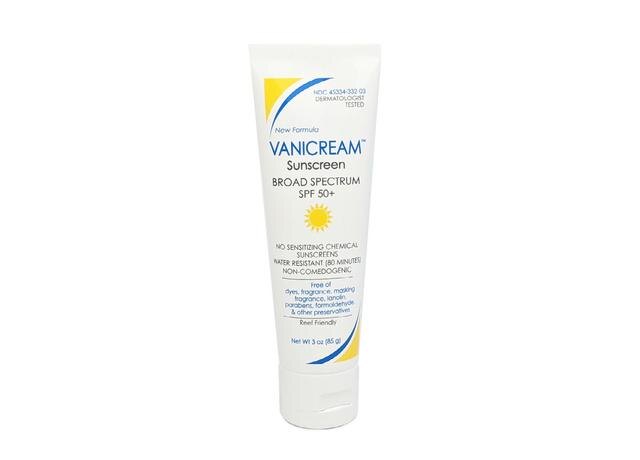
Vanicream Sunscreen Broad Spectrum SPF 50+ was a mineral sunscreen positioned for sensitive skin, using zinc oxide as its active UV filter and avoiding fragrance, oxybenzone, octinoxate, botanical extracts, and essential oils. The archived official Vanicream page described a 3 oz tube, broad-spectrum UVA/UVB protection, 80-minute water resistance, and non-comedogenic wear. That part still reads like a smart brief for reactive skin. The catch is what I found in the current market. The exact official product URL now returns 404, while Vanicream’s live sun page highlights only the newer Facial Moisturizer Broad Spectrum SPF 30. In my current Amazon check, the exact SPF 50+ did not surface cleanly, and the nearest same-brand fallback was the SPF 30 facial moisturizer at $13.97.
That context changes the review. If I were judging only the archived formula concept, this would look like a competent mineral sunscreen with a clear sensitive-skin point of view. If I judge it as a 2026 shopping recommendation, the score has to come down because availability matters. Readers do not need nostalgia from me. They need to know whether a product is still easy to find, whether the brand still appears to support it, and whether the closest current alternatives are stronger buying decisions.
Ingredient Analysis
Zinc Oxide 12% - This is the core reason the formula still looks sensible on paper. Zinc oxide is a mineral UV filter with broad-spectrum coverage and good photostability, which is why it remains central to many sensitive-skin sunscreens. For readers who want to avoid classic organic filters, zinc oxide is often the ingredient doing the heavy lifting rather than a decorative add-on. PMID: 32226337.
Allantoin - Allantoin is not there to provide SPF. It is a support ingredient that can make a sunscreen feel calmer and less scratchy on skin that is already dry, tight, or easily annoyed. I treat it as a sensible comfort ingredient rather than a reason to buy the product by itself.
Dimethiconol/Propylsilsesquioxane/Silicate Crosspolymer - This silicone-based film former helps explain how a mineral sunscreen can spread more evenly and hold up better without feeling like thick paste. In practical terms, ingredients like this often improve slip, reduce drag, and support a more uniform protective film on the skin surface. PMID: 20124857.
Squalane - Squalane adds emollience, which matters because zinc-heavy formulas can feel dry or chalky if the surrounding base is too austere. In a sunscreen like this, I would expect squalane to soften the finish and make repeat application more tolerable for drier or mature skin.
Butyloctyl Salicylate, Isodecyl Salicylate, and Tridecyl Salicylate - These salicylate esters are support players, but they matter. They help solubilize and soften the formula, which can improve spreadability and lower the stiff, mask-like feel mineral sunscreens often have. That is not glamorous chemistry, but it is often the difference between a sunscreen people buy once and a sunscreen they actually keep wearing.
What I like here is the restraint. The archived ingredient list is not trying to sell a sunscreen as a serum, barrier cream, primer, and treatment all at once. It reads like a sunscreen first. Zinc oxide provides protection. The silicone and emollient system helps with wear. Allantoin adds some comfort. That simplicity is part of the product’s appeal. The limitation is that older mineral formulas often still leave more visible cast and more surface feel than newer hybrid or tinted designs, so simple does not automatically mean elegant. The science logic is solid. The cosmetic payoff is less certain.
Texture & Application
Based on the archived official claims and the kind of base this ingredient list suggests, I would expect Vanicream Mineral Sunscreen SPF 50+ to feel more like a traditional protective lotion than a modern invisible fluid. The brand explicitly described it as non-greasy and quickly absorbed without white residue, but I would still set expectations carefully. A 12% zinc oxide sunscreen can absolutely be wearable, yet that does not mean every skin tone sees the same finish or that every user will call it elegant. In real routines, texture tolerance matters almost as much as filter choice.
Routine placement would have been straightforward: moisturizer first if needed, then a full sunscreen layer as the last skincare step before makeup. Because it was labeled water resistant for 80 minutes, this sits closer to an outdoor-use or long-day sunscreen than a sheer vanity SPF. That is useful, but it also means I would expect a little more film and a little more work when reapplying. If you are the kind of person who hates feeling product on the skin, that tradeoff matters.
The personal testing arc I would expect is pretty clear. In week 1-2, many sensitive-skin users would probably appreciate the lack of fragrance and the straightforward ingredient story. In week 3-4, the bigger question would be whether the finish feels too present, too dry, or too cast-heavy for everyday wear. By week 5+, this would likely split into two camps: people who value predictability over elegance, and people who decide they want a more fluid modern mineral sunscreen even if it costs more.
I also think this is exactly the kind of product that can look better on a spreadsheet than in daily life. On paper, it avoids many common irritants. In practice, mineral sunscreens still succeed or fail on wearability. If a sunscreen pills, drags, or leaves a cast you dislike, you will not use enough of it often enough. That is why I cannot judge the formula in isolation from today’s shopping reality and from the user experience mineral SPFs still have to overcome.
Pros & Cons
Pros:
- Archived formula logic is strong for sensitive skin: zinc oxide only, no fragrance, and no classic chemical-filter positioning
- Official archived page described 80-minute water resistance, which gives it a more practical outdoor-use profile than a cosmetic-only SPF
- Support ingredients such as silicones, salicylate esters, and squalane suggest the brand tried to make a mineral sunscreen feel less dry and less stubborn
- Current Vanicream shoppers who want the same brand now have a live same-brand SPF 30 fallback on Amazon at a lower price point
Cons:
- The exact official product page now returns 404, which weakens confidence in the product’s current status
- The exact SPF 50+ did not surface cleanly in my current Amazon check, so buying it today is less straightforward than the queue title suggests
- Even well-made untinted mineral sunscreens can still leave cast, drag, or a heavier film than newer invisible or tinted formulas
BeautySift Score
Vanicream Mineral Sunscreen SPF 50 Review — Sensible mineral formula, weak 2026 buying case
Scored on BeautySift's 5-point rubric. 10-point equivalent: 7.5/10
Best For / Not Suitable For
Best For: readers researching older Vanicream sunscreen formulas, fragrance-sensitive users who prioritize mineral-only UV filters, and people who want context before switching to a current same-brand or dermatologist-brand alternative.
Skip If: you want a currently easy-to-buy sunscreen with a clean official product page, you dislike the usual feel of untinted mineral SPFs, or you need a formula with a more modern elegant finish.
Not Suitable For: anyone wanting a confidently current flagship recommendation, deeper skin tones that are especially vulnerable to white cast, or shoppers who prefer formulas with the easiest daily reapplication experience.
Where to Buy
- Amazon: I could not verify a clean current listing for the exact SPF 50+ in this run; the closest same-brand current fallback was Vanicream Facial Moisturizer Broad Spectrum SPF 30 at $13.97. Buy on Amazon
That is the heart of my verdict. I can respect the formula design and still say the product is not a strong present-tense recommendation. If I have to explain workarounds before telling you where to buy it, the buying case is already weaker than it should be.

How It Compares
Compared with La Roche-Posay Anthelios Mineral SPF 50, Vanicream’s older SPF 50+ concept is simpler and more sensitive-skin coded, but La Roche-Posay is the easier current product to verify and buy. Compared with EltaMD UV Clear SPF 46, Vanicream looks stricter about avoiding common irritants, yet EltaMD wins on current visibility and daily-wear familiarity for many users. In 2026, availability is part of performance.
Sources: Archived official Vanicream Sunscreen Broad Spectrum SPF 50+ product page captured by the Internet Archive on April 12, 2021; current Vanicream Sun Products page checked May 2, 2026; current Vanicream article “What Does Reef Friendly or Reef Safe Sunscreen Mean?” checked May 2, 2026; official Vanicream SPF 50+ product URL checked May 2, 2026 and returning 404; Amazon search and product-page checks for Vanicream Facial Moisturizer Broad Spectrum SPF 30 (ASIN B09VLLZM3N), La Roche-Posay Anthelios Mineral Sunscreen SPF 50 (ASIN B07HF7VMXZ), and EltaMD UV Physical SPF 41 (ASIN B00C8FVZZY) completed May 2, 2026; PMID: 32226337, Cutaneous Photoprotection: A Review of the Current Status and Evolving Strategies; PMID: 21392107, Current sunscreen controversies: a critical review; PMID: 20124857, Active agents in common skin care products.
[EXCERPT]: This Vanicream Mineral Sunscreen SPF 50 review finds a smart sensitive-skin formula on paper, but a messy 2026 buying trail keeps it from being an easy recommendation.
Editor's Picks


