How I Calm an Itchy, Flaky Scalp Without Over-Stripping
A practical, low-irritation routine for calming an itchy, flaky scalp without harsh over-washing, plus when to use targeted dandruff shampoos.
Medical disclaimer: This article is for general education only and does not replace personal medical advice. If your scalp is painful, bleeding, crusted, rapidly worsening, or causing hair shedding, please see a dermatologist or another qualified clinician.
Affiliate disclosure: If you shop through retailer links in this article, BeautySift may earn a commission. That does not change my editorial judgment.
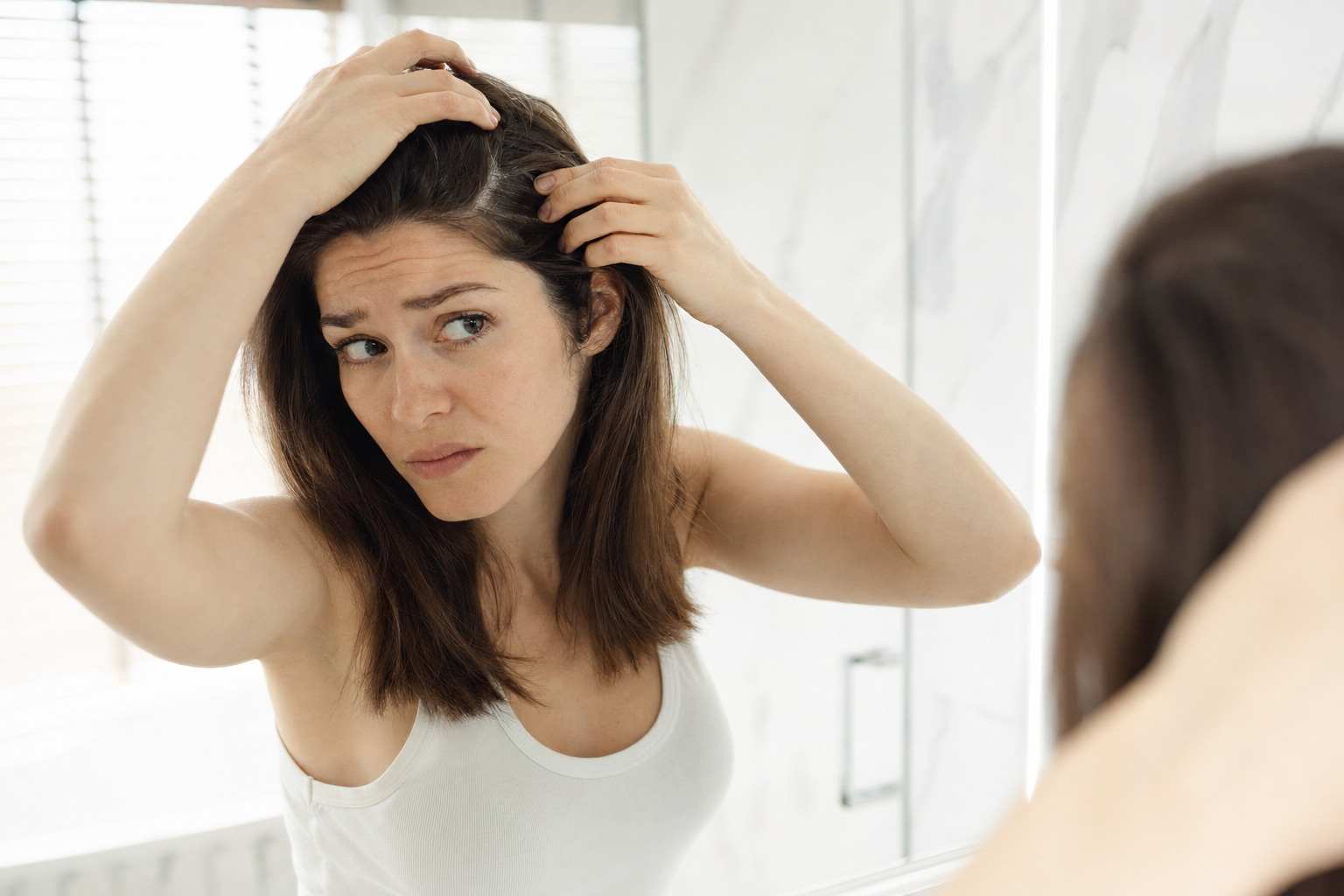
I usually treat an itchy, flaky scalp as a friction problem first and a treatment problem second. When my scalp feels tight, itchy, and dusty by the end of the day, my instinct is to wash harder, scrub longer, and rotate three active shampoos at once. That is the exact pattern that tends to leave me sorer and flakier. A calmer approach works better for me: reduce mechanical irritation, wash on a sensible schedule, then add a targeted anti-dandruff step only when the flakes look persistent rather than simply dry.
The reason I take that slower route is simple. Scalp flaking can come from more than one trigger, including seborrheic dermatitis, product buildup, heavy oiling, harsh cleansing, or irritation from fragrance and preservatives. I cannot diagnose that from a mirror, so I focus on what is low-risk and practical at home: gentler cleansing, less scratching, and clearer signals about when I need medical help instead of more experimentation.
How I tell dryness from dandruff before changing everything
If my flakes are tiny, light, and paired with a tight feeling after shampoo, I think about dryness or over-cleansing first. If they are oilier, more persistent, and keep returning around the hairline, crown, or behind the ears, I take dandruff more seriously. Seborrheic dermatitis is closely linked with inflammation and Malassezia activity on the scalp, which is why antifungal shampoos can help some people more than “gentle” shampoos alone. In randomized trials, ketoconazole shampoo improved dandruff and scalp seborrheic dermatitis better than placebo, and it was compared head-to-head with selenium sulfide in moderate to severe dandruff populations (PMID: 8245236; PMID: 7718463).
That does not mean every flaky scalp needs a medicated formula forever. It means I do not assume that more scrubbing will solve a problem with an inflammatory component. If the scalp is already irritated, aggressive rubbing can turn a manageable issue into burning, tenderness, and more visible scale.

The first thing I stop: scratching and over-washing
The biggest improvement for me often comes from removing irritation I created myself. If I scratch with my nails, use very hot water, or shampoo twice every day just to feel “clean,” my scalp usually gets angrier. I switch to lukewarm water, use the pads of my fingers instead of my nails, and keep the contact time of shampoo focused on the scalp rather than roughing up the lengths.
I also stop piling on extra variables. That means no exfoliating scalp serum on the same night as a medicated shampoo, no essential-oil-heavy pre-wash treatment, and no “detox” scrub. A stripped scalp can flake in a way that looks dramatic but still does not need a complicated routine. In that phase, I want fewer irritants, not more.
If I suspect my styling products are part of the problem, I check the pattern. Am I most itchy on the days I use dry shampoo, hairspray, root powder, or leave-in products close to the scalp? If yes, I pause them for a week and see whether the itch settles. That kind of short elimination test tells me more than buying another bottle.
How often I wash when the scalp is flaky
I do not follow a rigid wash rule because oil level matters. If my scalp gets oily within a day, stretching wash day too far usually makes flakes look worse, not better. If my scalp runs drier, a harsh daily wash can backfire. My practical rule is this: wash often enough that sweat, oil, and styling residue do not sit on the scalp for days, but not so aggressively that the scalp feels squeaky, sore, or tight right after rinsing.
For me, that often lands at every other day during a flare and less often once things are calm. I focus on even shampoo distribution across the scalp, give it enough contact time to do something useful, and rinse thoroughly. Residue can keep the scalp feeling itchy, especially when I panic-rinse in 10 seconds and leave cleanser behind.
More recent clinical work also supports the idea that targeted shampooing can help when seborrheic dermatitis is driving the flakes. A 2025 study found that a selenium sulfide and salicylic acid shampoo was effective and generally well tolerated in patients with seborrheic dermatitis, which matters because treatment only works if people can keep using it without feeling wrecked by it (PMID: 40421970). Another 2025 assessment reported good dermatologist-rated efficacy for a selenium disulfide and salicylic acid shampoo in scalp seborrheic dermatitis (PMID: 40192814).
When I reach for a targeted dandruff shampoo
If the flaking is recurring, concentrated on the scalp rather than the hair, and paired with itch that comes back quickly after washing, I consider a targeted anti-dandruff shampoo. I do not use it like a random extra cleanser. I use it as the scalp step, let it sit briefly according to label directions, and I do not combine three active shampoos in one wash just because I am frustrated.
The active I think about depends on the pattern. Ketoconazole can make sense when dandruff seems stubborn. Selenium sulfide is another evidence-backed option for dandruff and seborrheic dermatitis. Salicylic acid can be useful when scale is thicker and I need help loosening buildup, though it can feel too drying for some scalps if I overuse it. My goal is not to chase the strongest formula. It is to choose one targeted option, use it consistently for a short window, and judge my scalp honestly.
If I feel burning from the first few uses, or the scalp looks redder and more inflamed, I stop pretending that irritation is part of the process. That is usually my sign to back off and get professional guidance rather than escalating.

The low-strip routine I come back to
When my scalp is reactive, I keep the rest of my routine boring on purpose. I use one shampoo at a time. If I need a second product, it is usually a simple conditioner from mid-length to ends, not packed onto the scalp. I avoid heavy fragrance if I already suspect sensitivity. I also dry my hair gently instead of blasting the hottest setting right at the roots.
My routine during a flare is usually this:
- Wash with a gentle shampoo or a medicated shampoo chosen for the specific pattern.
- Massage with fingertips, not nails.
- Leave the active shampoo on briefly if the label calls for it.
- Rinse thoroughly with lukewarm water.
- Condition the lengths only if needed.
- Pause dry shampoo, scalp scrubs, strong fragrance, and heavy styling buildup for several days.
I also pay attention to what happens between washes. If I am scratching absentmindedly at my desk, that matters. If hats, sweat, and workout buildup are making things worse, that matters too. Sometimes the fix is less about a new product and more about interrupting the irritation loop I accidentally keep feeding.
What I would buy, and what I would skip
If I wanted a very simple shopping list, I would separate products by job. For a bland, low-irritation cleanse, Vanicream Shampoo is one of the first options I would look at. For a more classic anti-dandruff step, I would check Nizoral. If scale felt thicker and I specifically wanted salicylic acid, I would look at Neutrogena T/Sal. I verified on May 1, 2026 that Amazon search results showed these options in stock, with visible starting prices around $12.93 for Vanicream Shampoo, $27.57 for Nizoral, and $7.77 for Neutrogena T/Sal. Prices and pack sizes change, so I treat those numbers as a same-day snapshot rather than a promise.
What I skip during a flare: gritty scalp scrubs, strong minty products that feel “refreshing” but sting, and routines that require me to guess whether four new products are helping or hurting. I want fewer variables and clearer feedback.
When I stop self-managing and call a dermatologist
I do not like stretching home care too far. If the scalp is painful, oozing, crusted, forming thick plaques, or shedding hair, I stop treating it like ordinary dandruff. The same goes for symptoms that keep returning despite several weeks of careful use of a targeted shampoo. At that point I want a proper diagnosis, because psoriasis, eczema, contact dermatitis, fungal issues, and seborrheic dermatitis can overlap visually in ways that are hard to sort out at home.
My honest rule is that a calmer scalp routine should make my life simpler within a couple of weeks, not more confusing. If I am collecting more products, feeling more irritated, and scratching more often, I am probably over-stripping rather than helping.
Sources
- A randomized, double-blind, placebo-controlled trial of ketoconazole 2% shampoo versus selenium sulfide 2.5% shampoo in the treatment of moderate to severe dandruff. PMID: 8245236
- Successful treatment and prophylaxis of scalp seborrhoeic dermatitis and dandruff with 2% ketoconazole shampoo. PMID: 7718463
- Effectiveness and tolerance of medicated shampoo containing selenium sulfide and salicylic acid in patients with seborrheic dermatitis. PMID: 40421970
- A study on dermatologists' self-assessment of the efficacy of a 1% selenium disulfide-0.9% salicylic acid-based shampoo for scalp seborrheic dermatitis. PMID: 40192814