How I Choose Base Makeup When My Skin Is Reactive
An honest BeautySift guide to choosing base makeup for reactive skin, with practical formula, finish, and application tips that reduce friction.
Medical disclaimer: This article is for general cosmetic education only and does not replace personal medical advice. If your skin burns, swells, develops a rash, or keeps reacting to makeup, please check in with a board-certified dermatologist.
Affiliate disclosure: BeautySift may earn a commission from some retailer links, but that never decides what I recommend or skip.
TL;DR: When my skin is reactive, I stop chasing coverage and start chasing tolerance. I do best with a light, fragrance-free base, thin layers, and tools that let me tap product on instead of rubbing it around.
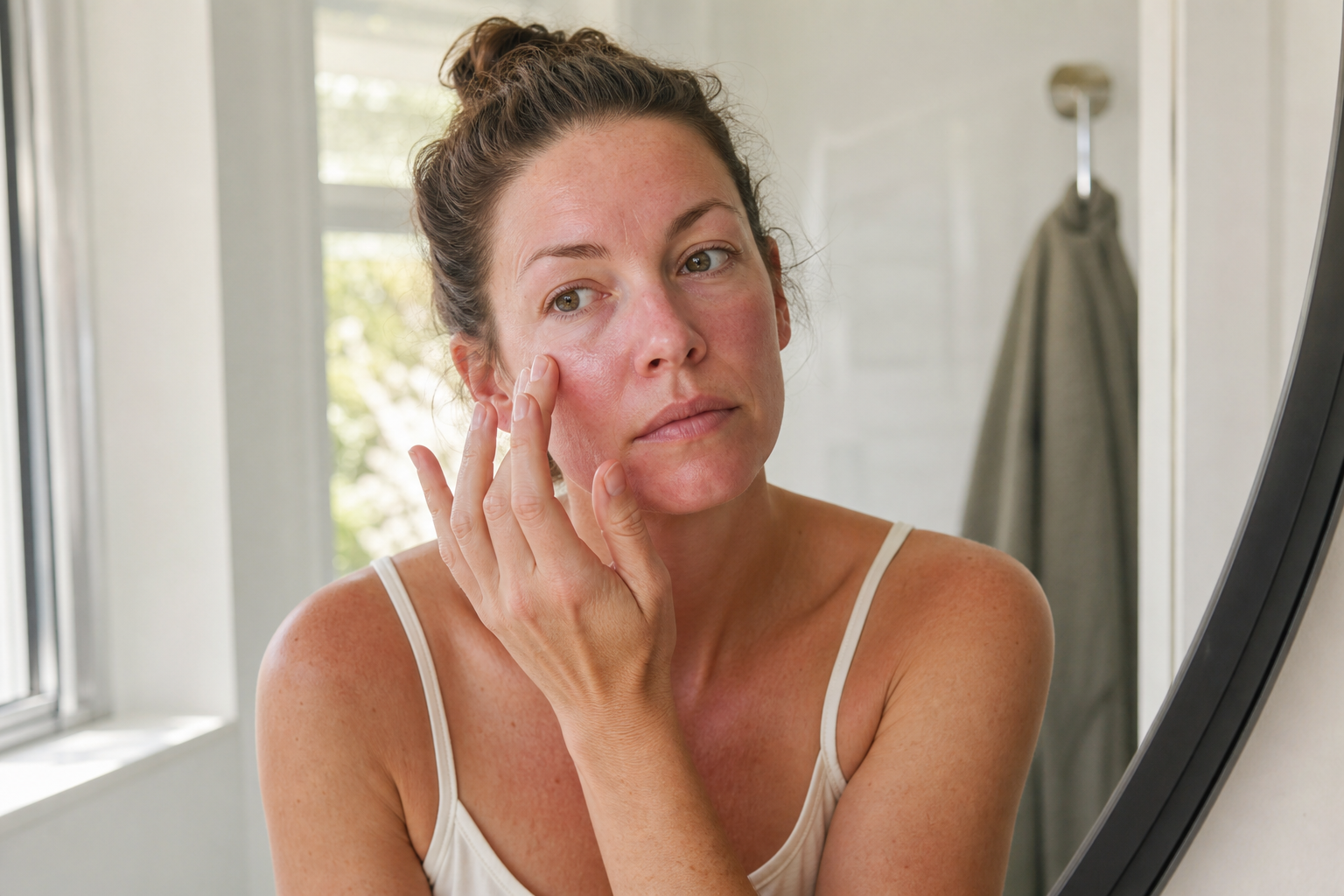
When my skin is calm, I can get away with more experimentation. When it is reactive, even a base product that looks beautiful for two hours can feel like a bad decision by lunch. That is why I do not choose foundation the same way I choose lipstick or blush. I am not looking for the most dramatic finish. I am looking for the formula that lets my skin stay quiet.
By reactive skin, I mean days when my face is flushing easily, stinging after cleansing, or showing that tight feeling that makes every extra step obvious. Reviews of sensitive skin describe this pattern as unpleasant sensory responses to products or environmental triggers that may not bother everyone else, which matches what many people mean when they say their skin is “angry” or “touchy” (PMID: 28954102). On those days, the wrong base makeup does not just look patchy. It can turn a manageable morning into a long, uncomfortable one.
What I want a base product to do first
The first question I ask is not, “How full is the coverage?” It is, “Can I wear this for a few hours without feeling it?” If the answer is no, I move on. For reactive skin, comfort is performance. A review on management options for oily sensitive skin points out that gentle, tolerable formulations matter because people with sensitive skin often react to a wider range of cosmetic triggers and need routines that minimize irritation rather than constantly challenge the barrier (PMID: 32112510).
That usually pushes me toward a light liquid foundation, serum foundation, or skin tint rather than a matte long-wear formula that sets down fast and grabs onto every dry edge. I look for texture that spreads easily in a thin layer, because thick pigment often means more rubbing, more reapplication, and more chances to disturb skin that already feels overstimulated.
The formula details I check before the shade chart
I read the ingredient list with a practical mindset. I am not trying to avoid every ingredient with a long name. I am trying to reduce the odds of a bad day. Fragrance is usually the first thing I cut. That does not mean fragrance irritates everyone, but it is an easy variable to remove when skin is already unpredictable. Reviews of allergic contact dermatitis from cosmetic products show that cosmetics can trigger allergy or irritation through a range of ingredients, including fragrance components and preservatives, so my approach is to simplify first and experiment later (PMID: 24656778).
After that, I usually prefer formulas that feel cushioned rather than aggressively oil-controlling. Ingredients such as glycerin, dimethicone, squalane, and panthenol tend to make a base feel less scratchy on application. I also like products that do not require a separate gripping primer to stay on the face. If a complexion product only behaves when I use a strong primer, powder heavily, and finish with a setting spray, it is probably too demanding for my skin on a reactive day.
- I lean toward fragrance-free formulas.
- I prefer light to medium coverage that can be built only where I need it.
- I look for slip, so I can spread product without dragging.
- I avoid anything that dries down so fast I have to chase it across my cheeks.
- I treat “24-hour wear” claims as marketing, not a personal requirement.
The finish I usually skip
Very matte base makeup can look polished in photos, but it is often the finish that betrays me first when my skin is reactive. If my barrier is a little unsettled, matte pigment catches on dryness around my nose, settles around healing breakouts, and makes redness look more obvious because the surrounding skin goes flat. I would rather let a little natural glow come through than spend the day trying to fix a rigid base.
I am also careful with formulas marketed as blurring if they rely on a lot of powdery slip. Sometimes that texture feels elegant at first and then turns grainy or tight as the day goes on. When I need longevity, I would rather build it with thin layers and selective concealer than one heavy layer of a high-control foundation.
My application routine changes more than my product choice
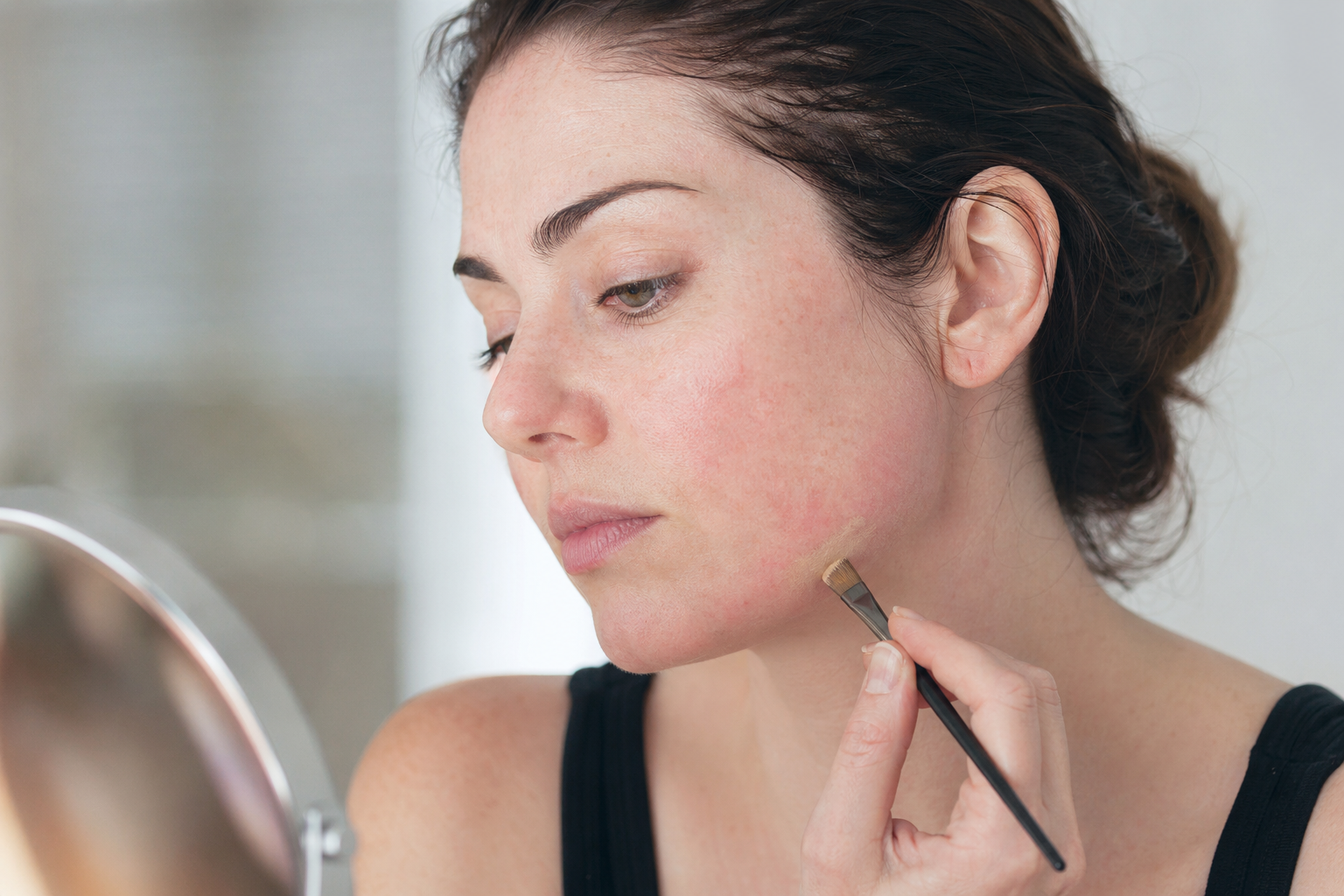
On calm days, I can use a brush confidently. On reactive days, I treat my face like it has less tolerance for friction. That means I do my skincare, wait a few minutes, then apply base in the smallest amount that will even things out. I usually start in the center of my face, where I want the most tone correction, and then sheer it out around the perimeter.
- I apply moisturizer and let it settle so the base is not sliding over wet skincare.
- If I need extra protection in daylight, I use a sunscreen that I already know my skin tolerates and let that set too.
- I spread a small amount of base on the back of my hand first, not directly onto my face.
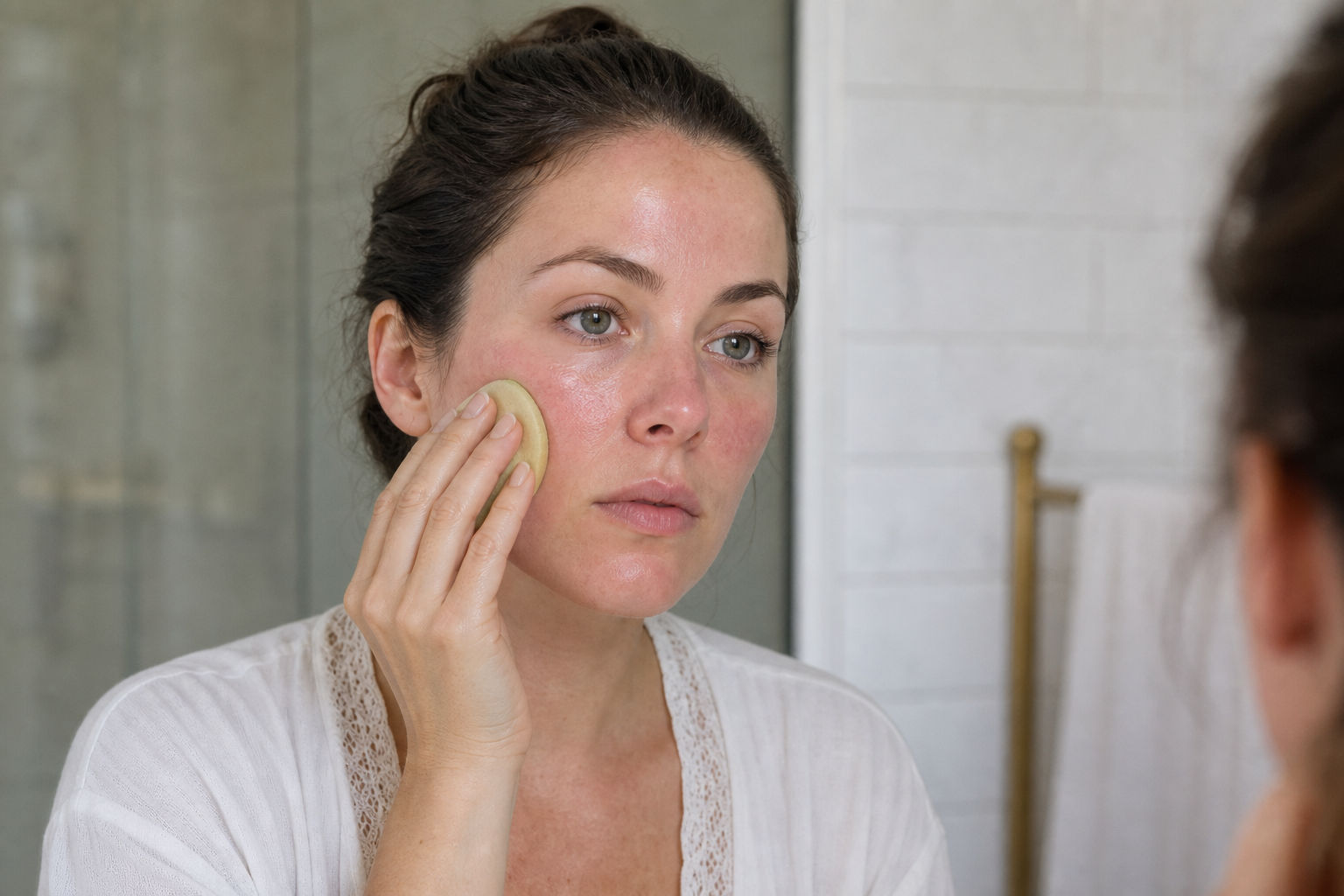
- I tap it on with fingers or a damp sponge instead of buffing hard with a dense brush.
- I add concealer only where redness or discoloration still shows through.
This method matters because reactive skin does not always object to one ingredient alone. Sometimes it objects to the total experience: too much cleansing, too much rubbing, too many layers, too many corrections. A simpler application style often does more for me than switching to a brand with louder sensitive-skin marketing.
How I handle shade matching when redness changes the picture
Reactive skin makes shade matching trickier because flushing can temporarily distort what my skin tone actually is. If I match foundation to the reddest part of my face, I can end up too deep or too pink once the flush settles down. I get a more reliable match by checking along the jawline and upper neck in natural light. I want the base to disappear into the calmer skin around the edge of my face, not perfectly mimic temporary redness in the center.
I also do not expect one product to solve everything. If a lighter coverage base is comfortable but still lets some redness through, I would rather keep the comfortable base and use pinpoint concealer than jump to a much heavier formula. Reactive skin usually looks better when I respect its texture instead of trying to erase it completely.
When I skip foundation altogether
There are days when the best base makeup choice is no traditional foundation. If my skin is stinging, peeling, or reacting to multiple products in a row, I do better with moisturizer, sunscreen, and maybe a little concealer only where I need it. That is not giving up. It is editing. Makeup should work around the condition of the skin I have that day, not the skin I wish I had.
I think this is where many people get stuck. We assume more visible redness means we need more product, but sometimes more product only makes the irritation easier to see. A lighter hand often looks fresher and feels safer.
Red flags that make me put a product back down
I become cautious when a base makeup formula has a strong scent, feels cooling or tingly on application, or starts setting before I can finish one cheek. I also pause when the finish looks beautiful only after a full prep stack of primer, color corrector, powder, and setting spray. Reactive skin tends to reward products that can stand on their own.
I am not saying everyone with sensitive skin needs the same do-not-buy list. Skin reactivity is personal. But for me, the pattern is clear: less scent, less friction, less aggressive wear claims, and fewer layers usually equals a better face by the end of the day.
My bottom line
When my skin is reactive, I choose base makeup the way I choose skincare after a flare: I simplify, reduce variables, and respect comfort as a real metric. The best product is not the one with the boldest promise. It is the one I can apply gently, wear for several hours, and remove without feeling like I need to apologize to my skin afterward.
If you are trying to figure out your own version of this, start with one fragrance-free base product, patch test it along the jawline, and wear it on a lower-stress day before making it your event makeup. That slower approach is less exciting, but it is usually how I avoid expensive mistakes.
Sources
- Duarte I, et al. Sensitive skin: review of an ascending concept. An Bras Dermatol. 2017;92(4):521-525. PMID: 28954102.
- Hong JY, et al. Oily sensitive skin: A review of management options. J Cosmet Dermatol. 2020;19(5):1016-1020. PMID: 32112510.
- González-Muñoz P, et al. Allergic contact dermatitis caused by cosmetic products. Actas Dermosifiliogr. 2014;105(9):822-832. PMID: 24656778.