How to Build a Gentle Morning Skincare Routine for Sensitive Skin
A calm morning skincare routine for sensitive skin, with cleansing, moisturizing, sunscreen, cautions, and PubMed-backed barrier advice.
Medical disclaimer: This article is for general skincare education only and is not a diagnosis or a substitute for personal medical care. If you have persistent burning, eczema, rosacea, swelling, cracking, or a rash around the eyes, please see a dermatologist.
Affiliate disclosure: This article does not include shopping links or paid product placements. If BeautySift adds retailer links later, they should be clearly labeled so readers can tell editorial guidance from commerce.
When my skin is feeling reactive, my best mornings are the boring ones. I do not try to squeeze in an exfoliating toner, a strong vitamin C, and a new sunscreen just because each one sounds useful on its own. Sensitive skin usually responds better when I reduce friction, keep the ingredient list sensible, and focus on three jobs only: cleanse if I truly need to, moisturize to support the barrier, and protect with sunscreen.
This routine is built for people whose skin stings easily, flushes after washing, or becomes tight by midday. It is also the approach I reach for after overusing actives, after a cold windy week, or during any stretch when my face suddenly dislikes products it tolerated a month earlier. The goal is not to do the absolute minimum forever. The goal is to make mornings calm enough that your skin can get through the day without extra irritation.
Why I keep the routine short
Sensitive skin is not one single diagnosis. Sometimes it is eczema-prone skin with a genuinely impaired barrier. Sometimes it is rosacea, contact dermatitis, over-exfoliation, medication irritation, or a mix of all of those. What those situations share is a lower margin for error. Every extra step adds another chance for fragrance, essential oils, acids, rough rubbing, hot water, or simple product overload to push the skin from mildly uncomfortable to visibly inflamed.
That is why I prefer a short morning structure. It gives me enough flexibility to cleanse more thoroughly after a sweaty workout, or to skip cleanser and simply rinse when my skin already feels dry. A shorter routine also makes it easier to notice which product is actually causing trouble. If five things hit your face before 8 a.m., troubleshooting becomes messy very quickly.
Step 1: Cleanse only as much as your skin needs
I do not think everyone with sensitive skin needs a full cleanser every morning. If I used a rich night cream, slept in a heavy occlusive layer, or woke up oily and sweaty, I like a small amount of a gentle low-foam cleanser. If my skin feels dry, I often rinse with lukewarm water and move on. The point is to remove what is uncomfortable, not to strip the face until it feels squeaky.
A useful detail here is cleanser type. Soap-based cleansers can raise skin pH and disrupt barrier lipids more than syndet cleansers, which is one reason they are more likely to leave reactive skin tight or itchy. A 2022 review on soaps and syndets described synthetic detergent cleansers as better able to maintain skin structure and barrier integrity than classic soap bars (PMID: 35335373). For sensitive skin, that usually translates into a fragrance-free cleanser with mild surfactants, a quick rinse, and no washcloth scrubbing.
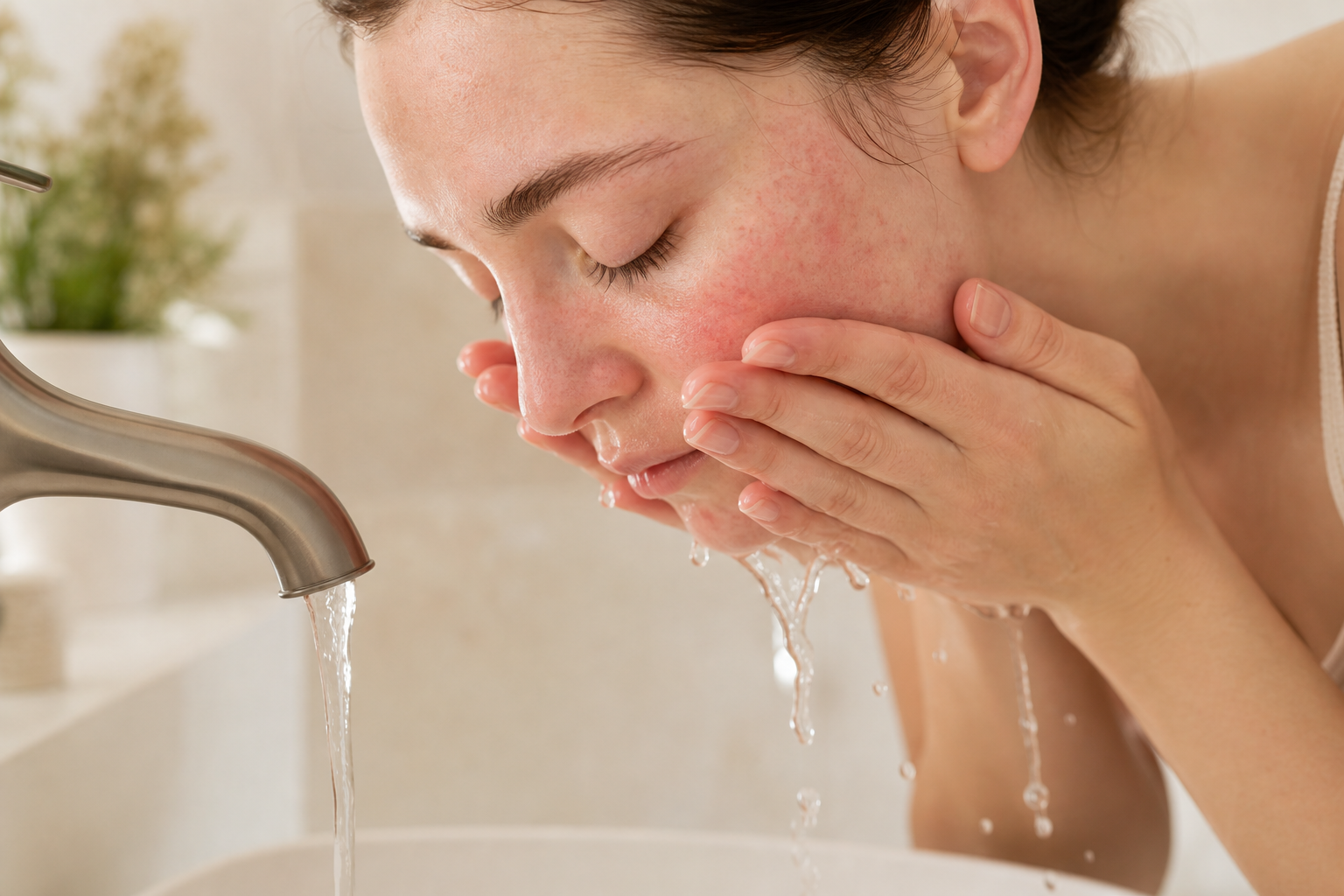
Water temperature matters more than many people realize. Very hot water feels relaxing in the moment, but it can worsen dryness and redness. I aim for lukewarm water, use my fingertips instead of a cleansing device, and keep contact time short. If my cheeks are already pink before moisturizer, that is usually my sign that I asked too much from the cleansing step.
Step 2: Moisturize while the skin still feels slightly damp
The moisturizer step is where I try to make the routine do the heavy lifting. A good barrier-focused moisturizer can reduce that tight, papery feeling that sensitive skin gets after washing and can help keep water in the outer layer of the skin through the morning. I look for formulas built around humectants like glycerin, barrier lipids such as ceramides, and bland occlusives or emollients that seal without stinging.
There is reasonable support for this approach. A 2026 randomized self-controlled study on xerosis found that a ceramide and natural oil body lotion improved hydration and barrier-related measures over four weeks, including stratum corneum hydration and transepidermal water loss trends (PMID: 41622615). Another clinical study found that ceramide-containing sunscreen and moisturizer formulations helped limit UV-induced skin surface barrier alterations (PMID: 33852258). Those studies are not a license to assume every ceramide cream behaves identically, but they support the basic idea that barrier lipids can be useful when skin is dry and reactive.
I usually spread moisturizer over the cheeks first, then the areas that tend to sting around my nose and mouth, and then whatever is left over my forehead. If a product pills every morning, I stop pretending I will tolerate it better next week. Sensitive skin often does better with fewer polymers, less fragrance, and fewer decorative extras.
Step 3: Sunscreen is the part I do not skip
If your skin is sensitive, sunscreen can be tricky because the wrong formula can sting, especially around the eyes. Even so, morning protection matters. Sun exposure can intensify redness, worsen post-inflammatory marks, and make barrier recovery harder when the skin is already inflamed. I look for broad-spectrum SPF 30 or higher, then choose the most comfortable texture I can reliably wear in the correct amount.
If my skin is flaring, I usually lean toward simpler, moisturizing sunscreens and avoid layering multiple potentially irritating actives underneath. In skin of color, photoprotection is also relevant for post-inflammatory hyperpigmentation. A 2026 randomized investigator-blinded study found that a broad-spectrum sunscreen containing niacinamide and sclareolide reduced markers linked with post-inflammatory hyperpigmentation after UV and visible light exposure in participants with darker skin tones (PMID: 41240206). That does not mean everyone needs that exact formula, but it does reinforce the broader point that daily sunscreen can be part of pigment prevention, not only sunburn prevention.
I also try not to judge sunscreen by the first ten seconds. Many formulas settle down after a minute. What I do pay attention to is delayed discomfort: watery eyes, persistent facial heat, itching at the jawline, or a prickly feeling that gets stronger after application. Those are better reasons to switch than a mild initial dewiness that fades.
Ingredients I usually keep, and the ones I pause first
When my skin is reactive, I keep the morning formula simple. Ingredients I tend to do well with include glycerin, ceramides, squalane, petrolatum in small amounts, colloidal oatmeal in bland formulas, and niacinamide at a modest concentration if my skin already knows it. Ingredients I pause first are exfoliating acids, rough scrubs, high-alcohol formulas, strong fragrance, many essential oils, and very high-strength vitamin C serums that sting on contact.
Niacinamide deserves a small caveat. It can support barrier function and reduce some redness in certain routines, but more is not automatically better. A 10% niacinamide serum is not the only path to good skin, and for some people a lower concentration inside a moisturizer is easier to tolerate. With sensitive skin, the elegant answer is often the gentler answer.
A sample routine I would actually follow
- Option 1, very dry or compromised morning: rinse with lukewarm water, apply moisturizer on slightly damp skin, then apply broad-spectrum sunscreen.
- Option 2, normal sensitive-skin morning: use a gentle fragrance-free cleanser, pat dry without rubbing, apply moisturizer, then sunscreen.
- Option 3, sweaty workout morning: cleanse with a mild low-foam formula, moisturize if needed, and finish with sunscreen once the skin feels comfortable again.
I do not usually add an antioxidant serum, an exfoliant, and a spot treatment before breakfast unless my skin is in a very stable place. Morning is the time I want consistency, not ambition.
Mistakes that quietly make the routine harsher
The most common mistake I see is stacking too many products that are each supposedly gentle. Three mildly active products can still feel like too much when your barrier is already compromised. The second mistake is confusing dryness with the need for a stronger cleanse. Tightness after washing is usually a clue to back off, not double down. The third is underapplying moisturizer because you are worried about pilling under sunscreen. In practice, choosing a more compatible texture works better than starving the skin of support.
Another issue is chasing instant brightness. Sensitive skin often improves because irritation is reduced, not because the routine becomes more aggressive. If your face looks calmer, less blotchy, and less tight by the end of the week, that is meaningful progress even before you see dramatic glow.
When I stop experimenting and get help
If a simple routine still burns, if redness is persistent, or if the skin around the eyes and mouth keeps cracking, I stop treating it like a normal product mismatch. Recurrent irritation can signal allergic contact dermatitis, rosacea, eczema, seborrheic dermatitis, or another condition that deserves a proper diagnosis. That is especially true if symptoms are getting worse despite fewer products.
The morning routine I trust most for sensitive skin is the one that respects the barrier first. Cleanse only when needed, moisturize with purpose, protect daily, and give your skin a chance to be quiet. That sounds simple because it is simple, and for reactive skin that is often the point.
Sources
- PMID: 35335373 — Skin Cleansing without or with Compromise: Soaps and Syndets.
- PMID: 41622615 — Body lotion study in xerosis using lipid and microbiome measures.
- PMID: 33852258 — Efficacy of Ceramide-Containing Formulations on UV-Induced Skin Surface Barrier Alterations.
- PMID: 41240206 — An Investigator-Blinded, Randomized Trial of a Broad-Spectrum Sunscreen Containing Sclareolide and Niacinamide for the Prevention of Post-inflammatory Hyperpigmentation in Skin of Color.