How I Adjust My Routine When My Skin Feels Tight by Midday
What I change when my skin feels tight by midday, with barrier-minded cleansing, moisturizer strategy, sunscreen adjustments, and PubMed-backed context.

Medical disclaimer: This article is for general skin-care education and does not replace medical advice. If your skin becomes swollen, blistered, infected, suddenly painful, or keeps tightening and burning even after you simplify your routine, I think it is safest to check in with a dermatologist or another licensed clinician.
Affiliate disclosure: This article does not include affiliate product links or paid retailer recommendations. It is an AI-assisted BeautySift editorial piece focused on routine logic, barrier care, and verified PubMed sources rather than shopping pressure.
TL;DR: When my skin feels tight by midday, I do not automatically add more active products. I usually get better results by stepping back to a gentler cleanse, using a simpler moisturizer strategy, keeping sunscreen application even but not heavy, and watching for clues that the problem is irritation rather than ordinary dryness. Tightness is often a texture and barrier signal, not a command to do more.
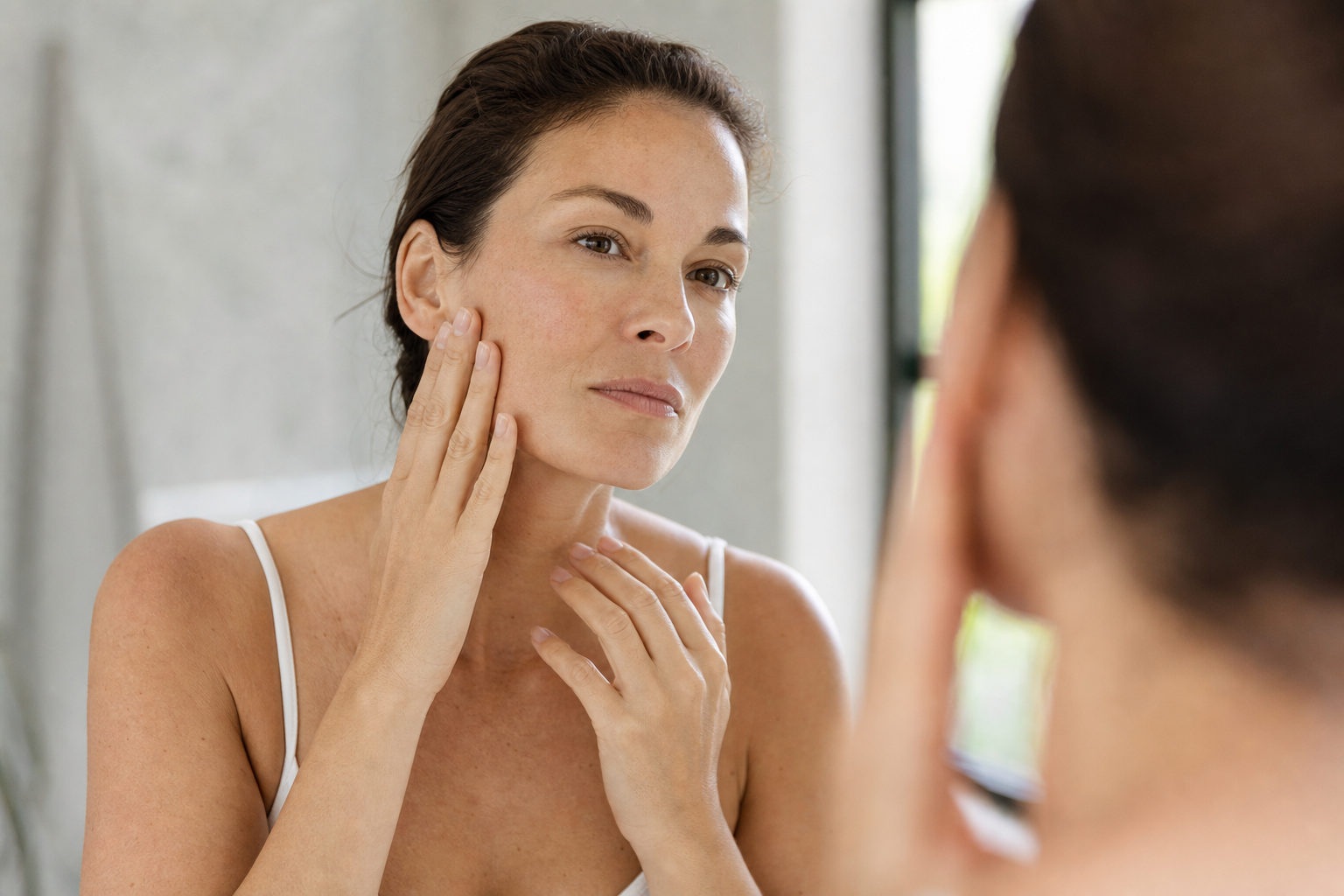
I have learned that midday tightness can change the mood of my whole day. My skin does not always look dramatically red when it happens. Sometimes it simply feels a half-size too small, especially around my cheeks, mouth, or under-eye area. Makeup starts sitting oddly, smiling feels less comfortable, and I become tempted to keep layering random hydrating products just to chase relief. I used to do exactly that. It rarely helped for long.
Now I treat that feeling as information. Sensitive skin research describes stinging, burning, tightness, and discomfort as common features of a real skin-sensitivity pattern rather than a vague cosmetic complaint (PMID: 26805416). That matters to me because it keeps me from dismissing the sensation just because no one else can see it clearly. When my face feels tight by noon, I assume my barrier may be under strain, my cleansing was a little too aggressive, my morning layers were not balanced well, or my environment pulled more water from the skin than I expected.
I also remind myself that the fix is usually boring in the best possible way. I do not need a dramatic rescue serum every time my cheeks feel stretched. I need to make the routine quieter and more efficient.
First, I decide whether the problem is dryness, irritation, or both
Midday tightness is not one single thing. If my skin feels slightly dry but otherwise calm, I think about water loss, a light morning moisturizer, indoor air, or too much time in heat or sun. If tightness comes with tingling, redness, or that sharp post-wash discomfort that makes my face feel hot, I suspect irritation. In practice, the two often overlap.
That distinction changes what I do next. Dryness alone may respond to a better moisturizer structure. Irritation needs me to remove friction and extra actives first. A newer review on ultraviolet-radiation skin pathogenesis describes barrier compromise as an early event in UV-related damage (PMID: 41774605). I do not use that as a reason to panic, but I do use it as a reminder that a tight face after a bright morning commute can reflect more than simple dehydration.
My quick check is simple. I ask myself four questions: Did my cleanser leave my face squeaky? Did I use an exfoliant, retinoid, or acne treatment last night? Did my sunscreen sting when I applied it? Am I in heavy air conditioning, heat, or wind today? Those answers usually point me toward the right adjustment faster than adding another layer at random.
What I change in the morning when tightness keeps repeating
If the same midday tightness shows up several days in a row, I look at my morning routine before I look for a new product. The first thing I change is cleansing. On mornings when my skin already feels a little fragile, I often skip a full foaming cleanse and use lukewarm water or a very gentle, low-stripping cleanser instead. That sounds almost too basic, but it matters. Tightness that begins right after cleansing is often the earliest clue that I have removed more oil and surface comfort than my skin could spare that day.
I also stop trying to make my face feel ultraclean. That "fresh" stripped feeling is not a success signal for me anymore. A review on gentle cleansers and moisturizers in skin maintenance supports the idea that mild cleansing and consistent moisturization are central to reducing barrier stress, especially in skin that is already vulnerable (PMID: 39073154). My takeaway is practical: if my face is getting tight by lunch, I should not be starting the morning with a punishment cleanse.
After cleansing, I usually move straight to moisturizer while my skin is still slightly damp, but I do not flood my face with five watery layers first. Too many light layers can feel elegant for ten minutes and then leave me chasing comfort again. I prefer one dependable moisturizing step that combines humectant support with some occlusive hold, especially over the cheek area.
Why I simplify actives before I increase hydration
When my face feels tight, my first impulse used to be hydration at any cost. But if I used exfoliating acids the night before, or if I stacked vitamin C, retinoid, and acne treatment too closely over the week, the more honest answer is often that I need less stimulation, not more product. I will usually pause leave-on acids for a few days, reduce retinoid frequency, and keep the routine focused on cleansing, moisturizing, and sunscreen.
This is where restraint helps me most. Sensitive skin does not always object with obvious peeling. Sometimes it objects by feeling overworked. A tight face that also looks shiny, patchy, or suddenly reactive under sunscreen often means my barrier is asking for a simpler plan. Instead of layering extra toners, I try to lower the total number of decisions my skin has to tolerate.
That simpler plan also makes it easier to identify what is actually helping. If I cut the routine down and tightness improves, I have learned something useful. If the feeling stays the same despite a calm routine, then I know to think harder about environment, cleansing habits, or an ingredient sensitivity.
How I use moisturizer when my skin feels too small by noon
The moisturizer itself matters, but the category logic matters more than trend language. I want something that helps reduce water loss and leaves a flexible, comfortable finish. Petrolatum remains one of the most useful reference ingredients here. A PubMed review calls petrolatum more than an inert moisturizer and discusses its barrier-repair and antimicrobial context (PMID: 26431582). I do not read that as a command to smear on the heaviest ointment every morning. I read it as evidence that a good barrier-supportive finish can be simple and effective.
In real life, I usually do one of two things. If my skin is only mildly tight, I use a cream with humectants plus barrier-supportive lipids in a moderate layer and leave it alone. If my skin is clearly irritated, I use a lighter moisturizer all over and a very small amount of richer occlusive product only on the tightest zones, usually around the mouth or the high part of my cheeks. That spot-treatment approach keeps me from turning my whole face into a slippery surface that makes sunscreen hard to spread evenly.
I do not usually do a full midday routine reset unless I am at home. If I am out, I would rather protect the barrier by avoiding unnecessary rubbing than try to perfectly re-create my morning routine in public. Too much touching often makes my face feel worse.
What I do with sunscreen on tight-skin days
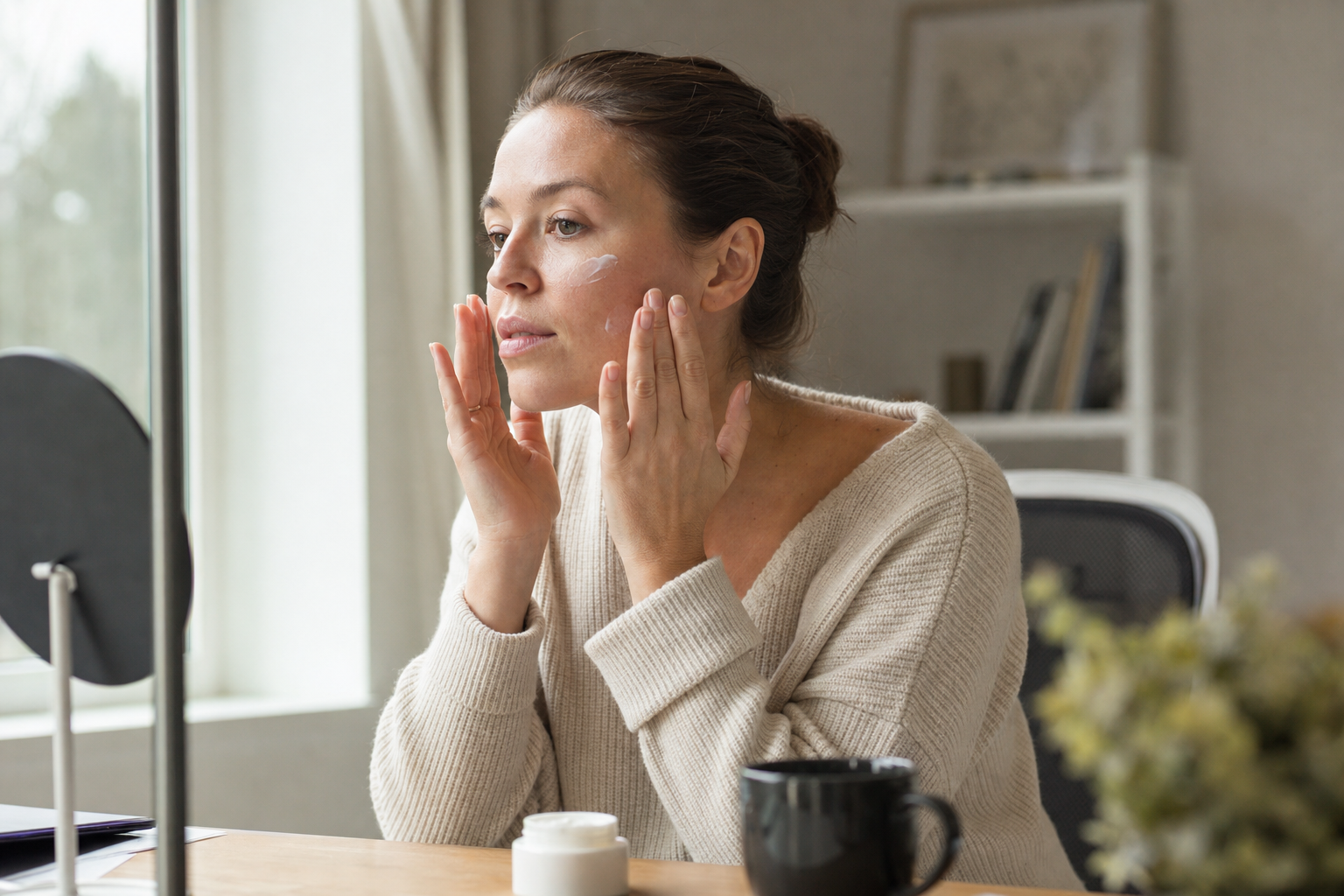
I do not stop sunscreen because my skin feels tight. I make the application easier. Photoprotection remains basic skin care, and review literature still supports sunscreen, clothing, and shade as core tools for reducing ultraviolet burden (PMID: 18045361). On days when my skin feels fragile, I use thinner, more deliberate layers and avoid aggressive rubbing. If a sunscreen always stings on compromised skin, I take that information seriously and set it aside instead of forcing the relationship.
The balance I aim for is comfort plus coverage. If my moisturizer is too heavy, sunscreen can slide or pill. If moisturizer is too light, sunscreen may feel draggy and amplify tightness. The middle ground is usually a calm cream underneath, a few minutes of settling time, and then a steady sunscreen application with my hands rather than frantic reworking.
I also pay attention to the environment after application. A windy walk, a dry office, or sitting directly under strong air conditioning can all make a decent routine feel inadequate by midday. That does not always mean the products were wrong. Sometimes the day itself is harsher than usual.
When I stop troubleshooting and get help
I am comfortable adjusting a routine for ordinary tightness. I am not comfortable trying to self-manage signs that look more like dermatitis, allergy, or a flare of an underlying condition. If tightness comes with swelling, hives, marked redness around the eyes, cracked corners of the mouth, oozing patches, or a rash that keeps spreading, I think home troubleshooting has reached its limit. The same is true if every basic moisturizer burns or if my face feels persistently worse for more than a week despite a stripped-back routine.
That is also when I become suspicious of a specific ingredient rather than the whole idea of skin care. One bad reaction does not mean my skin can tolerate nothing. It may simply mean one formula is wrong for me.
The routine I return to most often
When my skin feels tight by midday, my reset routine is usually this: a gentler morning cleanse, one well-chosen moisturizer, a careful sunscreen layer, fewer actives for several days, and much less touching during the day. If needed, I add a tiny amount of richer cream only to the spots that feel as if they are being pulled. That approach is less exciting than buying a new hydration launch, but it is the one that keeps my skin most cooperative.
I have become much better at respecting the signal instead of arguing with it. Tightness is often my skin's early warning system. If I answer it with gentleness rather than volume, I usually get back to normal faster.
Sources: PMID: 26805416; PMID: 41774605; PMID: 39073154; PMID: 26431582; PMID: 18045361.