How I Handle Sunscreen Pilling Without Restarting My Whole Routine
A practical fix for sunscreen pilling over moisturizer, with PubMed-backed context on wearability, coverage habits, and calmer layering steps.
Medical disclaimer: This article is for general skin-care education and does not replace medical advice. If your skin is burning, swelling, blistering, peeling severely, or reacting to multiple products no matter how simple your routine becomes, I think it is safest to see a dermatologist or another licensed clinician.
Affiliate disclosure: This article does not include affiliate product links or paid retailer recommendations. It is an AI-assisted BeautySift editorial piece built around verified PubMed sources and practical routine experience rather than sponsored product placement.
TL;DR: When sunscreen pills on top of moisturizer, I do not assume I need an entirely new routine. I usually get better results by using less product per layer, giving moisturizer a little time to settle, switching from rubbing to spreading in thin sections, and stopping extra skincare steps that leave too much slip behind. The goal is not a perfectly invisible finish at all costs. The goal is even sun protection I will actually wear.
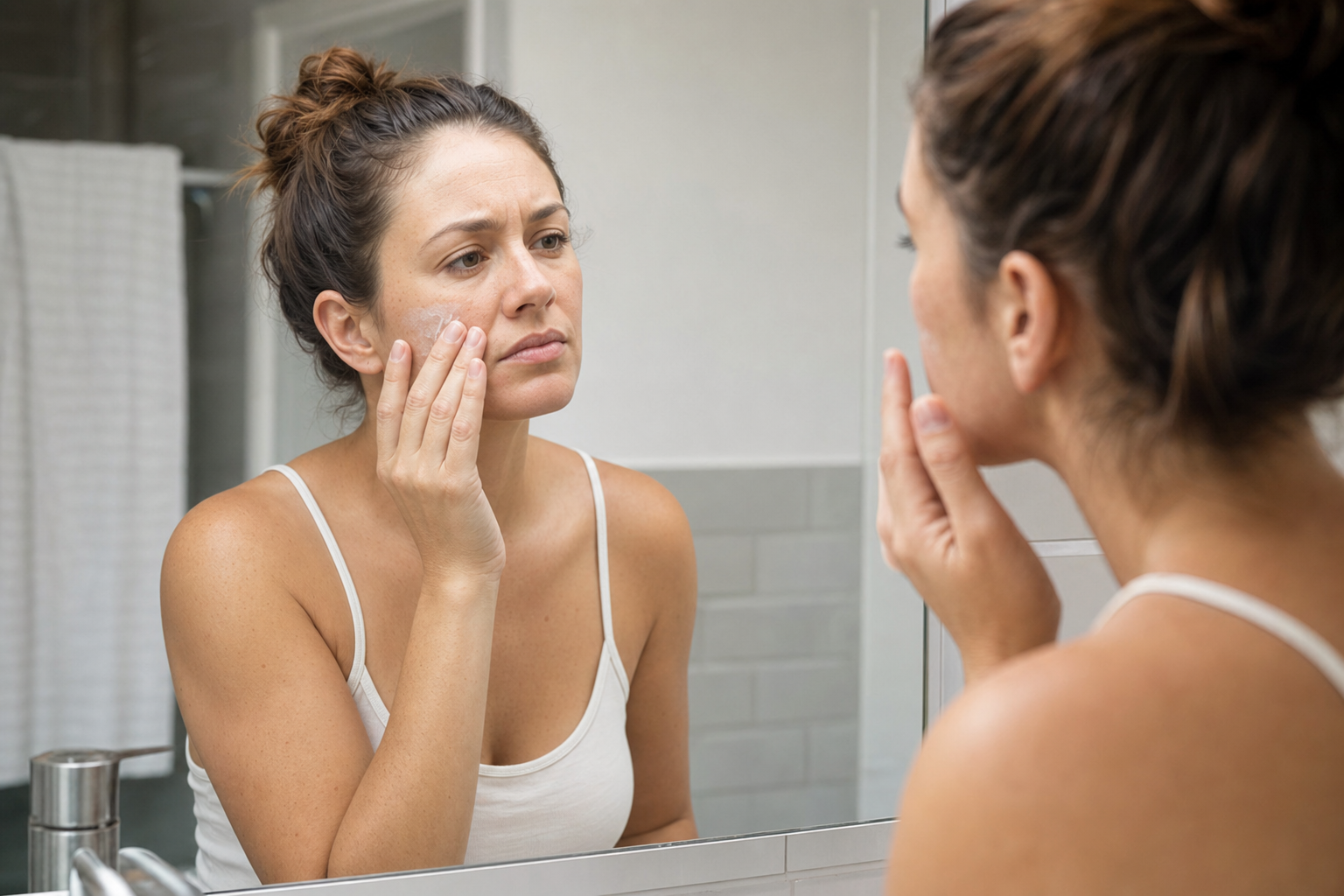
I have made the mistake of treating pilling like a moral failure in my routine. The little rolls start forming around my jaw or hairline, and suddenly I am wiping everything off, washing my face again, and turning a normal morning into a negotiation with the mirror. Over time, I stopped doing that. Most of the time, pilling is not a sign that my skin is uniquely difficult. It is a sign that I have too much product sitting on the surface, I moved too quickly between layers, or I chose textures that do not cooperate when I rub them together.
That practical mindset matters because real-life sunscreen use is already fragile. A study on consumer sunscreen preferences found that performance traits such as feel and cosmetic acceptability influence whether people want to use a product consistently (PMID: 27385189). Another paper looking at sunscreen use at Danish beaches showed that coverage habits are often imperfect and can be improved with better application behavior rather than wishful thinking (PMID: 29619938). That matches my experience exactly. If a sunscreen routine feels messy, pills badly, or turns makeup patchy, people do not usually become more diligent. They quietly start applying less or skipping steps.

What pilling usually means in my routine
Pilling usually looks dramatic, but the cause is often ordinary. I most often see it when I combine a rich moisturizer, a silicone-heavy sunscreen, and a rushed application style. If I keep massaging instead of stopping once the sunscreen is spread, I can feel those little soft rolls start to collect. The same thing happens when I add too many optional layers before sunscreen: hydrating toner, essence, serum, moisturizer, sunscreen, and then primer because I am trying to rescue the finish. Ironically, that rescue plan can create the problem.
I try to think of the morning in physical rather than emotional terms. How much material is sitting on the surface? Is the moisturizer still wet? Did I choose a sunscreen with a film-forming texture that needs a lighter hand? Am I pressing and smoothing, or am I buffing as if I am trying to erase texture? Those questions help me faster than blaming one product immediately.
I also remind myself that pilling does not automatically mean the sunscreen is bad. Sometimes it means the texture is wrong for the products underneath, or the total load is too high for my skin that day. Dry, irritated, or over-treated skin can make everything feel more uneven, so friction becomes a bigger issue. On those mornings, my solution is almost never to add more. It is to simplify.
The first thing I change: total product load
If my sunscreen is pilling, I first look at how much skincare I applied before it. I keep the step count boring: one hydrating layer if I need it, one moisturizer if I need it, then sunscreen. If I used a very emollient night cream by accident in the morning, or if my serum already feels cushiony and leaves a film, I may reduce moisturizer instead of forcing the same amount every day. That is not me telling people to skip hydration universally. It is me admitting that sunscreen sits on top of a real surface, and some mornings that surface is already full.
One practical shift that helps me is spreading moisturizer farther with a smaller amount instead of chasing a plush finish. I want comfort, not a visible coating. If my skin still feels damp or slippery after a minute or two, I know sunscreen will probably drag through it rather than sit evenly on top.
I am careful here not to swing too far in the other direction. Pilling frustration can tempt people to under-apply sunscreen, and that tradeoff is not worth it. The answer is usually to reduce the layers underneath or the amount of each support step, not to shortchange the protection step itself.
The second thing I change: timing between layers
I do not always need a long waiting period, but I do need enough time for my moisturizer to stop feeling actively wet. For me, that usually means about one minute for a light lotion and a little longer for a richer cream. I use that pause to brush my hair, get dressed, or make coffee instead of staring at my skin and poking at it.
This small pause matters because pilling gets worse when I spread sunscreen over a layer that is still moving around. If the base is too fresh, the sunscreen can start dragging the previous layer into little balls. I get a smoother result when the moisturizer has settled enough that my fingers glide without lifting product back up.
There is no magic universal timer here. Humidity, skin type, the amount I used, and the formula itself all change the answer. I just want the skin to feel cushioned rather than wet. That is a better cue for me than following a rigid number.
The third thing I change: how I apply the sunscreen itself
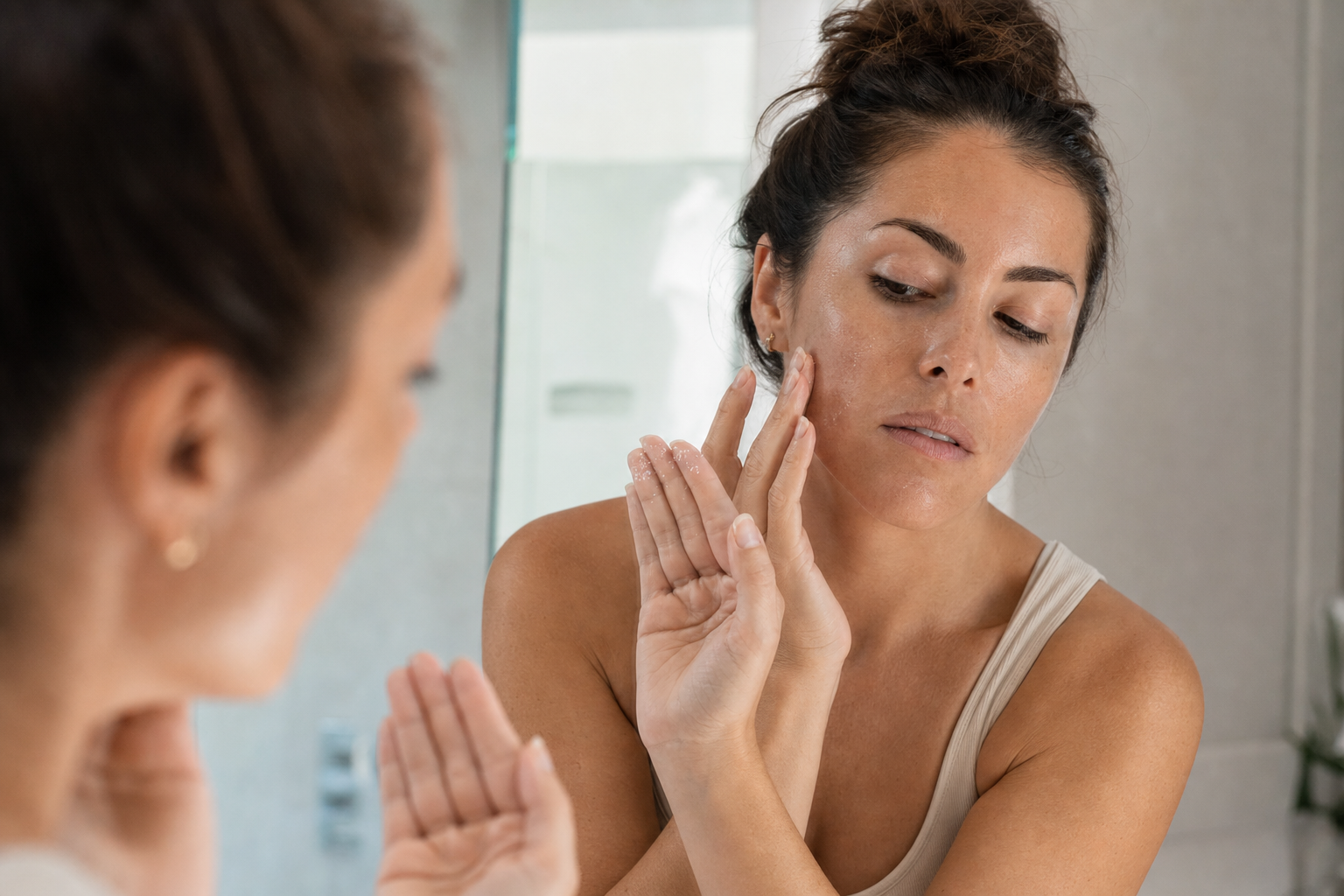
This is the fix that has probably saved me the most time. I no longer dump sunscreen onto both cheeks and massage it around until it disappears. Instead, I apply it in smaller sections and spread with fewer passes. If I keep rubbing long after the product is distributed, I increase the odds that friction will roll product up.
I usually place sunscreen across the forehead, cheeks, nose, and chin, then connect those sections with a gentle smoothing motion. Once I have an even layer, I leave it alone. If I notice a thicker patch, I pat and feather the edges rather than buffing the whole face again. That change sounds minor, but it often decides whether my finish stays smooth or starts shedding little crumbs.
I also watch the order of operations around makeup. If I plan to wear base products, I give sunscreen a few minutes to form its film before I go in with foundation or concealer. When I rush directly from sunscreen to a gripping primer, I get more texture conflict and more rolling. When I let the sunscreen settle first, I usually need fewer corrective moves later.
What I cut on bad pilling mornings
On mornings when everything wants to roll, I cut the optional extras first. That may mean skipping primer, using a lighter moisturizer, dropping a rich serum, or avoiding facial oil entirely. Oils are not evil, but if I already know a sunscreen is temperamental, adding more slip underneath rarely helps me. I would rather choose the minimum comfortable base than build a glossy sandwich I have to fight with.
I also avoid trying to “fix” pilling with repeated tapping from dirty hands, facial mist, or another random layer of moisturizer. Once the surface starts breaking up, endless tweaking usually makes it worse. If the pilling is minor, I brush away the little rolls gently and move on. If it is severe, I would rather reset once than keep grinding the same film into my skin.
That reset, however, is my last move, not my first. Earlier in my routine life, I washed everything off too quickly. Now I know many mild pilling episodes improve if I simply stop touching my face and let the layer settle.
How I decide whether the sunscreen or the moisturizer is the real issue
If the same sunscreen pills over multiple moisturizers, I suspect the sunscreen texture is simply a poor fit for how I like to layer. If one moisturizer causes trouble under several sunscreens, then the moisturizer is probably leaving more residue than I realized. I test this slowly, changing one variable at a time for a few mornings instead of declaring every product incompatible on the same day.
I keep notes on three things: how heavy the base felt before sunscreen, whether I had to rub a lot to spread the sunscreen, and whether pilling started immediately or only after makeup. Those clues usually point to the real problem. Immediate pilling often suggests too much surface product or too much friction. Pilling after makeup often suggests I rushed the sunscreen film or added another layer that grips too aggressively.
This is also where honesty helps. Sometimes the offending step is not the formula. It is me using far more product than my face can comfortably hold in the time I gave it.
When I stop troubleshooting and get help
If sunscreen pilling is happening because my skin is raw, flaky, burning, or reacting to almost everything, I stop treating it like a purely cosmetic annoyance. That kind of persistent reactivity can mean my barrier is irritated, I am overusing active ingredients, or I am reacting to a specific product. In that situation, the smarter move for me is simplifying the routine and, if the reaction keeps going, checking with a clinician.
I also pay attention if I see a rash pattern rather than just cosmetic rolling. Itching, swelling, stinging that worsens, or recurring irritation with different sunscreens is a different conversation from simple pilling. A dermatologist can help sort out whether I am dealing with irritation, allergic contact dermatitis, or a barrier problem that needs a calmer plan.
What reliably works for me now
My best sunscreen mornings are not the fancy ones. They are the mornings when I use a modest amount of moisturizer, wait until the surface feels settled, apply sunscreen in sections, and stop rubbing once it is evenly spread. If I want makeup, I give the sunscreen a little breathing room before I add more texture on top. That routine is less dramatic than a total product overhaul, but it saves me from restarting my whole face at 8 a.m.
The lesson I keep coming back to is simple: pilling is usually a routine engineering problem, not a character flaw. When I make the layers thinner, calmer, and less busy, I usually get the finish and the protection I was trying to force in the first place.
Sources: Xu S, Kwa M, Agarwal A, Rademaker A, Kundu RV. Sunscreen Product Performance and Other Determinants of Consumer Preferences. JAMA Dermatol. 2016;152(8):920-927. PMID: 27385189. https://pubmed.ncbi.nlm.nih.gov/27385189/
Wulf HC, Ryborg CT, Leonardi-Bee J. Sunscreen use at Danish beaches and how to improve coverage. Br J Dermatol. 2018;179(2):473-482. PMID: 29619938. https://pubmed.ncbi.nlm.nih.gov/29619938/