How I Layer Sunscreen When My Skin Is Irritated
My practical sunscreen routine for irritated skin, with simple layering steps that reduce sting and protect a fragile skin barrier.
Medical disclaimer: This article is for general skin-care education and does not replace medical advice. If your face becomes swollen, blistered, persistently painful, or develops a spreading rash after sunscreen or any other product, I think it is smart to stop using it and check with a dermatologist or another licensed clinician.
Affiliate disclosure: This article does not include affiliate product links or paid retailer recommendations. I am focusing on technique, texture, and irritation management rather than steering you toward a specific purchase.
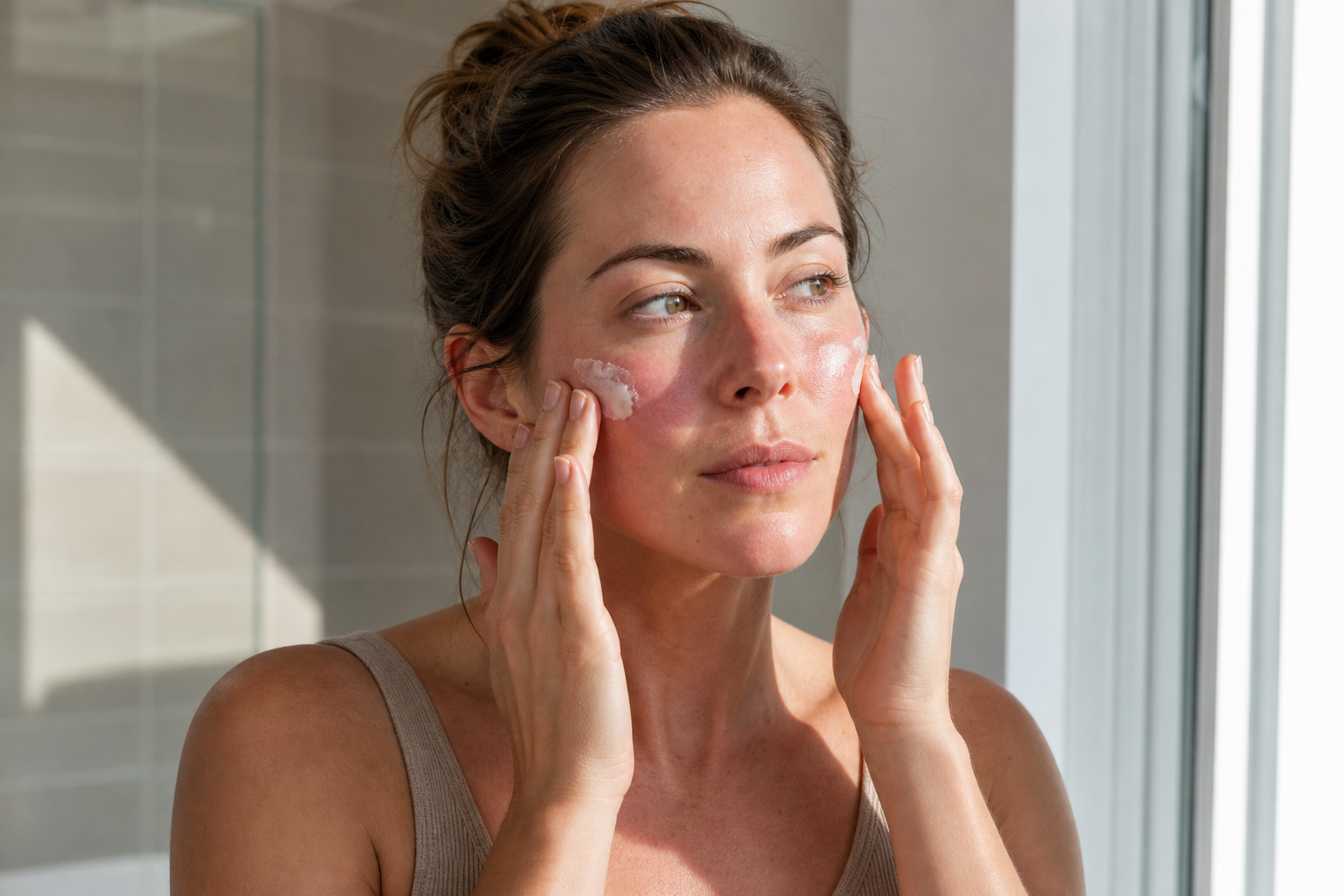
When my skin is irritated, sunscreen becomes the step I am most tempted to skip and the step I most need to get right. Freshly reactive skin can make almost everything feel louder: the slip of a lotion, the dry-down of a fluid, even the friction from rubbing too long. I have learned that forcing a complicated SPF routine onto unhappy skin usually backfires. What helps me is treating sunscreen like the final protective layer of a calm, stripped-down routine instead of one more treatment step.
That approach has a reasonable evidence base. Sensitive skin is commonly described by stinging, burning, tightness, and discomfort, and it often overlaps with barrier disturbance or underlying conditions such as rosacea and atopic dermatitis rather than existing as a vague cosmetic complaint alone (PMID: 26805416). Separate photoprotection research also supports the bigger picture: ultraviolet exposure is damaging to skin, and sunscreen, clothing, and shade are core tools for reducing that burden (PMID: 18045361). A newer review goes further by framing barrier compromise as an early event in ultraviolet-radiation skin damage, which is especially relevant when skin already feels fragile (PMID: 41774605).
So when my face is cranky, my goal is not perfect elegance. My goal is practical protection with the least possible drama.
First, I figure out whether my skin is irritated or actively reacting
I do not handle every uncomfortable sunscreen day the same way. If my skin is a little warm, dry, or sting-prone after too many actives, I usually simplify my routine and continue with sunscreen. If I have sudden swelling, hives, sharp burning, or a rash that is getting worse, I do not treat that like ordinary sensitivity. That is the point where I stop experimenting and think about medical advice, because irritation and allergy are not the same thing.
This distinction matters with sunscreen because some people react to the formula rather than to the idea of wearing SPF itself. Recent dermatology literature keeps paying attention to sunscreen allergens and photoallergy, which is a good reminder that a bad sunscreen experience can be about a specific ingredient mix, fragrance, preservative system, or vehicle rather than sunscreen as a category (PMID: 41967979; PMID: 41903515). In other words, if one formula burns, I do not conclude that my skin can never tolerate sun protection. I conclude that I need a quieter formula and a gentler application style.
I keep the layers underneath sunscreen boring
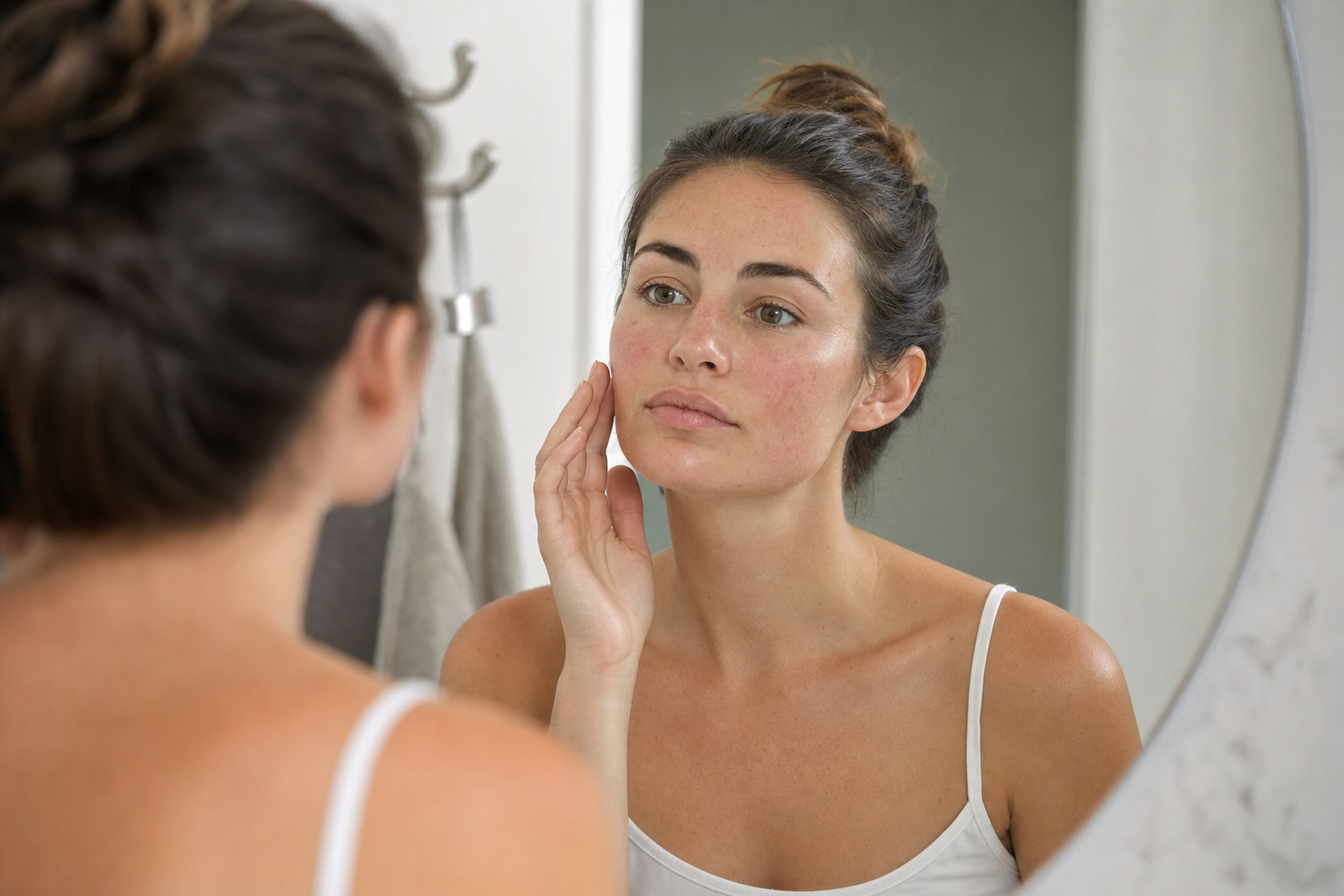
On irritated-skin days, I do less underneath SPF, not more. If I have already used a gentle cleanser, I usually stick to one simple hydrating or moisturizing step and let it settle briefly before sunscreen. I do not pile on exfoliating toner, vitamin C, retinoid, multiple serums, and then expect sunscreen to glide on peacefully over the top. That kind of layering can increase the chance of pilling, rubbing, and cumulative sting.
My preferred base is a bland moisturizer or hydrating serum that I already know my skin tolerates. I want enough slip that sunscreen can spread without tugging, but not so much residue that it starts rolling off. If my moisturizer leaves a greasy film, I use a smaller amount. If it dries down to nothing and my face still feels tight, I give it one more light pass and wait a few minutes. The right setup is not about chasing a trendy sandwich method. It is about reducing friction.
I also try not to apply sunscreen onto wet, overheated skin right after a hot shower. When my face feels flushed, I wait until it has cooled down. That small pause makes a difference for me because warm, irritated skin seems to interpret every formula more aggressively.
I choose texture before I obsess over finish
When my barrier is unhappy, texture matters more to me than whether a sunscreen is dewy, invisible, or fashionable on social media. I usually do best with creams, lotions, or milk textures that spread easily and do not require repeated rubbing to cover the face. Very alcoholic, fast-drying fluids can feel fine on my normal skin but surprisingly sharp on irritated cheeks. Highly fragranced formulas are another category I approach carefully when I am already sensitized.
That does not mean one texture is universally best. It means I choose the formula that lets me reach an even layer with the least sting. Sometimes that is a moisturizing cream sunscreen. Sometimes it is a mineral-leaning lotion. Sometimes it is simply the sunscreen I already know and trust, used over a minimal routine. I am less interested in sunscreen tribalism than in avoiding avoidable triggers.
I also accept that “cosmetically elegant” is relative when skin is reactive. A formula can leave a bit more shine or a little more cast than I would prefer on a good skin day and still be the better choice if it does not make my face feel angry. Comfort has practical value because the sunscreen I can actually wear in the right amount is more useful than the one I keep wiping off.
I apply in two gentle passes instead of one aggressive rub
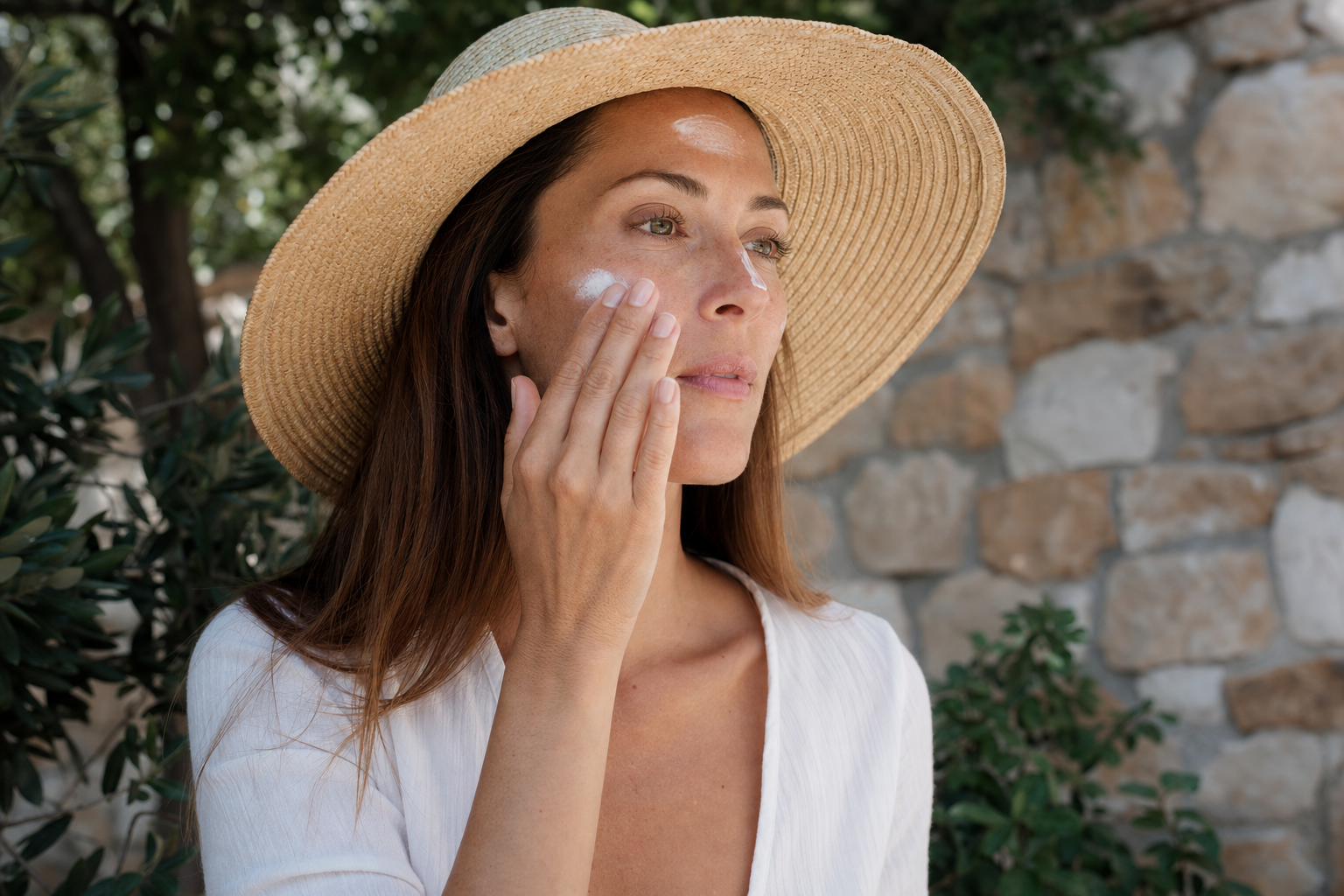
The biggest tactical change I make is how I apply sunscreen. If I squeeze out a full face amount and immediately start rubbing it everywhere, my skin often feels hot and overwhelmed. I do better when I split the application into two thin passes. The first pass gives me light, even coverage. The second pass helps me build toward the amount I want without creating as much drag.
I spread with my fingertips using short, gentle motions, then press lightly where needed instead of polishing the product in. If a formula starts catching on a dry patch, I stop rubbing harder. I either add a tiny bit more of the same sunscreen to that area or press what is already there into place. For me, aggressive blending is usually where irritation begins.
This is also why I avoid piling sunscreen directly on top of several half-dried layers that are already pilling. Once the surface starts balling up, more friction rarely fixes it. Washing off and starting with a simpler base is often kinder than trying to force the routine into submission.
I lean on hats and shade when my skin cannot tolerate heroic reapplication
I still aim to reapply when I am outside for prolonged periods, but I try to be realistic. On an irritated-skin day, repeated rubbing every two hours may not be my most successful plan. This is where the rest of photoprotection matters. A hat, sunglasses, shade, and timing my walks outside lower the amount of pressure I put on reapplication to do all the work by itself. Photoprotection research has long framed sunscreen as one part of a broader strategy rather than a magic shield (PMID: 18045361).
If I need to reapply, I usually blot sweat first, then press the sunscreen on with minimal rubbing. I would rather do a careful reapplication in shade than a rushed one on hot skin in direct sun. The practical outcome is often better.
What I skip when my skin is irritated
- I skip exfoliating acids, scrubs, and retinoids before sunscreen if my face already feels compromised.
- I skip fragranced products that I know can make my cheeks sting more.
- I skip rubbing sunscreen in for far longer than necessary just to chase a seamless finish.
- I skip experimenting with multiple new products on the same morning.
- I skip telling myself that a strong burn is normal adjustment. For me, persistent burning is feedback.
How I tell whether the sunscreen itself is the problem
If the same sunscreen burns every time, even when the rest of my routine is calm, I take that pattern seriously. If it only stings after exfoliation, over-cleansing, wind exposure, or a retinoid-heavy week, the formula may not be the main issue. The context matters. I keep mental notes on whether the sting fades quickly, whether redness increases, whether my eyelids react, and whether the problem repeats with similar formulas.
I also patch-test cautiously when I am unsure, especially if I suspect I reacted to fragrance or another non-active part of the formula. Home patch testing is not the same as dermatologist-run patch testing, but it can help me avoid putting a questionable product all over my face again. When the reaction feels bigger than simple irritation, I do not guess for too long.
My bottom line
When my skin is irritated, the best sunscreen routine is the one that protects without turning application into a second injury. I keep the layers underneath simple, choose a texture that spreads without tugging, apply in two gentle passes, and lean harder on hats and shade when my skin cannot tolerate a lot of reworking. That routine is less glamorous than a ten-step morning shelf, but it is far more useful when my barrier wants quiet.
Sources: PMID: 26805416; PMID: 18045361; PMID: 41774605; PMID: 41967979; PMID: 41903515.