How I Calm Sudden Redness After Too Many Active Ingredients
A practical barrier-reset routine for sudden facial redness after overusing active skincare, with PubMed-backed context and clear warning signs.
Medical disclaimer: This article is for general skin-care education and does not replace medical advice. If redness comes with swelling, blistering, severe pain, eye involvement, or keeps returning even after you stop irritating products, I think it is safest to see a dermatologist, GP, or another licensed clinician.
Affiliate disclosure: This article does not include affiliate product links or paid retailer recommendations. I am focusing on barrier-friendly routine choices, not steering you toward a specific purchase.
TL;DR: When my face turns suddenly red after too many active ingredients, I stop treating the redness like a problem to scrub away. My reset is simple: pause the strong actives, cool the routine down, keep cleansing brief, moisturize without friction, and give my skin a few quiet days before I decide whether the issue was simple irritation or something that needs medical help.
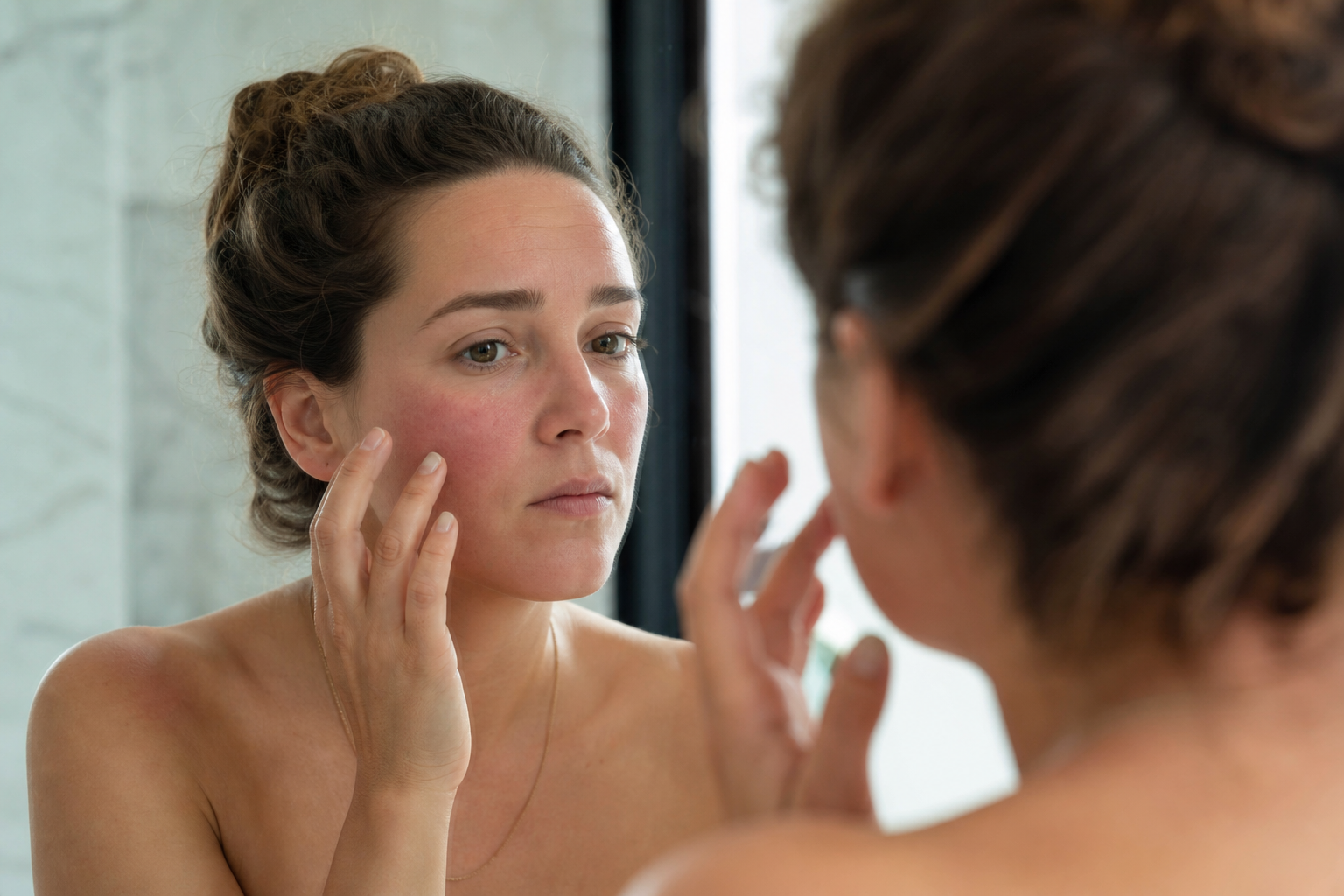
I usually know how I got here. The redness tends to show up after I start layering logic that sounds smart in theory but is noisy in practice: an exfoliating toner in the morning, a retinoid at night, a brightening serum because my skin looked dull, and maybe a “gentle” scrub because I wanted smoother texture faster. Then my cheeks flush more easily, my face feels hot after washing, and my regular moisturizer suddenly feels louder than it should. At that point I stop pretending I need a stronger fix. I need less.
The science behind that instinct is not mysterious. Sensitive skin research describes burning, stinging, and visible or invisible discomfort as common features of a barrier-vulnerable state rather than a purely cosmetic complaint (PMID: 22928591). More recent work has linked facial skin hypersensitivity with altered ceramide profiles and disordered intercellular lipids, which helps explain why skin can become more reactive after a period of overdoing active ingredients (PMID: 40176380). An observational study from 2024 also supports the broader idea that sensitive skin often overlaps with epidermal barrier impairment, not just temporary redness on the surface (PMID: 38635324).
So when my face flares up, I try to think like someone protecting a stressed barrier, not like someone chasing instant brightness.
First, I decide whether this looks like simple irritation or something bigger
I do not assume every red face is just a little over-exfoliation. When my skin is irritated by too many actives, the pattern is usually familiar: warmth, diffuse redness across the cheeks, tightness after cleansing, and stinging when I apply products that normally feel boring. I may also notice a slightly shiny but dehydrated look, which is my cue that the outer layer is not holding itself together very well.
What makes me more cautious is a different pattern: sharply defined rashy patches, swelling, hives, eyelid involvement, intense itch, blistering, or symptoms that keep escalating after I simplify everything. Reviews on irritant contact dermatitis make the same basic distinction. Irritation is common and can follow repeated exposure to harsh products, but it does not look identical to allergic or more persistent inflammatory conditions every time (PMID: 35433115). The NHS guidance on contact dermatitis also advises seeking medical help for persistent, recurrent, or severe symptoms rather than treating everything as a routine skin-care hiccup.
The first fix is subtraction, not another calming treatment
The most useful thing I do is stop adding effort. I pause leave-on exfoliating acids, scrubs, retinoids, strong vitamin C formulas that feel acidic on my skin, benzoyl peroxide, cleansing brushes, and any “resurfacing” mask that promises speed. If a product makes my face tingle on a good day, it does not get a second chance on a bad one.
I also stop trying to rescue the situation with a pile of soothing extras. This part took me longer to learn. A red face can make me want to layer mist, essence, barrier serum, thick cream, face oil, and sleeping mask all in one night. Sometimes that creates even more rubbing and more potential irritants. A stripped-down routine usually works better for me than an emergency routine that is twice as long.
Barrier-based dermatology has been making this point for years in other contexts: when the outer layer is compromised, irritants penetrate more easily, water loss rises, and tolerance drops (PMID: 20711259). I do not need to turn that into a dramatic diagnosis to find it useful. It simply means my skin needs fewer variables while it settles down.
My 72-hour redness reset
This is the exact approach I come back to when my face feels hot and over-managed.
- Cleanse only as much as necessary. In the morning I may just rinse with lukewarm water if I do not feel greasy. At night I use a mild cleanser and keep the contact time short.
- Use lukewarm water, not heat. Hot water makes my flushed skin feel more dramatic, not cleaner.
- Moisturize with the lightest pressure possible. I spread a plain moisturizer onto slightly damp skin and stop rubbing once it is on.
- Pause every unnecessary active. I do not bargain with my skin by keeping one exfoliant “just in case.”
- Protect from sun exposure without overworking the face. If sunscreen stings, I troubleshoot carefully and lean harder on shade and a hat instead of scrubbing product into unhappy skin.
During these few days, I want my routine to feel almost boring. If my face is less hot, less stingy, and less reactive by day two or three, that tells me I was probably dealing with irritant overload rather than a more complicated reaction.
Why redness often feels worse right after cleansing
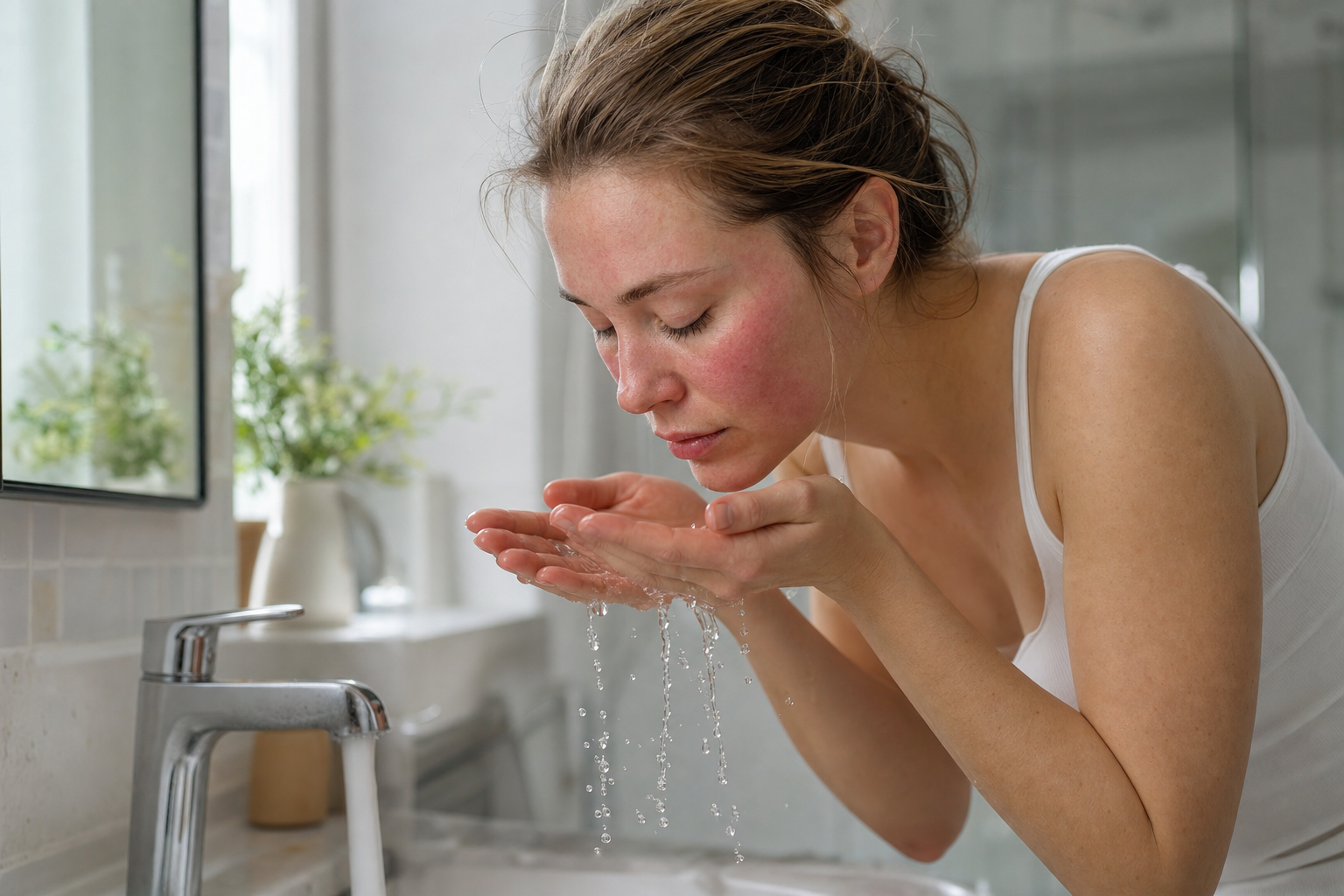
This is one of the patterns I pay attention to most. If my skin looks redder or feels hotter within minutes of washing, I treat that as a sign that the cleansing step itself needs to get quieter. Foamy cleansers are not automatically bad, but on an irritated week I usually do better with less contact time, less water temperature drama, and less friction from washcloths or repeated rinsing.
That fits what we know about sensitive and irritated skin. If barrier lipids are disorganized and the skin is more reactive, even ordinary daily steps can feel exaggerated (PMID: 40176380; PMID: 38635324). For me, the practical takeaway is not that water is dangerous. It is that technique matters more when my face is already in a reactive state.
What I look for in the moisturizer during a flare
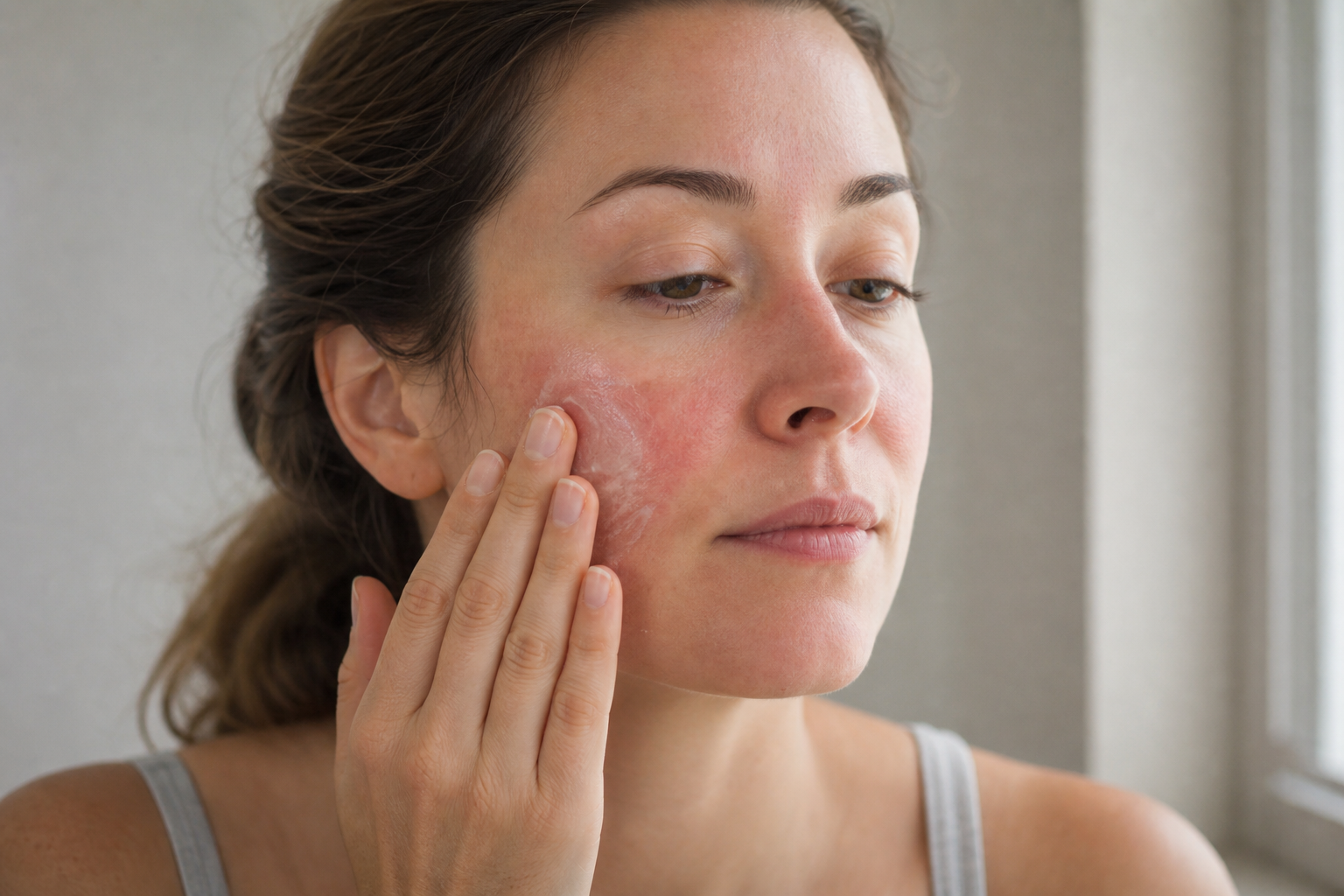
I want a moisturizer that behaves quietly. I usually do best with formulas centered on humectants, emollients, and occlusive support rather than treatment language. Glycerin, petrolatum, dimethicone, squalane, and ceramide-containing formulas tend to make more sense to me in this phase than anything marketed as brightening, clarifying, or pore-refining. That does not mean the fanciest barrier cream is required. It means I would rather choose a bland formula I already know my skin tolerates than start testing something new while my face is red.
If a moisturizer burns intensely, keeps burning, or leaves my redness looking angrier each time I use it, I stop. I do not force loyalty to a label that says sensitive skin. Labels can help narrow the field, but my skin still gets the final vote.
When I start suspecting rosacea, dermatitis, or allergy instead of routine overload
If the redness keeps coming back with very little provocation, centers on the middle of my face, or comes with a strong flushing pattern, I start wondering whether I am dealing with more than a bad routine week. If the problem is itchy, sharply rash-like, or tied to one particular product every time, allergic or irritant contact dermatitis also moves higher on my list of possibilities. Sensitive-skin guidance increasingly emphasizes that stinging and redness can overlap with conditions such as rosacea, eczema, or contact dermatitis rather than existing in a neat cosmetic box (PMID: 40736518).
That is where I stop trying to solve everything with purchase decisions. The NHS advice is sensible here: persistent, recurrent, or severe dermatitis symptoms deserve clinical help, especially if the skin is worsening or you cannot identify the trigger.
How I restart actives without re-creating the same problem
I do not restart the full routine the second my skin looks a little calmer. My rule is that cleansing, moisturizing, and sunscreen should all feel uneventful first. No heat, no sting, no rebound tightness. Then I bring back one active at a time and at a lower frequency than I was using before.
If I had been using both an exfoliating acid and a retinoid too aggressively, I do not restart them in the same week. I choose one, watch my skin for several nights, and keep the rest of the routine plain. If the redness returns quickly, that tells me either the product, the frequency, or the whole combination needs to change. I would rather move slowly than keep teaching my skin the same lesson.
My bottom line
When sudden redness shows up after too many active ingredients, I get the best results by acting less impressed with products and more respectful of my skin barrier. I pause the strong stuff, keep cleansing brief, moisturize without friction, and give my face a few quiet days before I decide what actually caused the flare. That approach is not glamorous, but it is usually the fastest route back to skin that feels like mine again.
Sources
- Berardesca E, Farage M, Maibach H. Sensitive skin: an overview. Int J Cosmet Sci. 2013. PMID: 22928591.
- Joichi T, Yoshida H, Katsukura H, et al. Altered Ceramide Profile of Facial Sensitive Skin: Disordered Intercellular Lipid Structure Is Linked to Skin Hypersensitivity. J Cosmet Dermatol. 2025. PMID: 40176380.
- Borghi A, Guarneri F, Pacetti L, et al. Does sensitive skin lie in epidermal barrier impairment or abnormalities? Results from an observational study assessing biophysical parameters. Ital J Dermatol Venerol. 2024. PMID: 38635324.
- Patel K, Nixon R. Irritant Contact Dermatitis - a Review. Curr Dermatol Rep. 2022. PMID: 35433115.
- Elias PM. Therapeutic Implications of a Barrier-based Pathogenesis of Atopic Dermatitis. Ann Dermatol. 2010. PMID: 20711259.
- Kim HO, Um JY, Kim HB, et al. Diagnosis and Treatment of Sensitive Skin. Ann Dermatol. 2025. PMID: 40736518.
- NHS. Contact dermatitis. Accessed 2026-05-02. https://www.nhs.uk/conditions/contact-dermatitis/