How I Wash My Face When Everything Stings
A practical, dermatologist-aware routine for cleansing sensitive skin when your barrier feels raw, stingy, and easily irritated.
Medical disclaimer: This article is for general skin-care education and does not replace medical advice. If your face burning is severe, sudden, blistering, associated with swelling around the eyes, or keeps happening despite a simple routine, I think it is smart to check with a dermatologist or other licensed clinician.
Affiliate disclosure: This article does not include affiliate product links or paid retailer recommendations. I am focusing on technique, barrier care, and how I simplify cleansing when my skin feels reactive.
When my skin reaches the point where even water feels annoying, I stop pretending I can cleanse the way I do on a normal day. This is the stage where a foamy wash, a spinning brush, or a long hot rinse can push my face from mildly irritated into properly miserable. I have learned that the goal is no longer to feel squeaky clean. The goal is to remove what actually needs to come off while giving the barrier the best chance to calm down.
I also try to be honest about what “stinging” means. Sometimes it is true irritation from over-cleansing, acids, retinoids, or friction. Sometimes it is a flare of sensitive skin, eczema, rosacea, or a product allergy that needs more than a gentler face wash. That is why I pay attention to pattern, timing, and severity instead of treating every uncomfortable face as a minor cosmetic issue.
The research backs the basic logic. A review on cleansers explains that synthetic detergent cleansers, often called syndets, are generally less barrier-damaging than traditional alkaline soaps because they are less likely to denature skin proteins and increase dryness (PMID: 29231284). A separate review on atopic dermatitis and sensitive skin also emphasizes that effective cleansing should not compromise barrier integrity, especially when skin is already dry and irritation-prone (PMID: 19209949). Those are not glamorous findings, but they match my lived experience exactly.
What I do first before I even reach for cleanser
My first question is whether I actually need a full cleanse. If I wore heavy sunscreen, long-wear makeup, or spent the day sweating, then yes, I need to remove residue. If I woke up with a stripped, angry face and barely used anything overnight, I may not need much more than a brief rinse or a very small amount of mild cleanser on the areas that actually feel coated. I do not force a textbook routine onto a skin barrier that is already telling me it wants less.
I also check the obvious triggers: did I over-exfoliate, use a stronger retinoid than usual, scrub at flaky patches, or wash with water that was hotter than I realized? If the answer is yes, the fix usually starts with reducing insult, not buying a new active. In practical terms, that means shorter contact time, lukewarm water, my fingertips instead of cloths or devices, and no second cleanse unless something is still clearly sitting on my skin.
How I choose a cleanser on stingy-skin days
On reactive days, I look for the least dramatic option I can tolerate: a mild, soap-free cleanser with a short ingredient list, low scent risk, and no exfoliating acids added for marketing sparkle. I do not need a cleanser that “feels powerful.” I need one that rinses without leaving my face tighter than it was before.
The detail that matters most for me is not whether the product is expensive or trendy. It is whether the formula behaves like a gentler synthetic detergent rather than a harsh soap. The cleanser review cited above notes that syndets are associated with lower irritation and dryness than alkaline soaps (PMID: 29231284). That is why I am less interested in dramatic before-and-after promises and more interested in whether the cleanser respects the skin it is touching.
If my skin is particularly reactive, I also avoid piling on optional cleansing extras: menthol, scrub particles, strong fragrance, essential oils, or “clarifying” language that usually translates to a finish my barrier does not enjoy. I would rather feel slightly under-cleansed for one morning than spend the rest of the day chasing down more redness.
The exact washing technique I fall back on
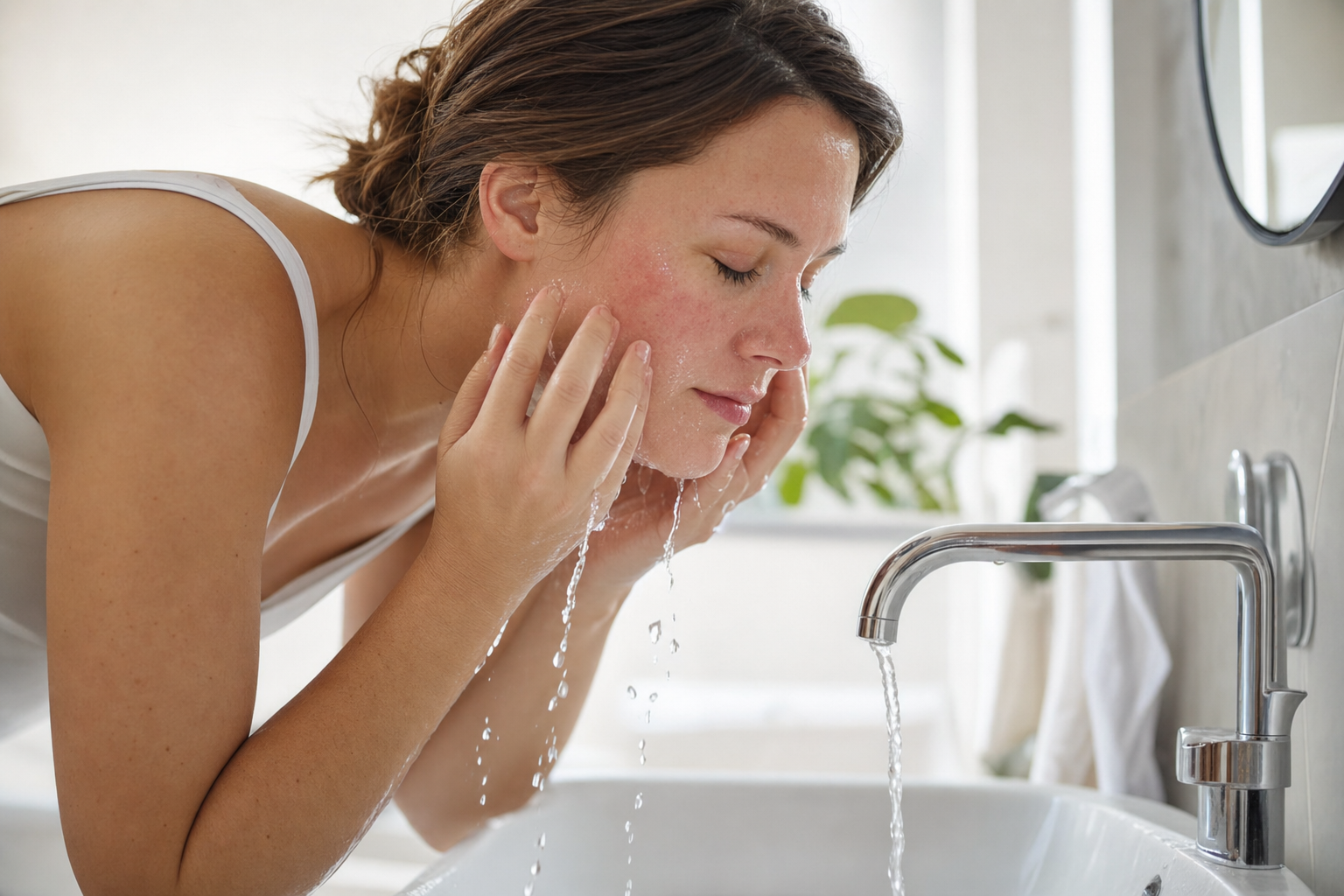
My fallback technique is almost boringly simple. I wet my hands with lukewarm water, not hot water, then lightly wet my face. I dispense a small amount of cleanser and work it only between my fingers first so I am not dropping a concentrated blob straight onto reactive areas. Then I spread it with light pressure, mostly over the places that genuinely collect residue: around the nose, chin, jawline, and any makeup zones. I do not massage for ages. Usually 10 to 20 seconds is plenty.
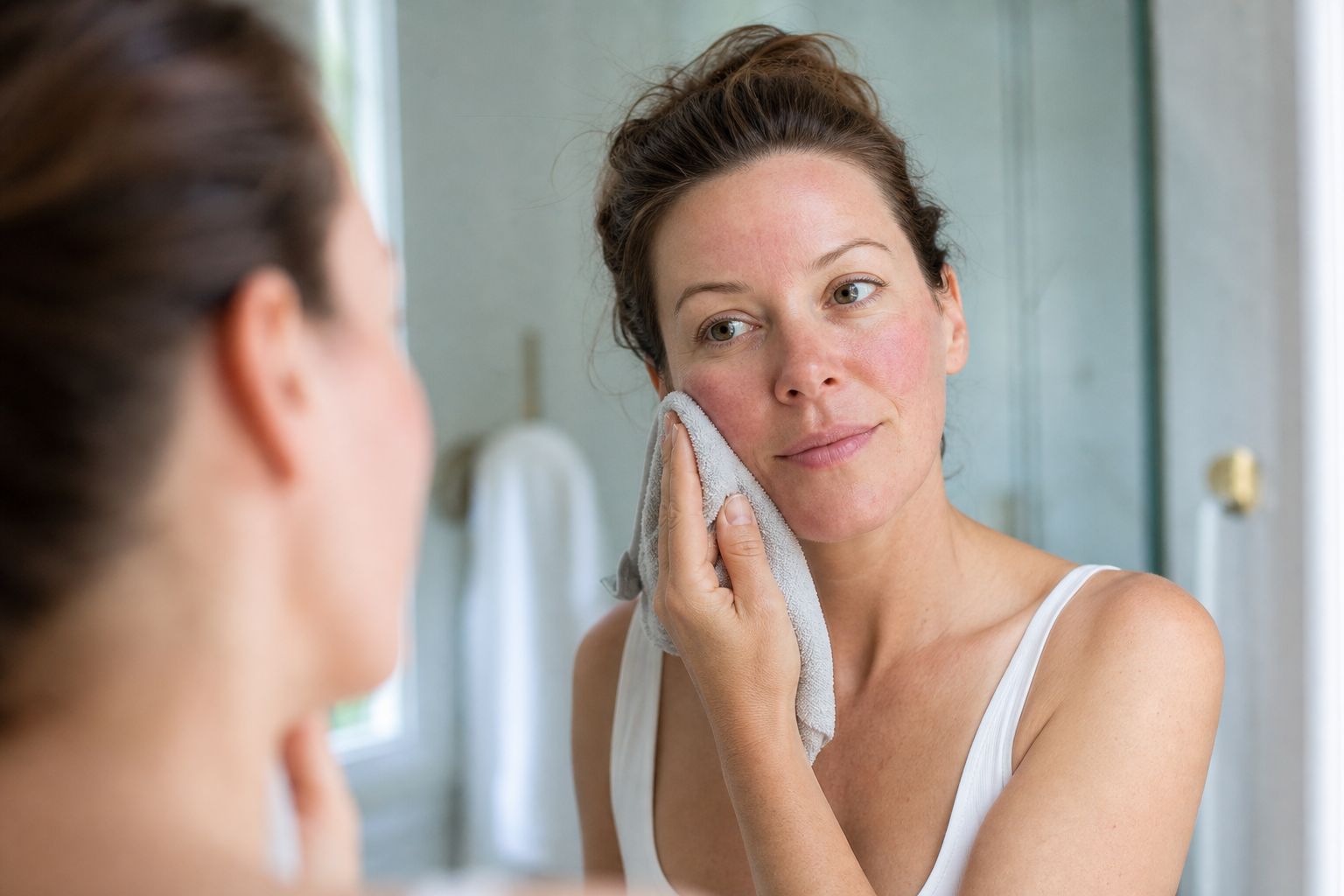
If my cheeks are the part that sting the most, I treat them last and touch them least. That sounds obvious, but it is easy to keep rubbing the exact area that is already asking for mercy. I rinse with more lukewarm water, pat with a soft towel instead of rubbing, and move directly to moisturizer while the skin is still slightly damp.
This shorter, calmer approach fits the evidence better than aggressive washing does. In a small clinical study of adults with mild acne and sensitive skin, a routine built around mild cleansing plus intensive moisturization improved both acne and dry-skin measures over four weeks, without adverse events from the regimen (PMID: 25483138). I am careful not to overstate that study because it was limited in size and population, but the direction is useful: gentler cleansing does not automatically mean neglecting the skin.
What I stop doing when cleansing hurts
I stop using washcloth friction as a shortcut for flaking. I stop chasing the “clean” feeling that comes right before tightness. I stop alternating three cleansers because I assume one of them must fix the problem. And I absolutely stop testing new actives in the middle of a flare just because my skin also looks dull.
The most common mistake I make in this situation is trying to solve discomfort and texture at the same time. If my face stings, that is not the moment for exfoliating pads, brush heads, or a sulfur cleanser I have not used in months. The barrier-focused review on gentle cleansing for sensitive and eczema-prone skin makes this point in a less dramatic way: cleansing has to support barrier integrity, not create another layer of irritation (PMID: 19209949).
I also avoid washing longer because I am nervous something is left behind. If I truly need more removal, I would rather repeat a tiny amount of a mild cleanser just on stubborn sunscreen or makeup areas than scrub my whole face into a worse state.
What I do immediately after rinsing
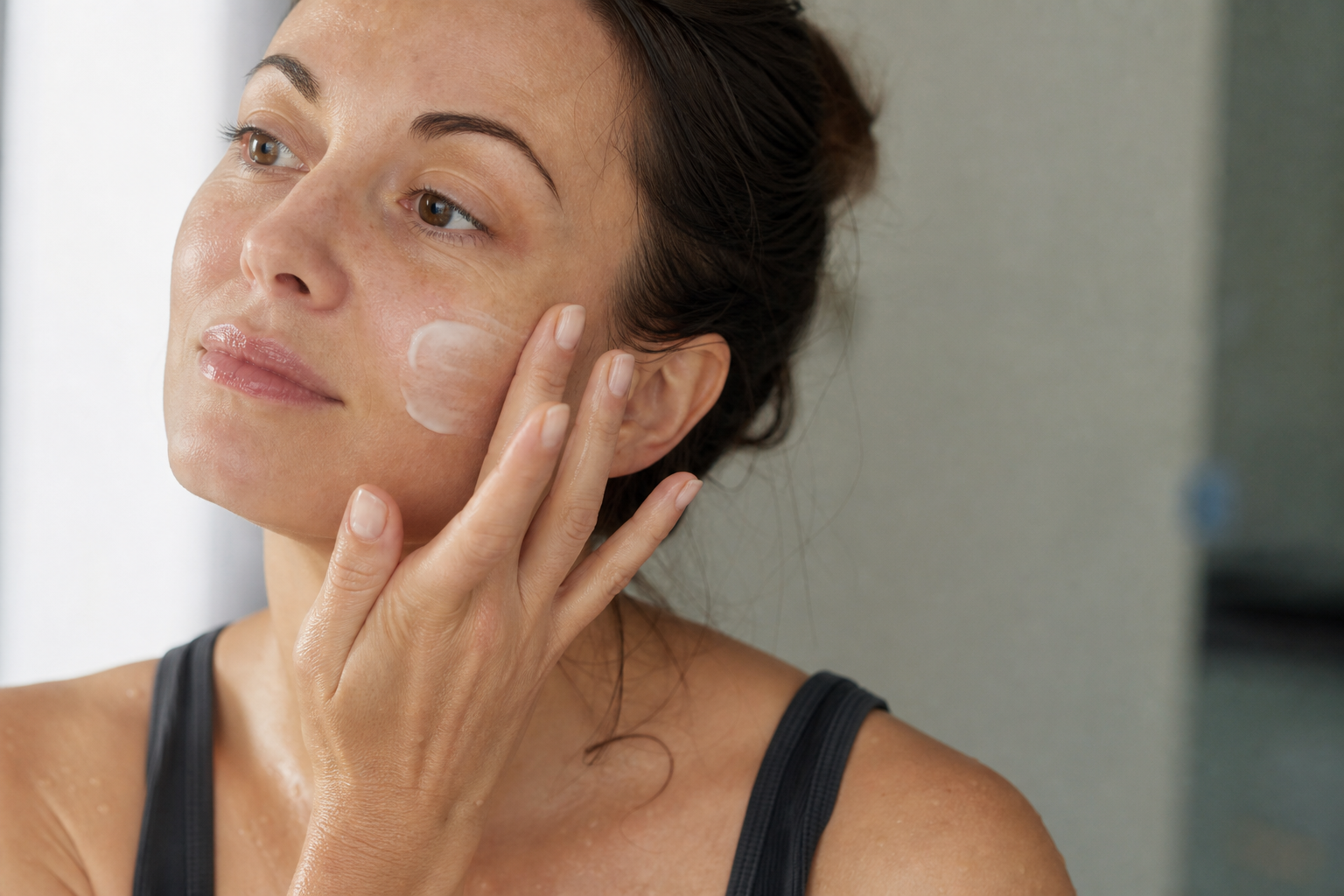
After cleansing, I keep the next step plain. If my face is stinging, I am not in the mood for a twelve-step routine or a lot of brightening language. I want a bland moisturizer that reduces the amount of evaporation happening from damp skin and helps the barrier feel less exposed. That usually means a fragrance-free cream or lotion with familiar support ingredients such as glycerin, petrolatum, ceramides, or dimethicone, depending on what my skin already tolerates.
If it is daytime, sunscreen still matters, but I choose the most comfortable formula I already know I can handle. A theoretically elegant sunscreen is useless to me if it burns on contact. On very reactive mornings, I give moisturizer a few minutes to settle first. My logic here is not fancy; it is simply to reduce the number of immediate variables so I can tell what is helping and what is not.
How I tell the difference between temporary irritation and a bigger problem
If the stinging settles once I simplify everything, I usually read that as a routine problem: too much exfoliation, too much friction, too many products, or the wrong cleanser for my current barrier state. If the burning keeps returning with a very plain routine, or comes with swelling, scaling, hives, eye irritation, or obvious rash patterns, I stop treating it like a minor cleansing issue. That is when I start thinking about allergic contact dermatitis, rosacea, eczema, perioral dermatitis, or another condition that deserves actual medical assessment.
I am especially cautious if even a bland moisturizer burns every time, because that tells me the barrier may be quite disrupted or that something else is happening beyond “my skin is a bit sensitive today.” The article on holistic skin care for conditions including sensitive skin syndrome also reinforces the value of dermatologist-guided routines when skin disease may be part of the picture (PMID: 36409588).
My realistic routine until my skin calms down
For the next few days, I keep my routine minimal: gentle cleanse only when needed, plain moisturizer, comfortable sunscreen, and no unnecessary experiments. I do not reward myself for being “brave” with a new exfoliant. I wait until the stinging is actually gone before I think about reintroducing anything more active, and even then I go one product at a time.
This may sound basic, but basic is often what reactive skin needs. The more complicated my routine gets during a flare, the harder it becomes to see cause and effect. When everything stings, restraint is not me giving up on skin care. It is me doing the part that usually works.
Sources
- Draelos ZD. The science behind skin care: Cleansers. J Cosmet Dermatol. 2018. PMID: 29231284.
- Cheong WK. Gentle cleansing and moisturizing for patients with atopic dermatitis and sensitive skin. Am J Clin Dermatol. 2009. PMID: 19209949.
- Isoda K, et al. Efficacy of the combined use of a facial cleanser and moisturizers for the care of mild acne patients with sensitive skin. J Dermatol. 2015. PMID: 25483138.
- Goh CL, et al. Expert consensus on holistic skin care routine: Focus on acne, rosacea, atopic dermatitis, and sensitive skin syndrome. J Cosmet Dermatol. 2023. PMID: 36409588.