How to Reintroduce Retinol After a Barrier Reset
A practical guide to restarting retinol after barrier irritation, with a slow schedule, buffering tips, and warning signs that mean your skin is not ready.
Medical Disclaimer: This article is for general skincare education and is not medical advice. If your skin is cracked, persistently burning, swollen, or you have eczema, rosacea, pregnancy questions, or prescription-retinoid concerns, see a board-certified dermatologist before restarting retinoids.
Affiliate Disclosure: This article does not include affiliate links at the time of publication. If BeautySift adds shoppable product links later, they will be disclosed clearly.
TL;DR: After a barrier setback, the safest way to restart retinol is to wait until stinging and visible irritation have settled, then reintroduce a low-strength formula slowly. Two nights per week, a pea-sized amount, and a plain moisturizer buffer are usually more sensible than jumping back to your old schedule.
Retinol is useful, but it is not forgiving when your skin is already irritated. A lot of people do the same thing after a barrier reset: they feel better for a week, go back to their old routine too quickly, and end up right where they started. The better approach is boring on purpose. You want calm skin first, then predictable exposure, then careful increases only if your face stays comfortable.
That approach lines up with the way topical retinoids are discussed in the literature. Retinoids can improve acne and photoaging, but irritation in the first phase is common, especially when the barrier is already compromised. An updated review of topical tretinoin notes that dryness, erythema, peeling, and burning are among the most common tolerability issues and that patient-friendly dosing strategies matter for staying on treatment (PMID: 41302994). A newer head-to-head trial comparing a retinol derivative with retinol also reinforces a familiar point: efficacy conversations are only useful if the formula is tolerable enough to keep using consistently (PMID: 39624736).
What a “barrier reset” actually means before retinol comes back
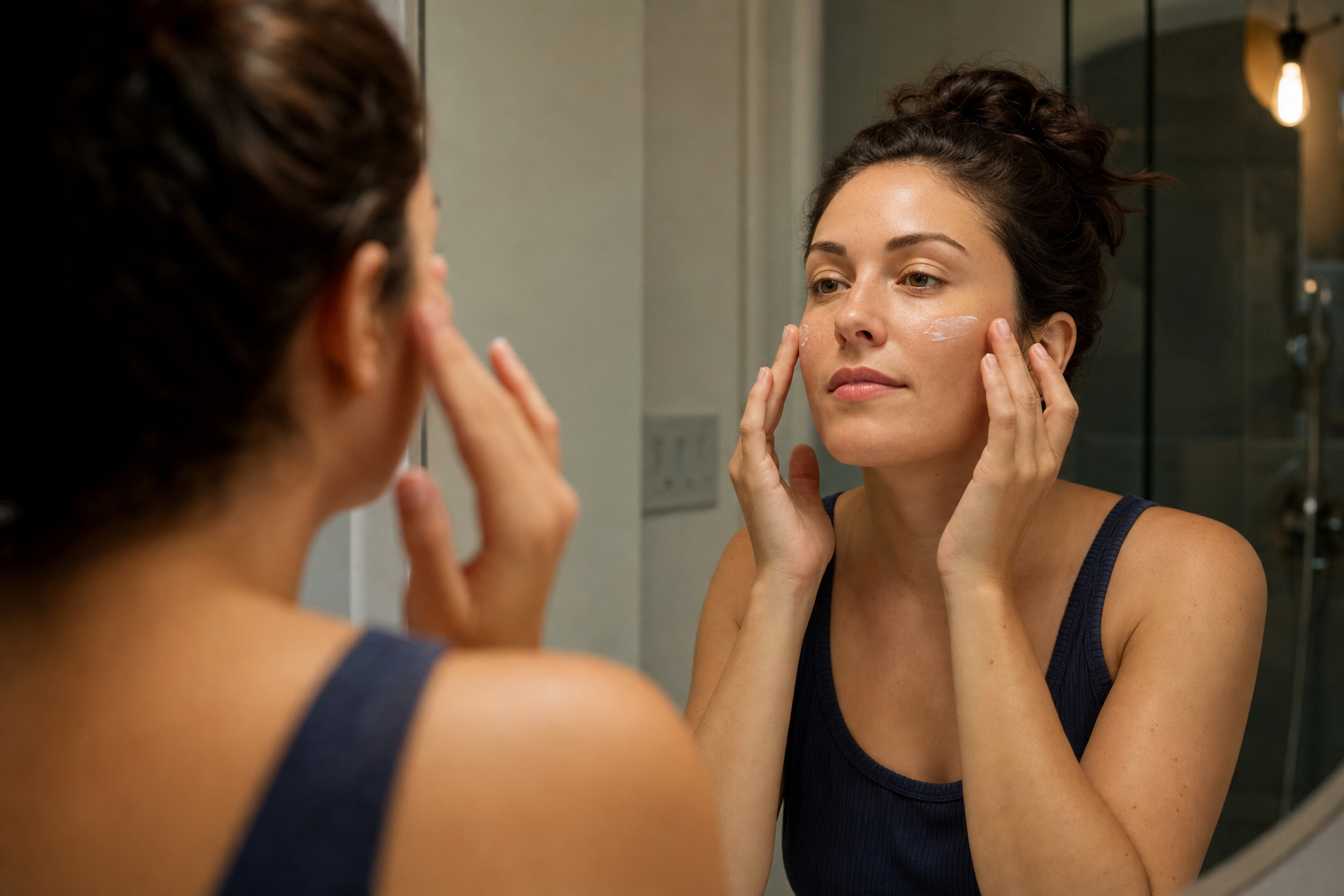
I would not restart retinol just because your skin looks less flaky under bathroom lighting. The better signs are more practical: cleanser no longer stings, moisturizer feels soothing instead of sharp, redness is lower, and your skin can handle a simple routine for at least several days in a row without new burning. If water alone feels irritating or your face is shiny-tight by midday, your skin is probably not ready.
For most people, a reset phase means using a gentle cleanser once daily if needed, a bland moisturizer twice a day, and broad-spectrum sunscreen every morning. You do not need acids, scrubs, cleansing brushes, strong vitamin C, or multiple treatment serums during this stage. The goal is not to make progress on every concern at once. The goal is to get back to neutral.
The restart schedule I trust most
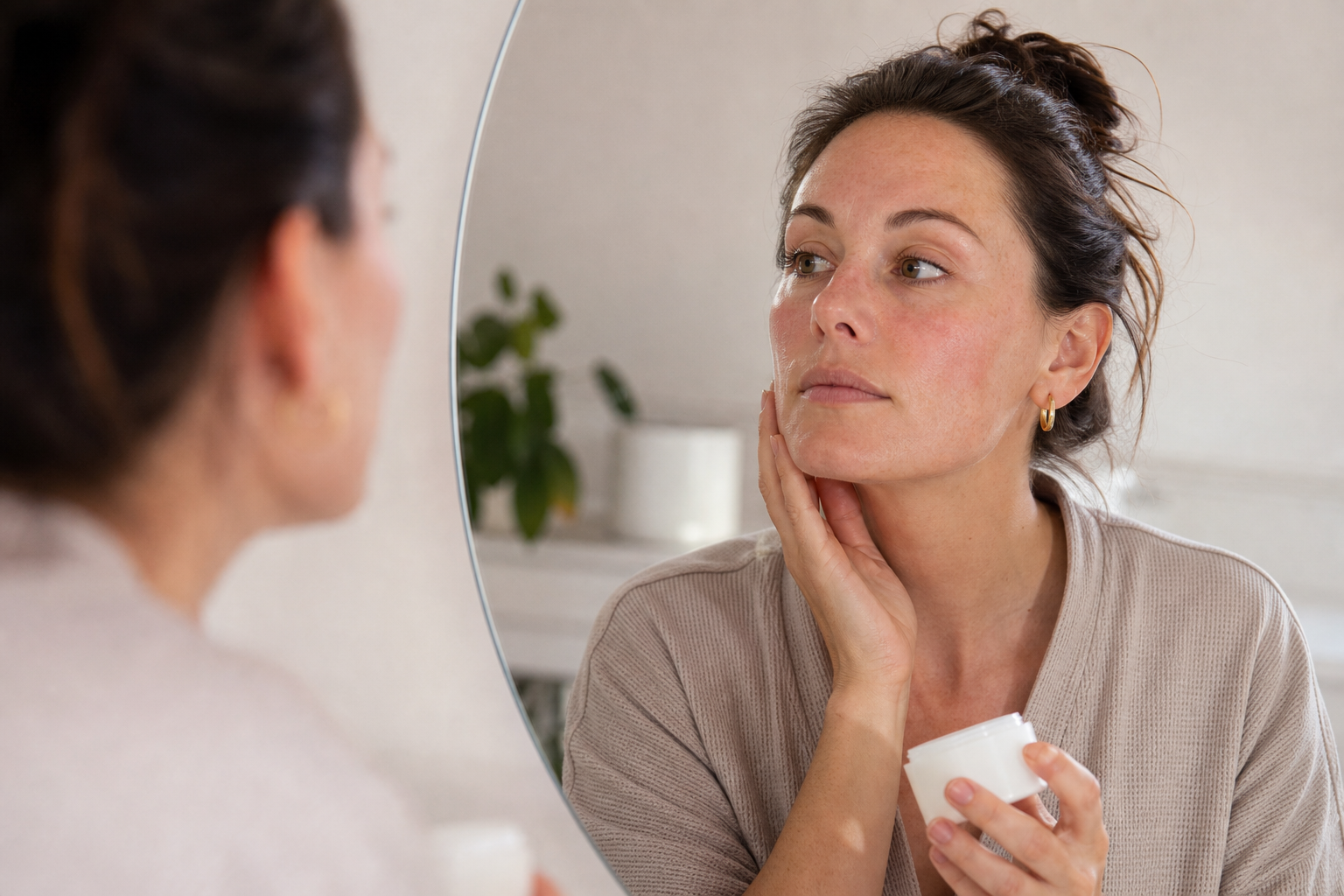
If your skin has been calm for several days, start with retinol just two nights per week for the first two weeks. Use a pea-sized amount for the whole face, not a dab per cheek and then more on the forehead. Retinoids spread farther than people think. Applying too much is one of the easiest ways to turn a reasonable restart into another setback.
A simple schedule looks like this:
- Weeks 1 to 2: two non-consecutive nights per week
- Weeks 3 to 4: increase to three nights per week only if there is no lingering burning or flaking
- Weeks 5 to 6: consider every other night if your skin is still comfortable
- After that: decide whether you even need nightly use; many people do well without it
You do not get bonus points for moving faster. With retinol, consistency beats ambition. If your skin starts to feel hot, tight, or unusually glossy, stay at your current frequency or step back.
Why the moisturizer sandwich still makes sense
The “sandwich” method is not magic, but it is practical. Apply a thin layer of moisturizer, wait a minute or two, apply retinol, then finish with another thin layer of moisturizer if needed. This does not make retinol useless. What it usually does is make the experience more tolerable, which is often the difference between a routine you maintain and one you abandon after ten days.
This is especially sensible if your reset followed over-exfoliation, cold weather irritation, or layering too many strong actives. If your skin is oily and robust, you may not need the full sandwich. But if you are restarting after stinging, redness, or rough patches, there is no downside to being conservative at first.
What to avoid on retinol nights
Barrier repair gets much harder when retinol is competing with other irritating steps. On retinol nights, I would keep the rest of the routine quiet:
- Skip leave-on exfoliating acids
- Skip benzoyl peroxide unless your dermatologist specifically told you to pair them
- Skip cleansing devices, scrubs, and rough washcloths
- Be careful with fragranced products if your skin is already reactive
- Do not layer multiple treatment serums just because each one seems mild on its own
In the morning, sunscreen matters even more. Retinoids do not replace sunscreen, and irritated skin is less tolerant of extra UV stress. Use a broad-spectrum SPF 30 or higher that you already know your skin can handle.
How to tell normal adjustment from a bad restart
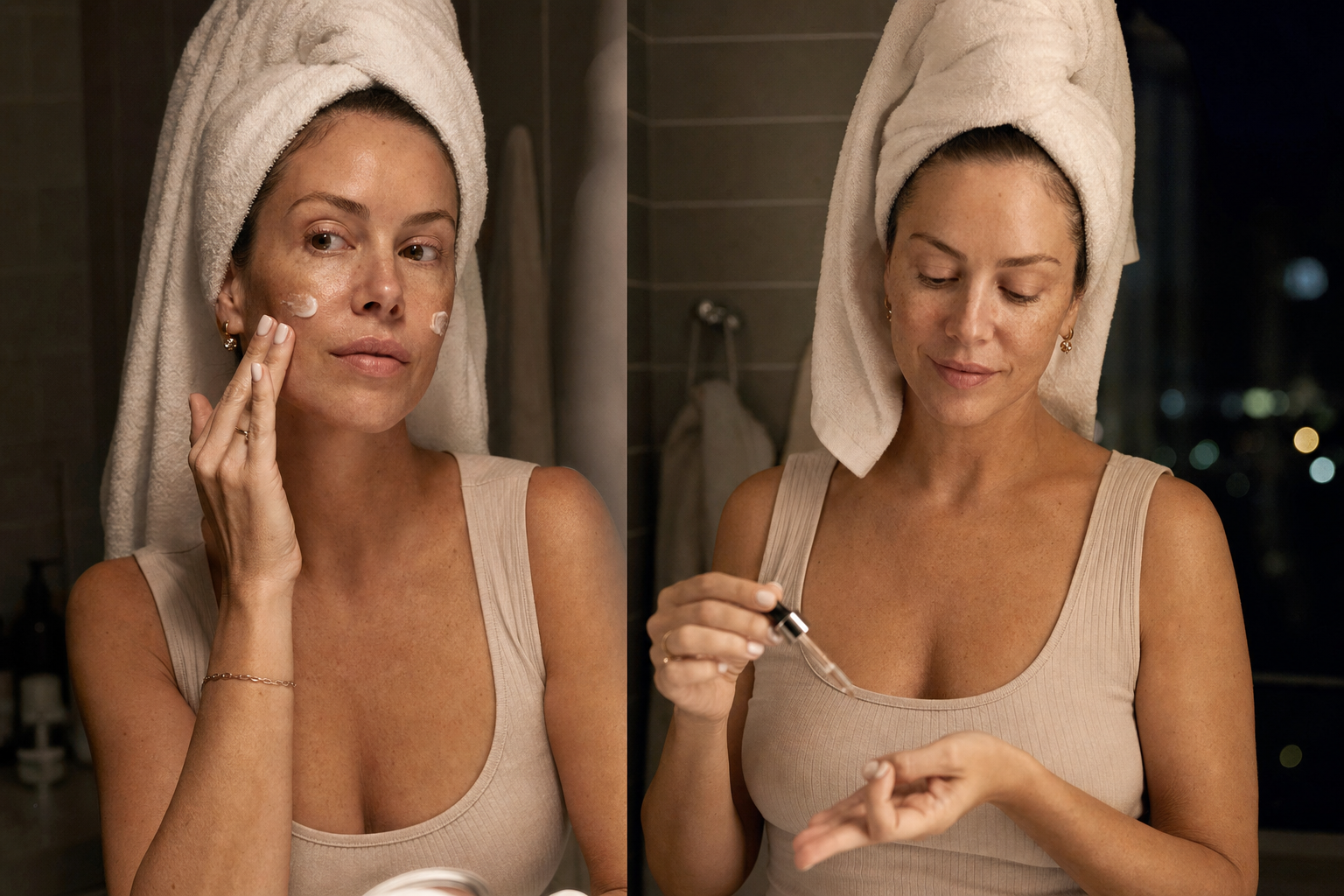
A mild adjustment period can include light dryness, a little extra tightness, or subtle flaking around the nose or chin. Those signs are not ideal, but they can be manageable if they fade within a day or two and do not keep building after each use.
A bad restart looks different. Stop and reassess if you notice:
- burning that lasts well beyond application
- widespread redness instead of small dry areas
- skin that stings with moisturizer, sunscreen, or water
- cracking at the corners of the nose or mouth
- new itching, swelling, or rash-like bumps
If that happens, go back to your barrier routine and do not restart again until your skin is calm. Repeatedly pushing through irritation is usually what keeps sensitive skin stuck.
Choosing the right retinol when you come back
The best restart product is usually the one with the simplest formula and the most predictable texture, not the one with the highest percentage on the label. Look for a low-strength retinol serum or cream in a moisturizing base. Fragrance-free formulas tend to be easier for freshly recovered skin. If you know niacinamide is comfortable for you, a formula that combines retinol with barrier-supportive ingredients can be easier to tolerate than a very bare but highly potent treatment.
Packaging matters too. Air-tight pumps or opaque tubes can help with stability, while wide jars are less ideal. But concentration and routine fit matter more than clever packaging. If you are deciding between a gentler formula you will use consistently and a stronger one you are slightly afraid of, the gentler formula is often the smarter restart.
When prescription-strength advice matters
If you were previously using tretinoin, tazarotene, or adapalene for acne or photoaging and had a major irritation flare, it is worth checking in with a dermatologist before resuming your exact old schedule. Prescription retinoids can be excellent long-term tools, but the re-entry plan may need adjustment. Sometimes the fix is lower frequency. Sometimes it is a different vehicle, like a cream instead of a gel. Sometimes it is removing another irritating step rather than quitting the retinoid entirely.
That nuance matters because the literature supports retinoids as effective treatments, but it also repeatedly shows that tolerability shapes real-world success. If a product works in theory but repeatedly disrupts your barrier in practice, the plan is not working for you yet.
A realistic six-week reintroduction plan
If you want a template, this is the one I think is easiest to live with:
Week 1
Use retinol one night, then wait three nights. Focus on comfort, not progress photos.
Week 2
Use retinol two non-consecutive nights. Keep cleanser and moisturizer unchanged.
Week 3
If your skin has stayed calm, move to three nights weekly. If not, repeat week 2.
Week 4
Hold steady. This is not the week to add acids back in just because things seem better.
Weeks 5 to 6
Consider every-other-night use only if dryness is minimal and there is no persistent stinging.
This sort of pacing may feel slow, but it respects how skin actually behaves after irritation. Faster is usually not more efficient if it leads to another two-week recovery period.
The bottom line
If your barrier has only recently settled, the safest retinol restart is a low-strength formula, a pea-sized amount, and a schedule that leaves recovery days between uses. Keep the rest of the routine plain, use moisturizer generously, and treat new burning as information rather than something to power through. Retinol can still have a place in your routine after a setback. It just needs a quieter re-entry than most people expect.
Sources: An Updated Review of Topical Tretinoin in Dermatology: From Acne and Photoaging to Skin Cancer (PMID: 41302994); A prospective, double-blinded, randomized head-to-head clinical trial of topical adapinoid (oleyl adapalenate) versus retinol (PMID: 39624736).