La Roche-Posay Toleriane Hydrating Cleanser Review - gentle, reliable, but not a makeup-melting workhorse
An honest BeautySift review of La Roche-Posay Toleriane Hydrating Cleanser, with ingredient analysis, current prices, and who should skip it.
By BeautySift Editorial Team
Transparency note: This is an AI-powered editorial review built from the current ingredient list, brand directions, retailer data, and published research. I cannot physically wash with this cleanser the way a human editor can, so I am not pretending this is a hands-on bathroom diary.
Medical Disclaimer: This article is for general skincare education and should not replace medical care. If you have eczema, persistent burning, swelling, cracked skin, or a diagnosed skin condition, check with a board-certified dermatologist before changing your routine.
Affiliate Disclosure: Retailers mentioned below may support BeautySift through affiliate relationships when available, but that does not affect the score or the negatives I point out here.
TL;DR: La Roche-Posay Toleriane Hydrating Gentle Face Cleanser is a sensible pick for dry to normal, easily irritated skin because the formula stays low-foaming, fragrance-free, and buffered with glycerin, ceramide NP, niacinamide, and panthenol. The trade-off is that it is not the fastest option for heavy sunscreen or long-wear makeup, and the price is higher than basic drugstore cleansers of similar size. My verdict is positive if comfort matters more to you than that squeaky-clean feeling.
Product Overview
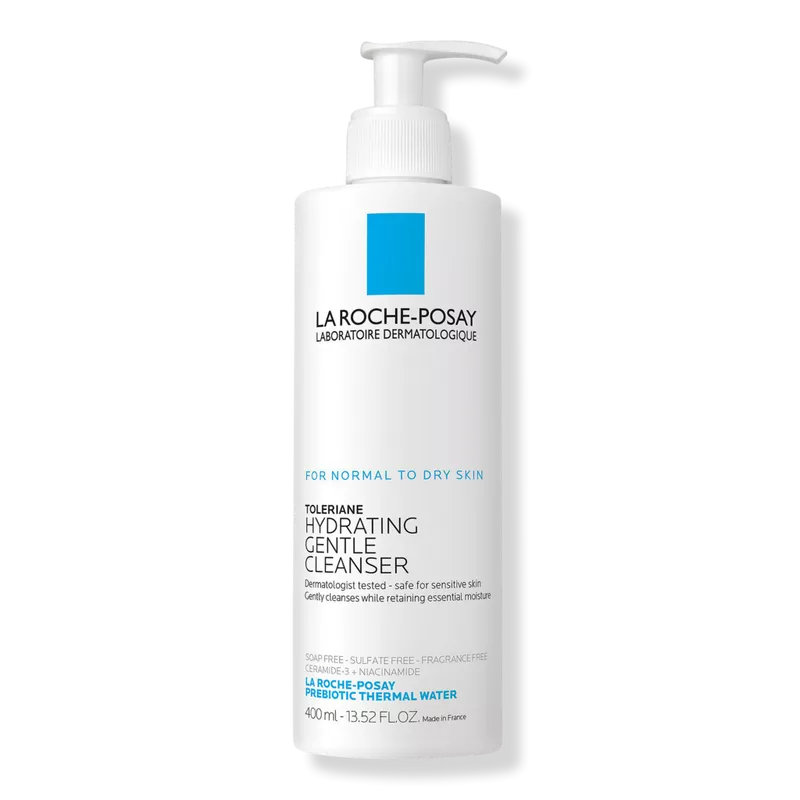
La Roche-Posay Toleriane Hydrating Gentle Face Cleanser is a cream cleanser positioned for dry skin, normal skin, and sensitive skin. Ulta describes it as a hydrating daily face wash that removes impurities and makeup while helping reinforce the skin barrier. The current ingredient list shown on Ulta includes glycerin, ceramide NP, niacinamide, coco-betaine, panthenol, and thermal water, which explains why the formula reads more comfort-focused than clarifying. At final check on 2026-05-01, Ulta listed the 13.5 oz bottle at $21.99 and marked it in stock. Amazon search results showed the 13.52 oz size from La Roche-Posay starting at $19.99, while Sephora did not show a public listing I could verify during final checks.
Ingredient Analysis
The formula is short, familiar, and appropriately restrained for a cleanser aimed at sensitive skin. What matters most is not one star ingredient by itself, but the fact that the surfactant system is paired with humectants and barrier-supportive helpers instead of fragrance, exfoliating acids, or high-foam detergents.
Glycerin - Glycerin is a classic humectant that helps hold water in the outer skin layer, which is especially useful in rinse-off products that might otherwise leave dry skin tighter after cleansing. Clinical data on glycerol-containing emollients show measurable benefits for xerosis and comfort, which supports why even a simple cleanser can feel noticeably less stripping when glycerin is placed high in the formula. PMID: 39422853.
Ceramide NP - Ceramides are native lipids in the stratum corneum, so adding ceramide NP makes sense in a cleanser marketed around barrier support. A cleanser cannot rebuild the barrier on its own, but ceramide-supportive routines are associated with better hydration and lower transepidermal water loss in barrier-focused skin care research. PMID: 39361692.
Niacinamide - Niacinamide is one of the more versatile support ingredients in modern skin care because it is linked to better barrier function, calmer-looking redness, and improved tolerance in many routines. In practice, I read its inclusion here as a quiet support ingredient rather than a dramatic active, which is appropriate for a daily cleanser. PMID: 39768384.
Panthenol - Panthenol is a humectant and skin-conditioning ingredient that can make low-foam cleansers feel less harsh. It is not flashy, but it is exactly the kind of background support ingredient I like to see in a cleanser built for reactive skin.
Coco-Betaine - Coco-betaine is a milder surfactant than the harsher high-foam options people often associate with that tight-after-washing feeling. It helps this formula cleanse without turning the whole experience into a foamy strip, though very makeup-heavy routines may still need a separate first cleanse.
Formula-wise, the biggest positive is what is not here: no added fragrance, no scrubbing particles, and no exfoliating acid angle trying to do too many jobs at once.
That matters because cleansers only stay on the face briefly. When a cleanser still manages to feel more comfortable, it is usually because the whole formula was designed to limit unnecessary irritation, not because one headline ingredient does something dramatic during a 30-second rinse. In that sense, this product is well edited. It does not promise too much, and for sensitive skin I usually see that as a strength rather than a weakness.
Texture & Application
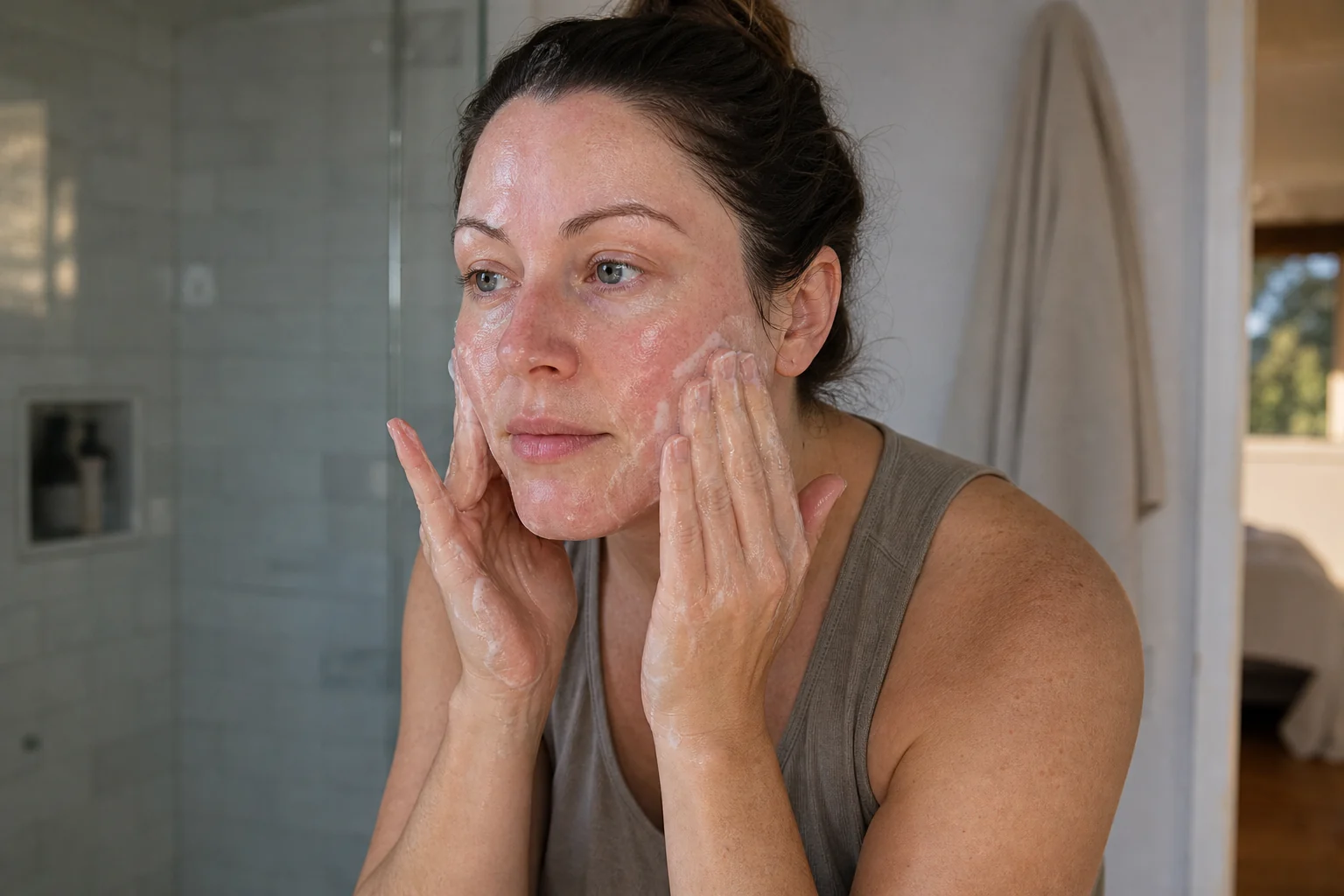
This is the kind of cleanser that usually feels closer to a lotion-gel than a classic foam. Ulta's directions say to use it on wet skin, work it into a light lather, and rinse with lukewarm water, and that matches the formula structure. Expect a soft slip, very low bubble payoff, and a finish that should feel comfortable rather than squeaky. If you enjoy a fresh, stripped sensation, this may feel almost too gentle. If your cheeks usually sting after cleansing, that restraint is probably the point.
Week 1-2
Because this is an AI-powered editorial analysis and not a physical wear test, I cannot give you a fake diary. The realistic expectation in the first two weeks is simple: less post-cleanse tightness, easier tolerance around dry areas, and better compatibility with barrier-repair routines.

Week 3-4
By the third or fourth week, the benefit usually shows up as consistency rather than drama. If your old cleanser was too aggressive, switching to a lower-foam formula like this can make moisturizers and retinoid recovery nights easier to tolerate.
Week 5+
Long term, the main question is whether you still need a separate first cleanse for makeup, water-resistant sunscreen, or heavy city grime. For many people, this works best as the comfort-focused second cleanse or the morning cleanse rather than the only cleanser for everything.
The pump bottle is practical and hygienic, and I also like that the directions explicitly steer people toward lukewarm water and gentle massage rather than aggressive rubbing. Those details sound basic, but they line up with the kind of routine advice dermatologists usually give people whose barrier is already irritated. The one application downside is that low-foam cleansers can make some users overuse product because they mistake less lather for less cleansing.

Pros & Cons
Pros:
- Fragrance-free formula that avoids a lot of common irritation extras.
- Uses glycerin, ceramide NP, niacinamide, and panthenol to make cleansing feel less drying.
- Comfortable texture for dry, normal, and reactive skin that dislikes strong foam.
- Easy to place in a barrier-repair routine because it does not try to exfoliate or overperform.
Cons:
- Not the best single-step option for heavy makeup or stubborn sunscreen.
- Price is a little high compared with very basic drugstore cream cleansers.
- People who prefer a truly fresh, foamy clean may find it underwhelming.
Score Breakdown
Overall score: 8.4/10.
- Efficacy: 4.2/5
- Texture: 4.4/5
- Value: 3.9/5
- Scent: 4.8/5
- Packaging: 4.3/5
- Overall: 4.2/5
Best For / Not Suitable For
Best For: dry skin, normal-to-dry sensitive skin, and people rebuilding tolerance after overusing stronger actives.
Skip If: you wear heavy makeup daily, want a deep-foam cleanse, or need one wash to cut through very water-resistant sunscreen.
Not Suitable For: people who love a squeaky-clean finish, routines that rely on a single cleanse after long-wear makeup, and anyone who already knows coco-betaine triggers their irritation.
Where to Buy
- Amazon: 13.52 oz search result verified at $19.99 from Amazon search results checked on 2026-05-01. Source
- Sephora: I could not verify a current public product listing during final checks, so I am not assigning a price. Search page checked
- Ulta: 13.5 oz listed at $21.99 and in stock at final check on 2026-05-01. Source
How It Compares
Compared with CeraVe Hydrating Facial Cleanser, this La Roche-Posay formula feels a touch more elegant and a little lighter on the skin, but the price is usually higher. Compared with Vanicream Gentle Facial Cleanser, it is less bare-bones and more comfort-oriented on paper because of niacinamide and ceramide NP, though Vanicream is still the simpler option for ingredient minimalists. My honest read is that Toleriane makes the strongest case for people who want a gentle cleanser that still feels cosmetically polished.
If your routine already includes strong retinoids, benzoyl peroxide, frequent exfoliation, or prescription acne care, this cleanser makes more sense than a trendy active cleanser that keeps adding more variables. If your skin is resilient and your priority is removing everything in one fast wash, there are more efficient options. That is why I score it well, but not perfectly: the comfort story is strong, while the cleansing power remains intentionally moderate.
Sources: Ulta product page and ingredient list checked 2026-05-01; Amazon search results checked 2026-05-01; PubMed PMIDs 39422853, 39361692, 39768384.
[EXCERPT]: This La Roche-Posay Toleriane Hydrating Cleanser review explains who the gentle cream cleanser suits best, where it falls short, and why the barrier-friendly formula matters for dry skin.