Sleep, Skin, and Morning Puffiness: What I Track Carefully
I tracked how short sleep, irritation, and habit patterns affect morning puffiness, plus the simple routine changes that help my skin look calmer.
Medical disclaimer: This article is for general education and does not replace medical care. If morning swelling is painful, happens on one side, comes with a rash, or does not settle, I think it is worth checking with a clinician.
Affiliate disclosure: This article does not include affiliate links or product commissions. I am focusing on tracking habits and skin signals rather than shopping.
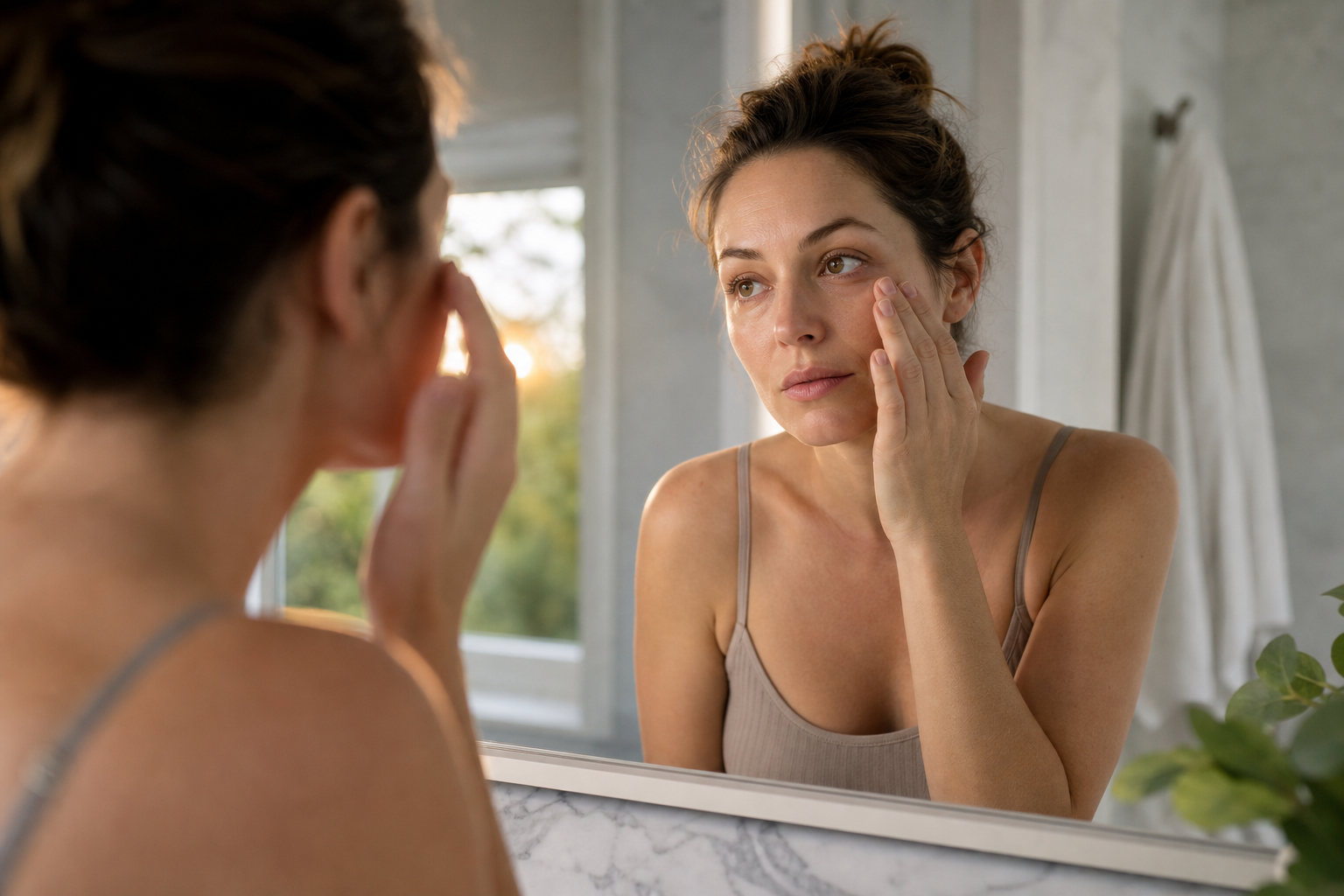
When my face looks puffier than usual in the morning, I try not to blame a single thing too fast. Sleep matters, but it is rarely the only variable. In my own notes, puffiness usually shows up when a short night overlaps with another trigger: salty takeout, a late drink, allergy symptoms, a hot shower, or irritation from overdoing actives the night before. That is why I track patterns instead of chasing quick fixes.
The useful part is that sleep still gives me a strong baseline. A 2015 study in Clinical and Experimental Dermatology found that poor sleepers had higher transepidermal water loss at baseline and slower barrier recovery after tape stripping than good sleepers, along with more visible signs of intrinsic skin aging and darker under-eye circles (PMID: 25266053). A 2018 study in Journal of Applied Physiology also found that sleep restriction delayed skin barrier restoration after an experimental wound model (PMID: 28912361). More recently, a 2022 study reported that just two nights of sleep restriction were linked with lower hydration, higher transepidermal water loss, and duller-looking facial skin in healthy women (PMID: 34971928).
That does not mean every puffy morning is a sleep emergency. It means sleep is one of the first variables I check because it changes how my skin holds water, recovers from irritation, and looks under normal daylight.
What I track first before I blame my eye cream
I keep this part boring on purpose. If I wake up puffy, I write down six things: bedtime, wake time, how many times I woke up, alcohol, very salty food, and whether my skin felt irritated before bed. If my nose was congested or my eyes were itchy, I note that too. This sounds small, but it prevents me from creating fake skincare theories.
My reason is simple: morning puffiness can come from overnight fluid shifts, rubbing, allergy-related swelling, heat, irritation, or just a face that had too little time to recover. If I change five things at once, I learn nothing. If I keep a short log for a week or two, patterns usually get obvious.
Sleep quality matters more for me than chasing a perfect number of hours on one heroic night. The 2015 paper on poor sleep quality did not just look at one bad evening. It looked at chronic poor sleep patterns and found weaker barrier recovery in that group (PMID: 25266053). That fits what I see in real life: one late night may make me look tired, but several rough nights in a row are what push my skin into that flat, puffy, reactive phase.

How I separate puffiness from irritation
I ask myself two questions: does my skin look swollen, or does it look inflamed? Puffiness usually feels soft and a bit waterlogged, especially around the under-eye area or along the cheeks. Irritation looks redder, stingier, and more uneven. Sometimes I get both together, especially if I slept badly and used an exfoliating acid too late.
This is where sleep and barrier function connect. If my barrier is already stressed, even mild friction from cleansing, rubbing my eyes, or leaving a drying mask on too long can look worse the next morning. The 2022 sleep-restriction study is helpful here because it showed measurable drops in hydration and increases in transepidermal water loss after just two restricted nights (PMID: 34971928). That does not prove every puffy face is barrier damage, but it supports the idea that short sleep can make skin less resilient.
When I suspect irritation, I do less, not more. I skip exfoliating acids, strong retinoids, scrubs, and anything heavily fragranced that day. I cleanse gently if I need to, then use a basic moisturizer and sunscreen. When I suspect simple puffiness without redness, I still keep the routine plain, because a dramatic product stack can make the whole picture harder to read.
The small routine changes that actually help me
I do not have a magic depuffing ritual, but I do have a short list of low-risk moves that help me look more normal by mid-morning.
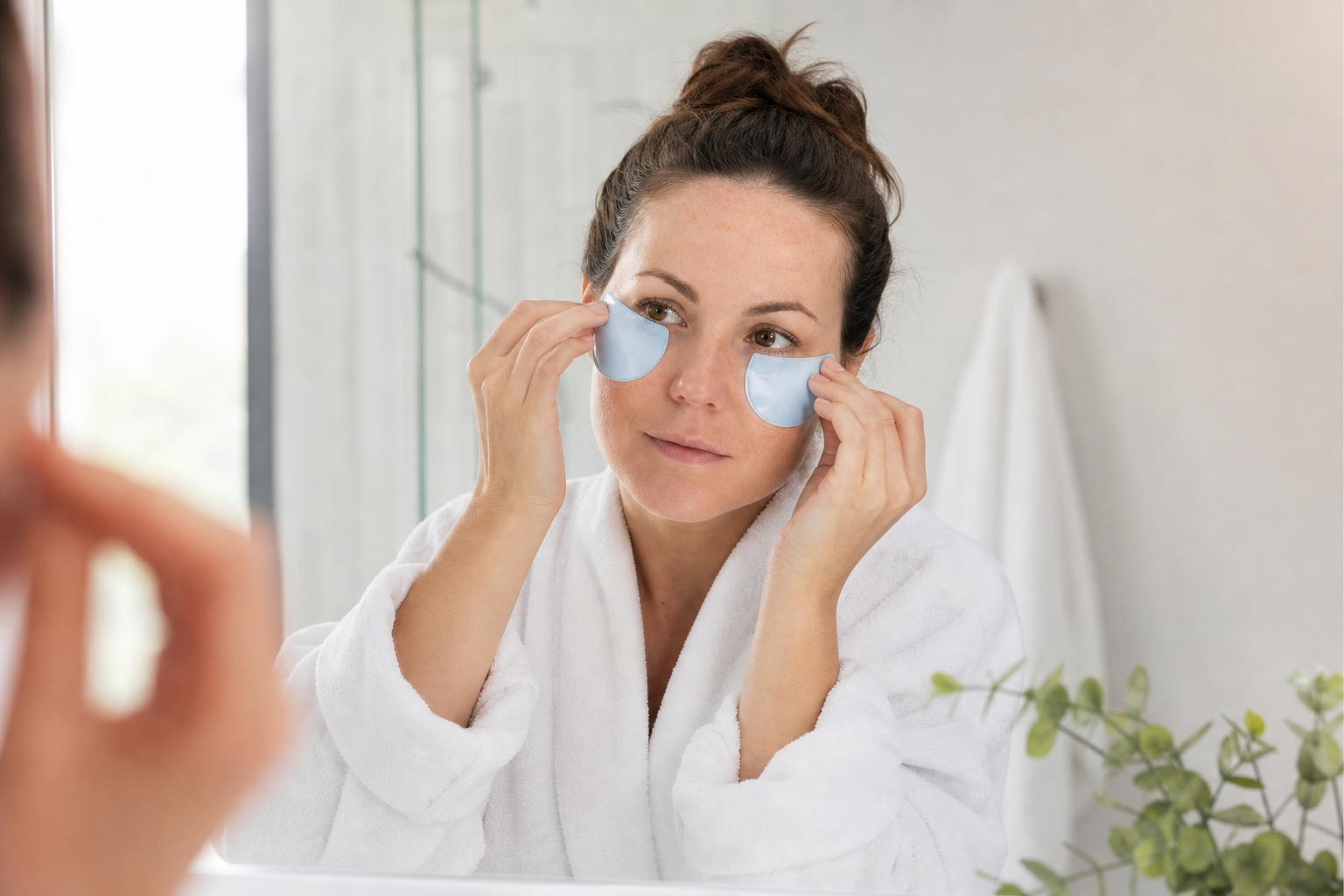
- Cool, not freezing, compresses: A cool washcloth for a few minutes feels more useful to me than aggressive ice tools. Extreme cold can be uncomfortable on already reactive skin.
- Head slightly elevated at night: If I am in a streak of waking up puffy, a little elevation tends to help me more than buying another eye product.
- A calmer night routine: If I used strong actives the night before, I make a note. Repeatedly, those are the mornings when my face looks both puffier and more irritated.
- Earlier dinner and less salt: I cannot claim this fixes everyone, but in my notes it is one of the clearest non-skincare triggers.
- Morning daylight and hydration: A regular wake time, some daylight, and drinking water help me feel and look less swollen, even if they are not instant cosmetic tricks.
The pattern across the sleep studies is not that one special topical can erase the effects of poor sleep. The pattern is that skin recovery gets worse when sleep is consistently restricted. The 2018 study on experimental wounds found slower skin barrier restoration under sleep restriction (PMID: 28912361). For me, that is the most practical takeaway: if recovery is the problem, the fix usually starts with recovery habits.
What I stop doing on puffy mornings
I stop pressing, massaging, and over-inspecting my face. The more I poke at swollen skin, the more irritated it seems to get. I also stop assuming I need an exfoliant because my face looks dull. Dullness after poor sleep can come with dehydration and higher transepidermal water loss, not just dead-skin buildup. If I treat that like a texture emergency, I usually regret it by evening.
I also avoid making firm conclusions from one mirror check. Lighting, menstrual cycle timing, crying, seasonal allergies, and even how I slept on my side can change what I see in the morning. That is why I look for repeatable patterns, not a dramatic story.
When I think the issue is not really about sleep
If puffiness keeps happening even when sleep is decent, I widen the list. New products around the eyes, fragranced formulas, rubbing from makeup removal, nasal congestion, and persistent allergy symptoms can all be more relevant than sleep itself. If swelling is painful, one-sided, suddenly severe, or paired with other symptoms, I would not treat that as a beauty issue first.
This is also why I am careful with language around eye-area products. I do not think most people need a separate under-eye formula to solve a pattern that is being driven by irritation, congestion, or repeated short sleep. A bland moisturizer, patience, and fewer triggers usually give me clearer answers.
My realistic takeaway
Sleep is not the only reason I wake up puffy, but it is one of the most trackable reasons. When I sleep badly for several nights, my skin usually looks flatter, less hydrated, and slower to bounce back. The research lines up with that lived experience: poorer sleep quality and short-term sleep restriction have been linked with weaker barrier function, slower recovery, and more tired-looking skin (PMID: 25266053; PMID: 28912361; PMID: 34971928).
So my approach is very plain. I track the obvious variables, calm down my routine, and give my skin a better recovery window before I buy something new. That is not glamorous, but it is the closest thing I have to a reliable system.
Sources
- Oyetakin-White P, et al. Does poor sleep quality affect skin ageing? Clin Exp Dermatol. 2015. PMID: 25266053.
- Pruitt NT, et al. Impact of sleep restriction on local immune response and skin barrier restoration with and without multinutrient nutrition intervention. J Appl Physiol. 2018. PMID: 28912361.
- Bessin M, et al. "You look sleepy…" The impact of sleep restriction on skin parameters and facial appearance of 24 women. Sleep Med. 2022. PMID: 34971928.