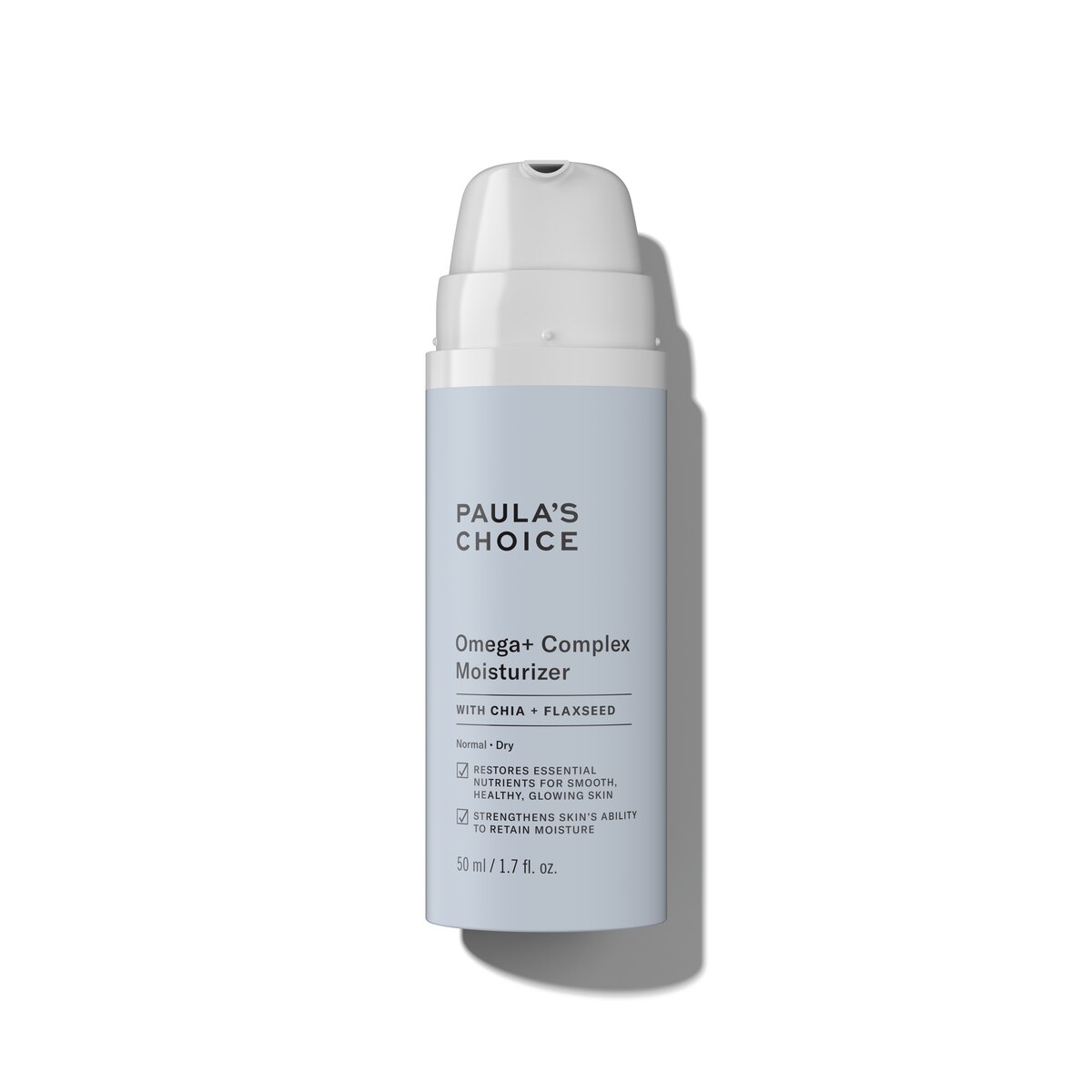
Paula’s Choice Omega+ Complex Moisturizer Review — Comforting for dry skin, but not my first pick for oily or easily clogged skin
Our Paula’s Choice Omega+ Complex Moisturizer review looks at texture, barrier-support ingredients, current pricing, and who should skip it.
Medical Disclaimer: This review is for general skincare education only and is not medical advice. If you have persistent eczema, a spreading rash, a suspected allergy, painful cracking, or swelling around the eyes, talk with a dermatologist before relying on any over-the-counter moisturizer.
By BeautySift Editorial Team
TL;DR: Paula’s Choice Omega+ Complex Moisturizer is a thoughtful cream for dry, dehydrated, or reactive skin because it pairs ceramide support with fatty plant oils in a whipped, fragrance-free base. I like the comfort level more than the value: at its full $42.00 price, it competes with several richer or more repair-focused creams that feel just as soothing. Overall score: 8.1/10.
This is an AI-assisted editorial review built from the current Paula’s Choice product page, Amazon listings, Ulta site search checks completed on May 2, 2026, and PubMed-indexed literature on barrier support. I am not pretending this came from a private six-week human diary; the goal is an honest formula review with transparent sourcing and clear limits. BeautySift affiliate disclosure is handled automatically by the site template rather than inserted here as sales copy.
Product Overview
Paula’s Choice Omega+ Complex Moisturizer is a fragrance-free face cream designed for skin that feels dry, dehydrated, tight, or easily irritated. The brand describes it as a cloud-like cream that combines omega fatty acids, ceramides, antioxidants, passion fruit, and guava to support the moisture barrier while keeping texture lighter than an old-school heavy balm. When I checked the Paula’s Choice site, the full 1.7 fl oz size was listed at a current price of $33.60 with a normal price of $42.00. Amazon listed the 1.7 fl oz item at $42.00, while I did not find a current Ulta listing during this run.
That positioning matters. This is not a treatment moisturizer aimed at acne, pigment, or peeling skin, and it is not sold like an aggressive anti-aging cream either. The product is trying to live in the middle lane: richer and more lipid-focused than a simple gel cream, but more wearable than a petrolatum-heavy rescue balm. For readers with chronically dry or over-cleansed skin, that can be a very useful lane. For oily or clog-prone users, it can also become the exact reason the formula feels like one step too much.
I also think the pricing changes the conversation. At the discounted brand-site price, the moisturizer looks more competitive and easier to recommend. At the regular $42.00 price, I start comparing it with creams that feel more protective, larger tubs that cost less per ounce, or lighter barrier creams that still give enough comfort without as much finish on the skin.
Ingredient Analysis
Ceramides - Ceramides are core skin-barrier lipids, so their inclusion makes sense in a moisturizer aimed at dryness and reactivity. They are not instant magic, but they fit well with barrier-support formulas and ceramide-focused topical care has a solid mechanistic rationale in the literature. PMID: 12553851; PMID: 41758783.
Omega fatty acids from chia and flaxseed - This is the part of the formula that gives the cream its identity. Linoleic- and alpha-linolenic-acid-rich oils help the formula behave more like a replenishing emollient rather than a simple water cream, which is why I would place it with dry-skin moisturizers instead of light gel creams. PMID: 41304700.
Shea butter - Shea butter adds cushion, slip, and some occlusive support, helping reduce that tight, papery feeling dehydrated skin gets after cleansing. It is useful here, but it also explains why the finish may feel too creamy for people who strongly prefer weightless textures.
Passion fruit seed oil - Passion fruit oil is a non-fragrant plant oil that mainly works as an emollient supporting softness and flexibility. In this formula, I see it as a texture-and-comfort contributor rather than the star clinical reason to buy the product.
Guava extract - Guava extract adds antioxidant positioning and helps the formula feel more complete than a basic ceramide cream. I would treat it as a supporting antioxidant rather than expect dramatic brightening or redness reduction from this ingredient alone.
Stepping back from the ingredient list, the formula reads like a comfort moisturizer rather than a problem-solving active treatment. That is not a criticism. In barrier-focused skincare, restraint is often a strength. I would rather see a cleanly built moisturizing base with lipids and emollients than a formula overloaded with exfoliants, acids, perfume, or a dozen flashy claims that pull sensitive skin in opposite directions.
The trade-off is that there is no single knockout ingredient here that justifies buying it on science headlines alone. What you are paying for is the way the parts work together: a fragrance-free cream with enough fatty richness to feel substantial, enough barrier-friendly language to make sense, and enough cosmetic elegance to stay more pleasant than a classic ointment. Whether that balance feels smart or merely expensive depends heavily on your skin type.
Texture & Application
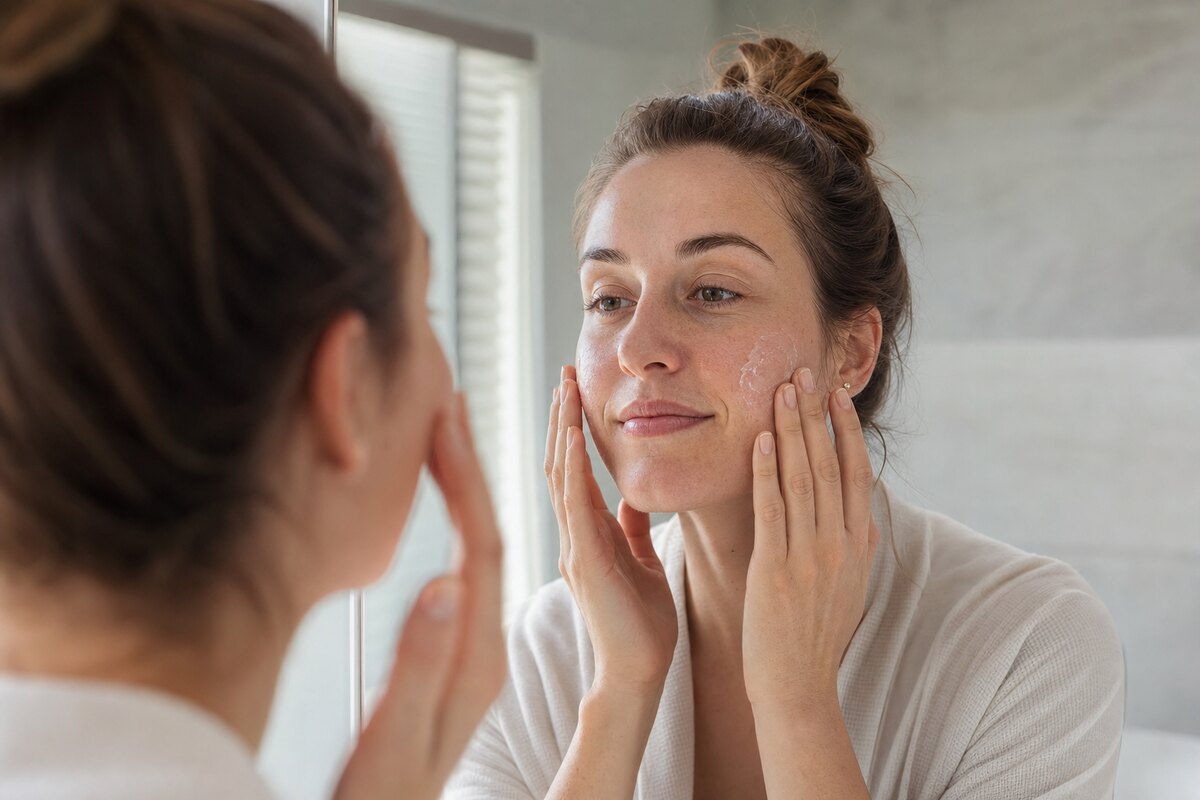
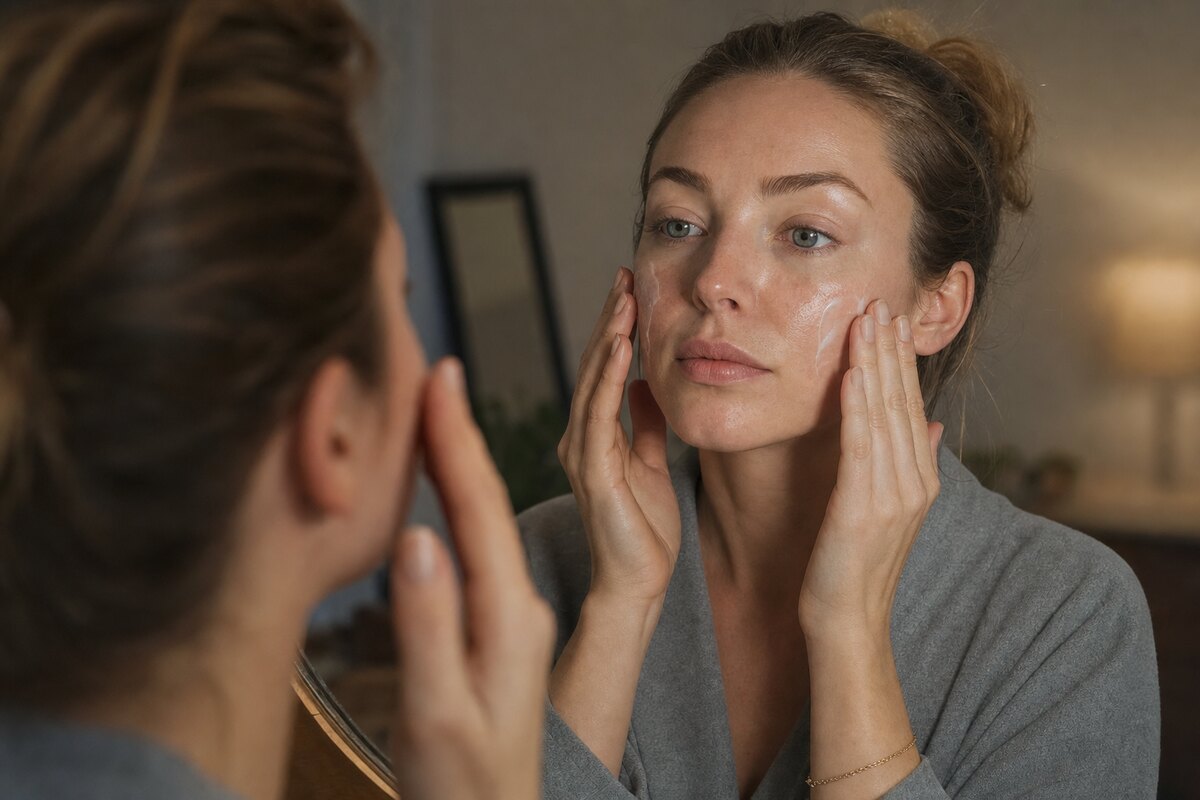
The texture sounds lighter than it really is. “Whipped” is accurate in the jarless-pump sense: it spreads more easily than a paste, but it still lands closer to a nourishing cream than a lotion. On normal-to-dry skin, I would use one to two pumps after serums and before sunscreen in the morning, or as the last step at night. Week 1-2 would probably feel immediately comforting if your skin is tight. Week 3-4 is where the barrier-friendly design should matter more. Week 5+ is when oily or congestion-prone users may decide the richness is either reassuring or too much.
Routine placement is straightforward. In the morning, this makes the most sense over a hydrating serum and under sunscreen, provided you give it a minute to settle. At night, it works best as a finishing cream rather than something layered under another heavy occlusive. If you already use facial oil, sleeping masks, or thick barrier creams, doubling up may feel unnecessary. If your skin usually feels tight after cleansing, though, the extra cushion may be exactly the point.
I also think the finish is more skin-type dependent than the brand language suggests. Dry skin can read it as soft and reassuring. Combination skin may like it on the cheeks but not the T-zone. Oily skin may find the cream technically non-greasy at first, then a little too present by midday. That does not make the formula bad; it just narrows who gets the best experience from it.
Packaging helps here. The airless pump is more hygienic than an open jar and usually gives predictable dosing, which matters for a cream where half a pump too much can change the finish. The downside is practical: once airless packaging gets near empty, some users find it harder to tell how much product remains, and rich creams sometimes need a few extra pumps before they dispense cleanly.
Pros & Cons
Pros:
- Fragrance-free formula with a sensible barrier-support story
- Comforting cream texture for dry, dehydrated, or reactive skin
- Ceramide and fatty-acid profile makes more sense than trend-driven filler ingredients
- Airless pump packaging is cleaner and easier to dose than an open jar
Cons:
- At full price, value is only decent rather than exceptional
- Can feel too creamy for oily, humid-climate, or easily clogged skin
- Brand claims around “glow” matter less than the basic moisturization performance
BeautySift Score
Paula’s Choice Omega+ Complex Moisturizer Review — Comforting for dry skin, but not my first pick for oily or easily clogged skin
Scored on BeautySift's 5-point rubric. 10-point equivalent: 8.5/10
Best For / Not Suitable For
Best For: dry skin, dehydrated skin, and sensitive skin that wants a fragrance-free cream with more cushion than a gel moisturizer.
Skip If: you prefer a very light gel finish, you live in heavy humidity and dislike any cream residue, or you are extremely acne-prone and already know richer plant-oil creams tend to feel congesting.
Not suitable for: shoppers looking for a treatment moisturizer for acne, pigment, or exfoliation; this is mostly a comfort-and-barrier formula, not an active-treatment product.
Where to Buy
- Amazon: $42.00 for the 1.7 fl oz listing when checked on May 2, 2026 Buy on Amazon
How It Compares
Compared with First Aid Beauty Ultra Repair Cream, this Paula’s Choice moisturizer feels a bit more elegant and less openly body-cream-like, though still not featherlight. Compared with Avène Cicalfate+ Restorative Protective Cream, it is easier to wear daily and less occlusive, but also less protective when skin is actively irritated from over-exfoliation or a rough procedure recovery window.
Sources: Paula’s Choice Omega+ Complex Moisturizer product page checked May 2, 2026; Amazon search and listing data checked May 2, 2026; Ulta site search checked May 2, 2026; PMID: 12553851, Ceramides and skin function; PMID: 41758783, Monocentric, Vehicle-Controlled, Double-Blind Study to Assess the Short- and Long-Term Effects of a Ceramide NP C15-Containing Emollient on the Skin Microbiome and the Skin Barrier Function in Sensitive Skin; PMID: 41304700, Barrier Products for Topical Delivery-Insight into Efficacy Testing and Barrier-Boosting Compounds.
[EXCERPT]: Paula’s Choice Omega+ Complex Moisturizer review finds a barrier-friendly cream for dry reactive skin, but the richer texture and full-price value will not suit everyone.
Editor's Picks