The No-Sting Makeup Prep Routine I Use Before Foundation
A practical no-sting makeup prep routine for reactive skin, with gentle cleansing, moisturizer timing, sunscreen layering, and low-friction makeup steps.
Medical Disclaimer: This article shares general beauty and skin-comfort information, not personal medical care. If your face burns, swells, develops a rash, or keeps reacting to basic products, see a board-certified dermatologist for diagnosis and patch-testing advice.
Affiliate Disclosure: This article does not include product affiliate links. If BeautySift adds commerce links later, they will be labeled clearly and will not change our editorial judgment.
I have learned the hard way that makeup prep can go wrong before foundation even touches the skin. When my barrier feels shaky, the sting usually starts with too much cleansing, too much rubbing, or a primer that promises grip but feels like a warning sign. On reactive days, I stop trying to make my skin behave like normal-combination skin and build my prep around comfort first. That usually means fewer layers, more waiting time, and formulas with less fragrance and less drama.
The basic logic is simple: a face that already feels hot, tight, or prickly does not need aggressive prep. A 2025 review on skin-barrier dysfunction notes that barrier damage can be driven by environmental stress, psychological stress, ultraviolet exposure, and inflammatory shifts, all of which make skin more reactive and less comfortable (PMID: 41404926). A 2024 review on barrier-repair moisturizers also highlights that moisturizer choice matters in dry, itchy, inflamed, and sensitive skin because composition affects how supportive the product actually is (PMID: 38214440). That is why I treat makeup prep as an extension of skin-barrier care rather than a separate cosmetic step.
Why my makeup prep stings in the first place
When my skin is reactive, the problem is rarely foundation alone. Usually I can trace it back to one of four issues: over-cleansing, rough application, too many active layers underneath, or fragranced formulas close to the eyes and around the nose. Cosmetic contact dermatitis is common, and a 2025 review notes that cosmetic dermatitis often affects the face because that is where exposure is repeated and concentrated (PMID: 40627138). That does not mean every flush is an allergy, but it does mean I take recurring stinging seriously instead of brushing it off as normal beauty discomfort.
I also watch for timing. If a product stings on application and the sensation grows stronger as I keep layering, I treat that as a sign to stop. If a product only tingles on broken skin after retinoids or over-exfoliation, I treat that as a barrier issue first. That distinction changes my routine: I either remove the likely trigger entirely or strip my prep back to the bland basics for several days.
Step 1: I lower the cleansing load before I think about primer
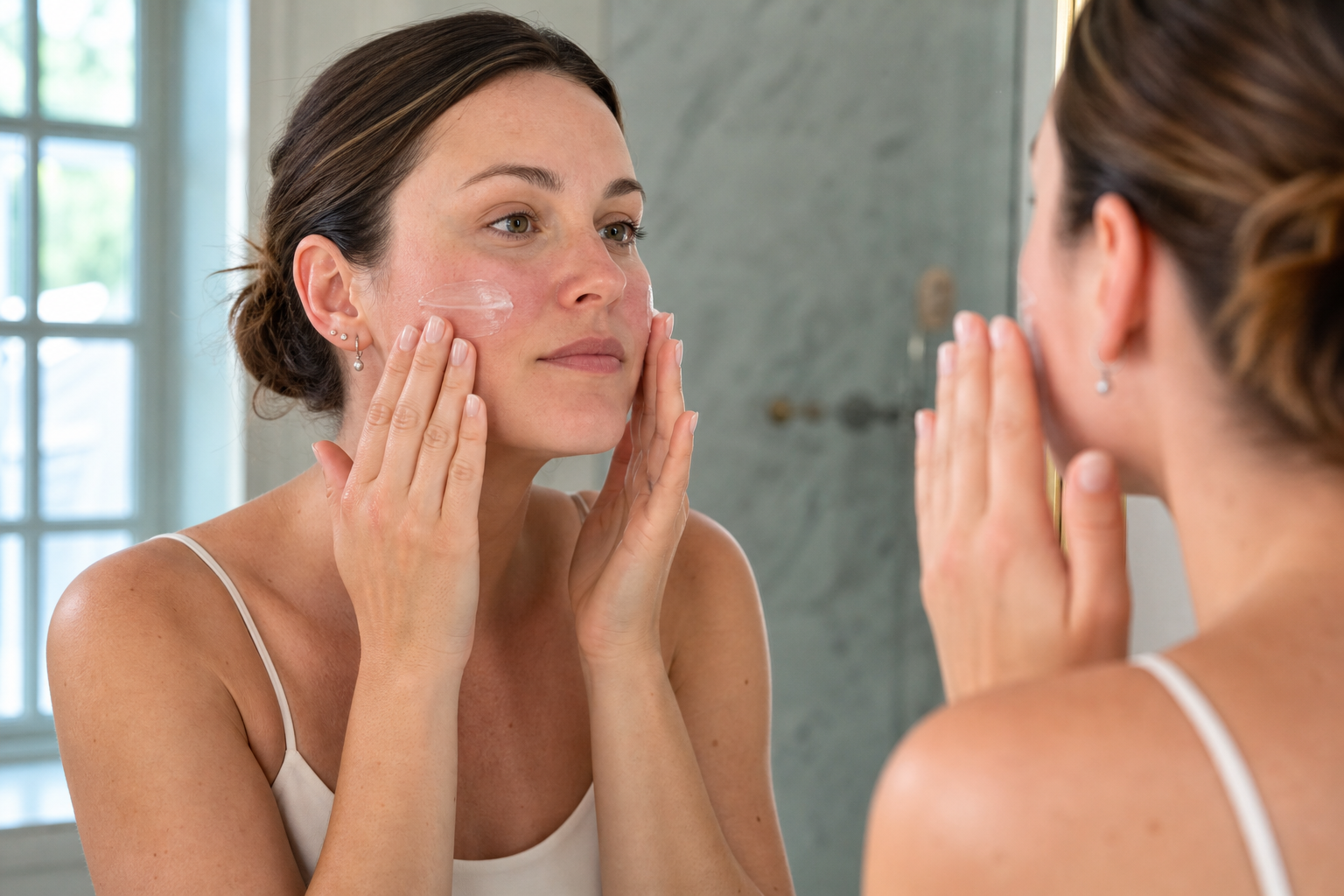
On calm mornings, I might use a gentle cleanser. On reactive mornings, I often switch to a lukewarm water rinse or a very mild, non-foaming cleanse focused on sunscreen residue and sweat rather than a squeaky-clean finish. I do not scrub with washcloths, cleansing brushes, or grainy formulas. Friction shows up later under foundation as diffuse redness and little dry islands around my nose and mouth.
If I used strong actives the night before, I become even more conservative. My goal is not to erase every trace of oil. My goal is to avoid starting the day with a face that already feels stripped. A cleaner surface is not helpful if it comes with tightness that makes every later layer burn.
Step 2: I use one boring moisturizer and give it time
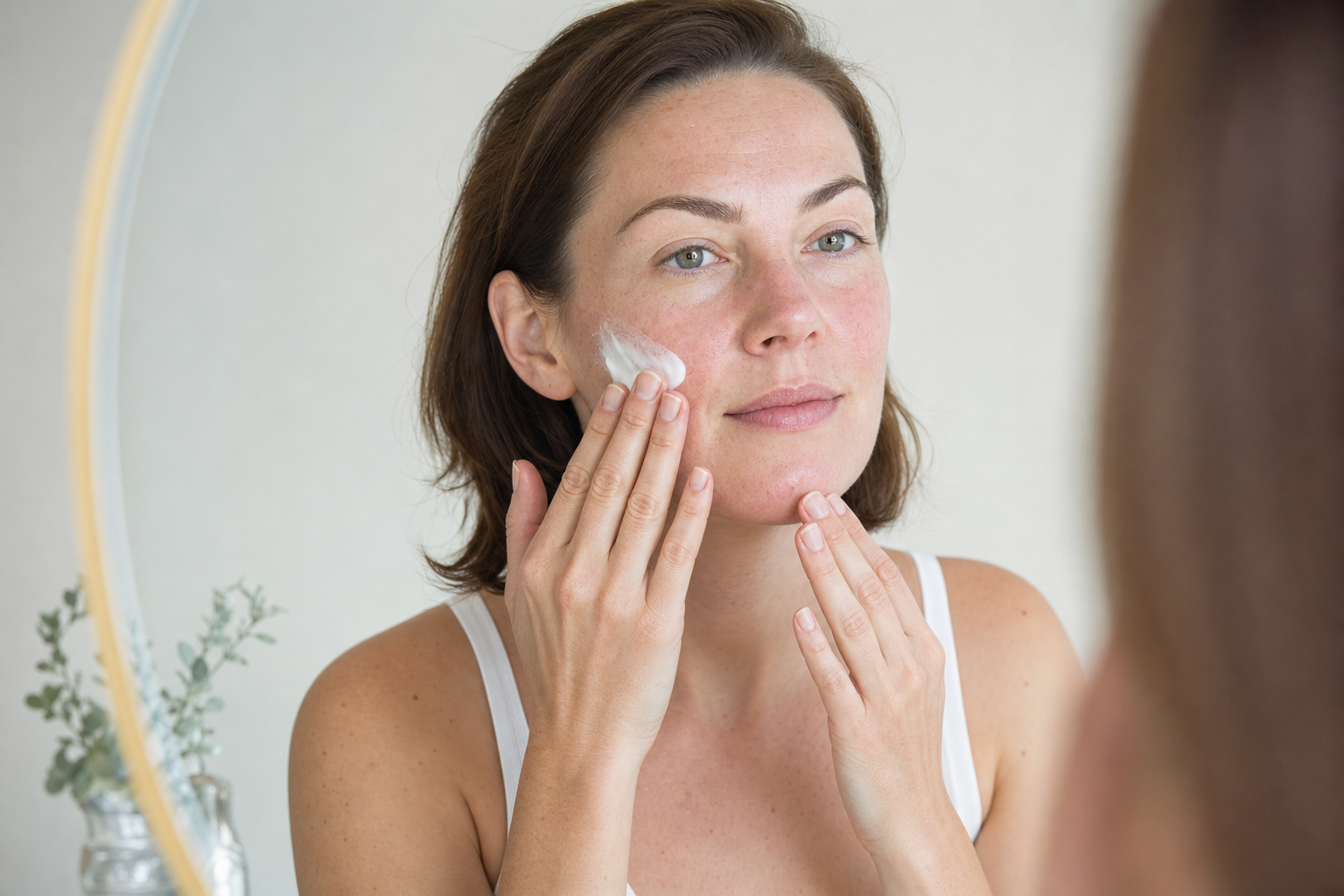
This is the least glamorous part of my routine, but it matters most. I pick one bland moisturizer, apply a moderate amount to slightly damp skin, and then wait. I look for a formula that feels cushiony rather than heavily perfumed or overly active. When my skin is reactive, I skip acid pads, vitamin C serums that already tingle, and experimental barrier cocktails. The 2024 moisturizer review is useful here because it stresses that not all moisturizers behave the same way in impaired skin; ingredient mix changes performance (PMID: 38214440).
Waiting a few minutes helps more than adding another product. If I put primer onto moisturizer that is still sliding around, I need more rubbing to spread everything evenly. More rubbing means more heat, and more heat usually means more stinging. So I let the moisturizer settle until my face feels soft, not wet.
Step 3: I keep sunscreen even, thin, and compatible
If I am wearing makeup in daylight, I still use sunscreen. What changes is texture strategy. I choose a sunscreen that spreads without a lot of drag and I apply it in thin sections rather than one thick dollop over a reactive face. I do not massage for minutes. I spread, pat lightly where needed, and let it form a film. A patchy sunscreen layer can make foundation sit unevenly, but an overworked sunscreen layer can also leave my skin hot and annoyed before I even start makeup.
This is also where I become strict about fragrance. Fragrance is not a problem for every person, but if my face is already reactive, I would rather not test that threshold on makeup day. The face is the most exposed site for cosmetic reactions, which is one reason I keep my prep simpler when I know I will be layering more products on top (PMID: 40627138).
Step 4: I treat primer as optional, not mandatory
A gripping primer is not automatically a bad product, but it is often the first thing I cut when my skin is reactive. Many primers are built to smooth, blur, mattify, or lock makeup in place. Those goals can come with extra film-formers, alcohol, fragrance, shimmer, or a tight feel that my skin interprets as irritation. If my moisturizer and sunscreen are sitting well, I usually do not need a full layer of primer everywhere.
What I do instead is spot strategy. If I need help around the sides of my nose or the center of my forehead, I use a tiny amount only in those areas. I do not drag it across cheeks that already feel warm. This keeps the prep functional without turning my whole face into an experiment.
Step 5: I switch from coverage thinking to friction thinking
The best reactive-skin makeup tip I have learned is that application method matters as much as formula. Dense buffing can look polished for ten minutes and then leave my cheeks angry. On sensitive days, I choose fingers or a damp sponge over hard circular brushing. I also use less foundation than I think I need and start where I want the most correction, usually around the nose and center of the face, then fade outward.
By doing less on the perimeter, I protect the areas that flush fastest. This also keeps me from repeatedly going over the same patch of skin to chase a perfect finish that my skin cannot comfortably support that day. I would rather accept a little visible texture than create a burning, glossy-red base by lunchtime.
My no-sting order before foundation
- Lukewarm rinse or very gentle cleanse
- One bland moisturizer on slightly damp skin
- Wait until the slip settles down
- Sunscreen in thin, even sections
- Optional spot primer only where truly needed
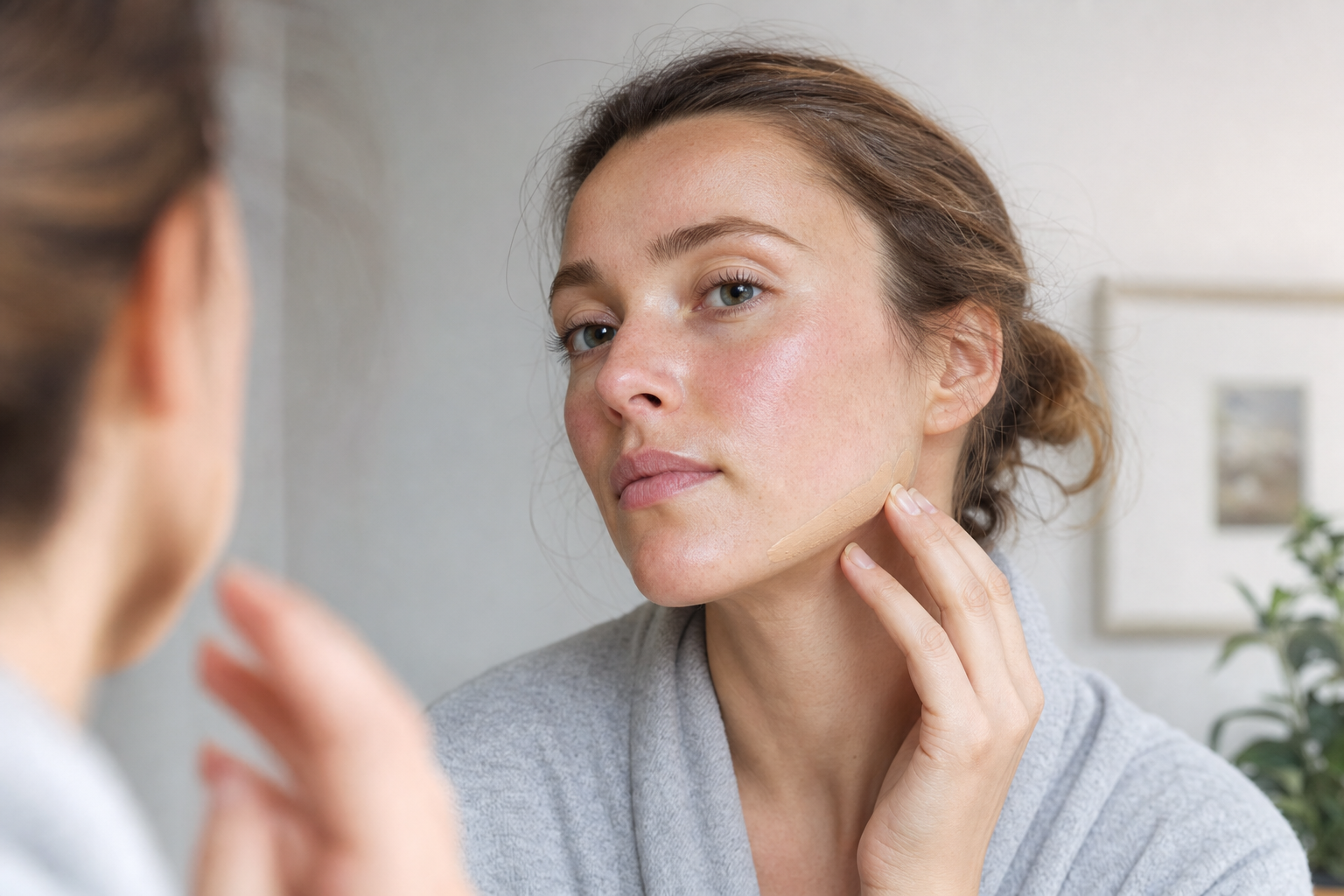
- Foundation tested at the jawline first
- Concealer only where it adds something
This order keeps me from stacking too many unknowns at once. If something stings, I can usually identify the step quickly and stop there instead of wondering which one of six layers caused the reaction.
What I skip when my skin is clearly irritated
When my skin already feels inflamed, I skip long-wear claims that require fast blending, exfoliating prep pads, fragranced mists, and pore-stripping mattifiers. I also avoid mixing multiple new products in one routine. The barrier review from 2025 makes the point that stressors can work together, not separately, in barrier dysfunction (PMID: 41404926). That matches my experience: one mildly irritating step may be tolerable, but several mildly irritating steps in a row are what tip my skin into visible discomfort.
I also stop chasing the look of ultra-smooth skin. If I have flaking, I do better with targeted concealer and a flexible base than with a full, set-everything foundation routine. Less product often reads fresher than a heavily corrected base sitting on top of skin that is asking for a break.
How I decide the routine is not working
If I feel burning that lasts longer than a few minutes, if redness spreads while I am applying makeup, or if my eyelids start itching, I take everything off and reset. That is inconvenient, but it is still better than spending the rest of the day wearing a reaction. Repeated stinging with multiple products can signal barrier damage, irritant dermatitis, or an allergy problem that needs professional evaluation, especially if the same zones keep flaring.
On those days, I would rather wear less makeup or none at all. A comfortable face almost always looks better than a fully covered face that hurts. My routine works best when it respects that limit instead of fighting it.
The bottom line
My no-sting makeup prep routine is less about secret products and more about reducing friction, fragrance, over-cleansing, and unnecessary layers. I prep reactive skin as if I am protecting a weak barrier first and building a base second. That approach does not make every foundation perfect, but it gives me the best chance of getting through the day without that familiar burn around my nose, cheeks, and eyes.
Sources: PMID: 41404926; PMID: 38214440; PMID: 40627138.